
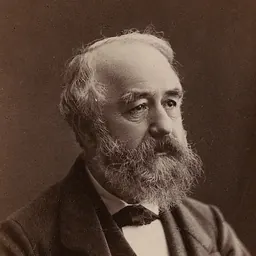
Isaac Bayley Balfour
British botanist and academic
About Isaac Bayley Balfour
Lived 1853 – 1922 (aged 69). Isaac Bayley Balfour was a British botanist, university teacher, botanical collector and scientific collector.
Sir Isaac Bayley Balfour, KBE, FRS, FRSE (31 March 1853 – 30 November 1922) was a Scottish botanist. He was Regius Professor of Botany at the University of Glasgow from 1879 to 1885, Sherardian Professor of Botany at the University of Oxford from 1884 to 1888, and Professor of Botany at the University of Edinburgh from 1888 to 1922.
Early life He was the son of John Hutton Balfour, also a botanist, and Marion Spottiswood Bayley, and was born at home, 27 Inverleith Row, Edinburgh. His mother was granddaughter of George Husband Baird.
He was the cousin of Sir James Crichton-Browne.
Biography Balfour was educated at the Edinburgh Academy from 1864 to 1870. At this early stage his interests and abilities were in the biological sciences, which were taught to him by his father. Due to his father's post as Professor of Botany at Edinburgh, the young Balfour was able to visit the Edinburgh Botanical Gardens, not open to the public at the time.
Balfour studied at the University of Edinburgh, from which he graduated in 1873 with a BSc (1st Class) in Natural Science. In 1874 he participated in an astronomical expedition of 1874 to Rodrigues. Though the stated aim of the mission was to observe Venus, Balfour used the opportunity to investigate the local flora, and on his return, the fieldwork he had carried out permitted him to gain his doctorate in botany in 1875.
Between 1877 and 1879 Balfour also spent time at the universities in Würzburg and Strasbourg with the influential plant physiologist Julius von Sachs and plant pathologist Heinrich Anton de Bary. After collecting some samples he sent them to be analysed by “Glasgow's Professor of Chemistry James Dobbie and G Henderson.” This was very important as it marked the first scientific investigation into the origins of the color known as Dragons Blood. “Of the 15 Dracaena resin samples that are housed within the EBC some of them have certain geographic origins, most are of D. cinnabari from this collection of samples are from Socotra Balfour himself.” This was important as it showed that certain colors can only be found in certain geographic regions.
In 1884, he was appointed Sherardian Professor of Botany at the University of Oxford. in collaboration with other young botanists most notably Sydney Howard Vines. Appearing in 1887 and published by the Clarendon Press, Annals of Botany remains one of the world’s leading plant science journals
It was, however, after his return to Edinburgh to take up his father's old chair as Professor of Botany from 1888 to 1922 that Balfour left his lasting mark on Scottish botany, following his appointment as 9th Regius Keeper of the Royal Botanic Garden Edinburgh. His father had greatly enlarged the botanical gardens during his tenure, but Balfour completely transformed them with support from Sir William Turner Thiselton Dyer, Director of the Royal Botanic Gardens Kew and editorial colleague at Annals of Botany. Balfour put the Edinburgh Garden’s finances on a safer footing by transferring them to the Crown, engaging in a major structural reforms of the Garden, establishing a botanical institute, and redeveloping the layout of the gardens to create a proper arboretum, new laboratories and improved scientific facilities.
Balfour was awarded KBE in the 1920 civilian war honours list. The knighthood was not for services to botany per se but for 'services in connection with the war' - a recognition of his work supporting the 1914-18 British war effort. This will have included keeping the Royal Botanic Garden Edinburgh going despite the severe shortage of manpower and materials and being involved in the Timber Supply Department setup to maintain supplies of timber during the hostilities and re-establish Britain’s forests after the war. Of greater significance was Balfour’s success, shared with his friend Charles Walker Cathcart, in persuading the War Office to adopt sphagnum moss bandaging in military hospitals and in identifying the best species to use and where to find them. The outcome was millions of wound dressings made from dried and sterilised Sphagnum papillosum and S. palustre. These undoubtedly saved many lives and towards the end of the war over one million such dressings a month were being used by British hospitals. Their effectiveness relied on the acidic antiseptic properties of dried sphagnum (first recognised in Germany in the late 19th Century) and its capacious ability to absorb up to twenty times its own volume of blood and other bodily liquids.
Balfour died at Court Hill, Haslemere in Surrey. . His only son, also named Isaac Bayley, or ‘Bay’, was killed in 1915 while serving in the First World War at Gallipoli.
Specific interests Balfour's interest in Sino-Himalayan plants also put him in contact with botanist and plant collector Reginald Farrer. Farrer provided valuable information to Balfour and the Royal Botanic Garden Edinburgh by sending him his plant illustrations together with the field notes, botanical specimens and seeds he had collected.
Honours, qualifications and appointments 1873: Awarded Bachelor of Science degree (BSc) with first class honours, University of Edinburgh 1873–1878: Appointed Lecturer in Botany, Royal Veterinary College, Edinburgh 1875: Awarded Doctor of Science degree (DSc), University of Edinburgh 1877: Awarded Bachelor of Medicine, Bachelor of Surgery degree (MB, ChB), University of Edinburgh 1877: Elected Fellow of the Royal Society of Edinburgh 1879: Appointed Professor of Botany, University of Glasgow 1880–1882, 1904–1906: President of the Botanical Society of Edinburgh 1884: Awarded Master of Arts degree (MA), University of Oxford 1884: Elected Fellow of the Royal Society 1884: Appointed Professor of Botany, University of Oxford 1888: Appointed Professor of Botany, University of Edinburgh 1897: Awarded Victoria Medal of Honour, Royal Horticultural Society 1901: Awarded Doctor of Laws degree (LLD), University of Glasgow 1919: Awarded Linnean Medal of the Linnean Society 1920: Awarded Knight Commander of the Order of the British Empire (KBE) 1921: Awarded Honorary Doctor of Laws degree (LLD), University of Edinburgh
Commemoration
The Benmore Estate was gifted to the nation by Harry George Younger of the Younger's family, and in 1928 he had the Bayley Balfour Memorial Hut, dedicated to Sir Isaac, placed in Puck's Glen. It was designed by Sir Robert Lorimer, with wooden panels using every variety of timber grown at Benmore. It also commemorated the contribution of James Duncan, a previous owner of the estate. The woodland was taken over by the Forestry Commission, which dedicated the area around the glen to the memory of Sir Isaac, while the central part of the estate was opened in 1929 as the Younger Botanic Garden, the first outstation of the Royal Botanic Garden Edinburgh. In 1968 the Bayley Balfour Memorial Hut was restored, and moved to a new site in the walled garden of Benmore House.
Balfour is commemorated in the scientific name of a species of Socotran lizard, Mesalina balfouri. and of the Socotran butterfly Charaxes balfourii.
Works
Balfour was a contributor to: Britannica Booklet No. 10: Botany, the Science: A Selection of Articles from the New 14th Edition of the Encyclopaedia Britannica (1929).
Don’t just read it —
keep it.
Full-length biographies made to live with: read them, listen on the way to work, watch them tonight.
- E-book
- Audio
- Video
Instant download · yours to keep · every purchase keeps this site free
Important facts
People in Isaac Bayley Balfour's life
Named in this biography and alive at the same time



Related people
Same field, nearest in time

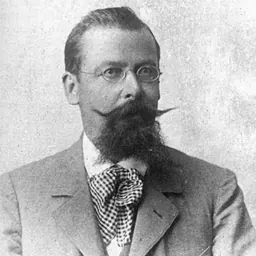

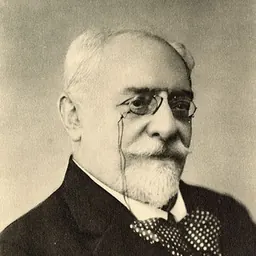


Contemporaries
People whose lives overlapped Isaac Bayley Balfour's
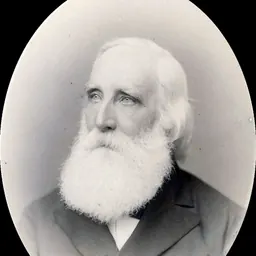
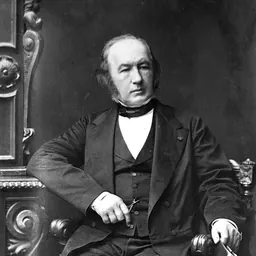


Frequently asked questions
Who was Isaac Bayley Balfour?
British botanist and academic (1853-1922)
When was Isaac Bayley Balfour born?
Isaac Bayley Balfour was born on 31 March 1853 in Edinburgh.
When did Isaac Bayley Balfour die?
Isaac Bayley Balfour died on 30 November 1922 in Haslemere.
What was Isaac Bayley Balfour's occupation?
Isaac Bayley Balfour was a botanist, university teacher, botanical collector and scientific collector.
What nationality was Isaac Bayley Balfour?
Isaac Bayley Balfour was British.
Sources & further reading
· Wikipedia: Isaac Bayley Balfour
· DBpedia: Isaac Bayley Balfour
Cite this page
APA: Biography.guide. (2026). Isaac Bayley Balfour. https://biography.guide/isaac-bayley-balfour/
MLA: "Isaac Bayley Balfour." Biography.guide, https://biography.guide/isaac-bayley-balfour/.
Chicago: "Isaac Bayley Balfour." Biography.guide. https://biography.guide/isaac-bayley-balfour/.
Data last updated: 2026-09-22 · Spot an error? Report a correction.
Page generated 2026-09-27 05:30 UTC