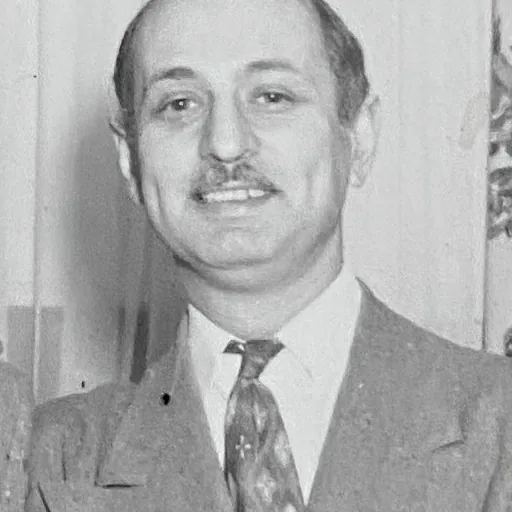
Irve Tunick
(1912-1987) writer, producer, miscellaneous
About Irve Tunick
Lived 1912 – 1987 (aged 74–75). Irve Tunick was a television maker, screenwriter, writer and businessperson.
Irve Tunick (July 27, 1912 – September 10, 1987) was an American scriptwriter and producer. He is best known for writing scripts for radio, television, and movies including for Freedom's People, Studio One, Armstrong Circle Theatre, The Bold Ones, Bonanza, Ironside, Witness, and The F.B.I.
Tunick began writing scripts in the 1930s for radio and continued writing scripts into the 1970s with his last script being for television. After 14 years of being employed as a scriptwriter, Tunick had written over 1000 radio and TV scripts.
Tunick founded and was president of the Eastern Region of the Television Writers of America, which was a predecessor of the Writers Guild of America.
Most notably, Tunick co-wrote the script for Murder Inc., released in 1960, which earned an Academy Award for Best Actor nomination for Peter Falk.
Early life Irve Tunick was born on July 27, 1912, in New York City. He attended Georgetown University in Washington D.C., and later New York University in New York City. Tunick's first script was a radio play titled "The Last Days of Pompeii" that envisioned a live broadcast of events in Pompeii that is interrupted by the eruption of the volcano. Tunick then began writing scripts for the television industry and later scripts for movies. The script dealt with James Otis Jr., a founding father of the United States who gave an almost five-hour speech in the State House in February 1761 to protest the British Writs of Assistance. Keyhoe thought about indignantly going to the press to protest the censorship right after the incident but realized that such a move would also hurt Costello and Tunick who he also believed were "victims" of pressure from the government and so gave up the idea. Later Keyhoe would appear on The Mike Wallace Interview on ABC on March 8, 1958, to explain what had happened on the episode.
In another episode while working on Armstrong Circle Theatre, Tunick once had a situation where they would only cast a gentile to play a Jewish role so the show would not appear too Jewish. Tunick had written a script involving the Dead Sea Scrolls along with a Jewish family in Israel. Tunick brought in the Jewish actor, Joseph Yadin, to play the father in the family drama. Fearing that the show would be seen as a "Jewish show", the backers of the show cast an actress who was used to playing an Irish mother in a soap opera as the mother in the drama. Tunick said that when he heard the actress say the lines with a "Gaelic intonation", "I don't have much hair on my head but the little I had stood up and waved."
The Witness In 1960, Tunick created and wrote The Witness, a series that dramatized the lives of notorious figures through simulated hearings before a fictional committee. The reviewer went on to state that Telly Savalas, "a comparatively unknown actor" at the time, did a great job in the first episode depicting the real life gangster "Lucky" Luciano and demonstrated his "gutter cynicism, arrogance, brutality" and yet was at moments "pathetic."
East Side/West Side In the early 1960s, Tunick managed to get a job on the television show East Side/West Side, a drama on CBS starring George C Scott, due to some good luck. As producer Don Kranze tells it: [The script supervisor that Scott recommended] oesn't show up for work...At that point, and this is the truth, when producer David Susskind hears that this guy doesn't show up, who's in his office at that time? Irve Tunick. He's used Irve over the years. Irve sort of writes documentary-type scripts. At that point, he says, ‘How would you like to be the script editor?’ Irve says okay. That's how he got hired – happened to be in the office the day that this guy quit . . . Irve [took the show] to the next step. He called in good writers, gave them the idea what the show was about, and [organized] it into a workable situation. In the discussion, the three talked about how sponsors had killed various efforts to depict certain actions in televisions programs with Tunick decrying how there is a "provincialism and an isolation about Madison Ave. that enters into all of this" and Serling explaining how his story regarding the Emmett Till case was not permitted to be broadcast until the "play was relocated to New England." That episode featured Angie Dickinson in the title role and a young Ian McShane credited as a special guest star.
In January 1954, Joan LaCour Scott the executive secretary for the Western Region of the Televisions Writers of America invoked her Fifth Amendment rights to refuse to testify before the House Un-American Activities Committee regarding any potential communist connections. In response to this refusal to cooperate, Tunick along with ten other members from the Eastern Region's executive board and their attorney Howard Cosell resigned from the union citing "a complete difference of opinion on basic union principles." Tunick explained his actions by stating that the inability of LaCour to testify before the committee hearing put the union in an "untenable position at the bargaining table" and required the union to be involved in an area outside of its concern by forcing it to be involved in the "political or philosophical convictions of a paid employee." The resignation of Tunick and others dealt a fatal blow to the Televisions Writers of America, which ended in 1954, and the Writers Guild of America was formed as a new union to fill the vacuum.
Film In addition to writing scripts for TV, Tunick also worked on as a writer for several films. He wrote the screenplay for Lady of Vengeance (1957) and for High Hell (1958), both directed by Burt Balaban.
In 1960, Tunick co-wrote the screenplay for Murder, Inc., a film depicting the rise and fall of a notorious crime syndicate of the same name.
Tunick liked to use references to poetry in his radio broadcasts because of the "essential economy of poetry" but usually would not have enough time to incorporate such references.
Tunick also found that unlike other writers, he could not outline the story first, and instead he had to simply just start writing his scripts after thinking about the subject for a bit.
Tunick had three children: Carol Maxfield, Richard Tunick, and Lisa Sarasohn. The American School of the Air – scriptwriter (1944–1945) The Sergeant and the Spy TV Movie – Story editor – (1954)
Movies Lady of Vengeance (1957) – writer High Hell (1958) – writer Murder, Inc. (1960) – co-writer along with Mel Barr
Don’t just read it —
keep it.
Full-length biographies made to live with: read them, listen on the way to work, watch them tonight.
- E-book
- Audio
- Video
Instant download · yours to keep · every purchase keeps this site free
Important facts
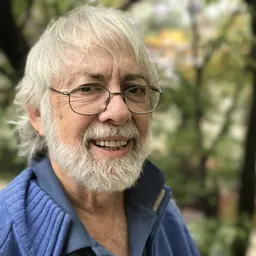
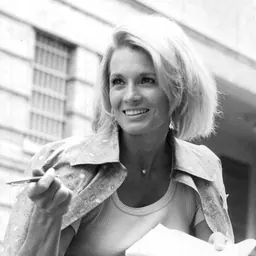
People in Irve Tunick's life
Named in this biography and alive at the same time
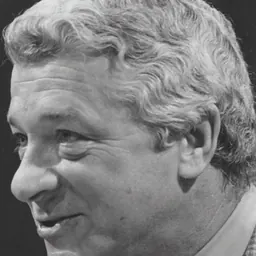





Contemporaries
People whose lives overlapped Irve Tunick's





Frequently asked questions
Who was Irve Tunick?
(1912-1987) writer, producer, miscellaneous
When was Irve Tunick born?
Irve Tunick was born in 1912.
When did Irve Tunick die?
Irve Tunick died in 1987.
What was Irve Tunick's occupation?
Irve Tunick was a television maker, screenwriter, writer and businessperson.
Sources & further reading
Cite this page
APA: Biography.guide. (2026). Irve Tunick. https://biography.guide/irve-tunick/
MLA: "Irve Tunick." Biography.guide, https://biography.guide/irve-tunick/.
Chicago: "Irve Tunick." Biography.guide. https://biography.guide/irve-tunick/.
Data last updated: 2026-09-21 · Spot an error? Report a correction.
Portrait: Wikimedia Commons · author & licence
Page generated 2026-09-27 04:59 UTC