
About Irmgard Keun
Lived 1905 – 1982 (aged 77). Irmgard Keun was a German writer and science fiction writer.
Irmgard Keun (; 6 February 1905 – 5 May 1982) was a German novelist. Noted for her portrayals of the life of women, she is described as "often reduced to the bold sexuality of her writing, [yet] a significant author of the late Weimar period and die Neue Sachlichkeit." She was born into an affluent family and was given the autonomy to explore her passions. After her attempts at acting ended at the age of 16, Keun began working as a writer after years of working in Hamburg and Greifswald. Her books were banned by Nazi authorities but gained recognition during the final years of her life.
Biography Irmgard Keun was born on 6 February 1905 in Charlottenburg (at the time an independent town, now part of Berlin) to Eduard and Elsa Keun. Her father was an agent for a company that imported petrol, her mother a housewife. Keun later recalled her mother as "stark hausfraulich eingestellt, auf eine sehr schauerliche Weise" (quite domestically inclined, in a very horrible way). She and her family, including her brother Gerd, born in 1910, lived in the city until 1913, when they moved to Cologne. There Keun attended a Lutheran girls' school, from which she graduated in 1921. She worked as a stenotypist, but also attended acting school in Cologne from 1925 until 1927. Although she had stage roles in Greifswald and Hamburg, these were only somewhat successful, and she decided to abandon her acting career in 1929. Encouraged by Alfred Döblin, she turned to writing.
In 1931 Keun's first novel Gilgi, eine von uns was published and became a success. In 1932 a second novel Das kunstseidene Mädchen (The Artificial Silk Girl) came out. Although there were allegations that she had plagiarised a novel by Robert Neumann (a claim endorsed by her erstwhile promoter Kurt Tucholsky – and disproven only much later), this novel also became a success.
In 1932, Keun married the writer and director . They divorced in 1937. After 1945, she claimed that this had been because he was a Nazi sympathizer; however, there is evidence that she stayed in close touch with him well after 1933, and that the reasons may have been much more personal in nature.
In 1933/34, her books were confiscated and banned by the Nazis. In the spring of 1933 she met and fell in love with the Arnold Strauss, a Jewish doctor who wanted to treat her for her alcoholism. Strauss, as a Jew, lost his position at the Berlin hospital that employed him and went to the USA in 1935; however, they stayed in touch (and many of their letters survive). Keun continued to publish in Germany after 1935, occasionally using pseudonyms, but after she was finally banned from publishing by the authorities - and after she had tried to sue the government for loss of income, and her final appeal to be admitted to Reich Chamber of Literature was refused - she went into exile to Belgium and later the Netherlands in 1936. Between sometime in 1936 and 1938 she lived with writer Joseph Roth, while, at the same time pursuing her relationship with Strauss in the US. Invited by Strauss, she even visited him in Norfolk, Virginia in 1938, yet returned to Europe that same year. In 1940 she returned to Cologne from the Netherlands, where she lived through the war years using an alias. How she managed to do this remains unclear. Keun claimed she seduced a Nazi official in the Netherlands and, however that may be, her cover back in Germany may have been helped by the fact that the British Daily Telegraph (among others) reported her suicide in Amsterdam on 16 August 1940.
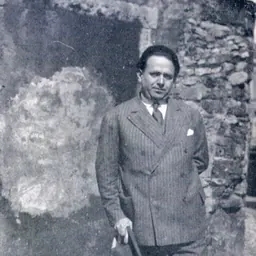
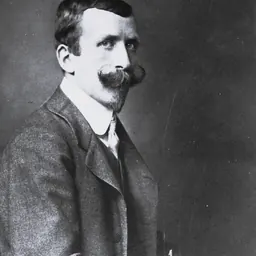
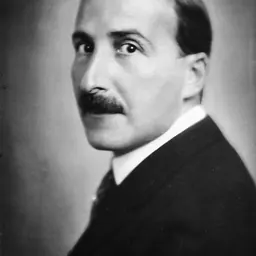
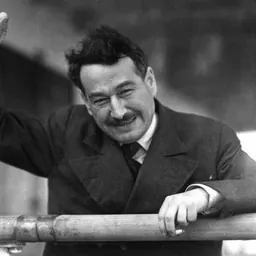
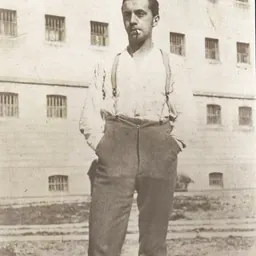
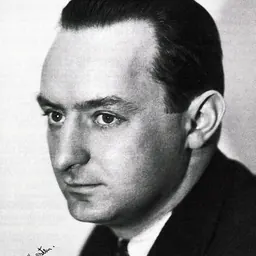
She counted among her friends such literary notables as Egon Erwin Kisch, Hermann Kesten, Stefan Zweig, Ernst Toller, Ernst Weiss, and Heinrich Mann. From 1936 to 1938, she had the already mentioned romantic relationship with Joseph Roth, a relationship that at first had a positive effect on her literary output. She worked together with Roth, traveling with him to various cities such as Paris, Wilna, Lemberg, Warsaw, Vienna, Salzburg, Brussels and Amsterdam. After the German invasion of the Netherlands, she returned in 1940 to Nazi Germany. Protected by false reports of her own suicide, she lived there undercover until 1945.
In the 1960s, her life was overshadowed by alcoholism and homelessness in spite of help from the literary community. In 1966, she was put under tutelage and committed to the psychiatric ward at the Bonn State Hospital, where she remained until 1972. In 1977, she was re-discovered after an article in Stern magazine. From 1979 onwards, her financial situation recovered thanks to new editions of her work. She died in Cologne in 1982 of lung cancer.
Response to her work
Keun received great acclaim for her sharp-witted books, most notably from such well-known authors as Alfred Döblin and Kurt Tucholsky, who said about her, "A woman writer with humor, check this out!". Keun utilizes her characters from her novels to highlight and critique the social problems of the early 1930s. Keun's biggest criticisms of consumerism and the complexity of a feminine identity are displayed through the female protagonists' relationships with men. Breaking the archetypal mold, Keun's characters offer depth to the feminine identity and challenge the idea that a woman must be placed into a category. For example, "Keun's representative novels of the New Woman's experience during the Weimar Republic, Gilgi—eine von uns (1931) and Das kunstseidene Mädchen (1932), feature two such young stylized New Women, Gilgi and Doris, who try to shape their lives in the aforementioned image by taking their cues from the popular media ". In the case of Das kunstseidene Mädchen (The Artificial Silk Girl), Keun tells the story from Doris' perspective, which she does to give the reader "insights into the social injustice of Weimar Berlin's class and gender hierarchy ". Keun's novel reflects critically on these discourses by casting its heroine's sentimental journey in terms of an education in vision.
In an interview, Keun's daughter, Martina Keun-Geburtig, answered the question if her mother was a happy woman, "Well, she always said that the Nazis took her best years. Starting in 1933 her success was abruptly ended through the book-burning up until '45, '46. It's a pretty long time…".
Don’t just read it —
keep it.
Full-length biographies made to live with: read them, listen on the way to work, watch them tonight.
- E-book
- Audio
- Video
Instant download · yours to keep · every purchase keeps this site free
Important facts
Family & relationships
People in Irmgard Keun's life
Named in this biography and alive at the same time

Related people
Same field, nearest in time

Contemporaries
People whose lives overlapped Irmgard Keun's



Frequently asked questions
Who was Irmgard Keun?
German writer (1905-1982)
When was Irmgard Keun born?
Irmgard Keun was born on 6 February 1905 in Berlin.
When did Irmgard Keun die?
Irmgard Keun died on 5 May 1982 in Cologne.
What was Irmgard Keun's occupation?
Irmgard Keun was a writer and science fiction writer.
What nationality was Irmgard Keun?
Irmgard Keun was German.
Sources & further reading
Cite this page
APA: Biography.guide. (2026). Irmgard Keun. https://biography.guide/irmgard-keun/
MLA: "Irmgard Keun." Biography.guide, https://biography.guide/irmgard-keun/.
Chicago: "Irmgard Keun." Biography.guide. https://biography.guide/irmgard-keun/.
Data last updated: 2026-09-20 · Spot an error? Report a correction.
Page generated 2026-09-27 05:33 UTC