
About Irene Clouthier
Born 1975. Irene Clouthier is an American and Mexican artist, draftsperson, installation artist and photographer.
Irene Clouthier Carrillo (born 1974) is a multi-disciplinary artist born in Culiacán, Sinaloa, Mexico, who has lived and worked in the Washington DC metro area since 2000. Her artistic practice centers on themes of childhood nostalgia and the idealization of early memories, incorporating imagery, objects, and materials drawn from childhood games and toys. Some of her early works in the U.S. addressed the visual disparity of the landscapes in the U.S. versus her native country. Several of her recent works have also explored social and humanitarian concerns.
Though primarily an independent artist, Clouthier has also contributed to various art collectives. She is currently collaborating with the Icebox Collective on the Nomadic House Project and previously participated with Exotico Noreste Collective and the Floating Art Collective.
Irene is both a visual artist and a curator. She has curated shows at museums, art centers, art fairs, non-profit spaces, and commercial galleries in the US and in Mexico.
Following her time in Monterrey, when she finished high school, Clouthier completed preparatory classes in France and her undergraduate work in Mexico at the University of Monterrey where she studied under artists Jorge Elizondo and Aldo Chaparro. When she graduated she was hired by her alma mater Universidad de Monterrey to teach, at the same time her colleague and co-worker Aldo Chaparro allowed her to used and worked in his studio in Monterrey. Three and a half years after completing her undergraduate degree and working in the art field, she moved to the U.S. where she pursued graduate studies and began showing with the Marina Kessler Gallery and later with Lowenstein Gallery. Clouthier's work was chosen for 15 international biennials including the Valencia Biennial Ciutat Vella 2021 where she received an honorary mention.
Personal life
Irene Clouthier was born in Culiacán, Sinaloa, Mexico to Manuel J. Clouthier del Rincón and Leticia Carrillo Cásarez. She was the youngest of eleven children (six girls and five boys). She and her twin brother, Ricardo, were the second set of fraternal twins born to her large family. This experience put Clouthier into the public eye since she and her siblings periodically toured Mexico with Maquio during his campaign. In the year following the election, Clouthier suffered the loss of her father in a tragic car accident. This loss was rumored to be a purposeful act in response to his political activism and movement towards electoral reform.
By the time Clouthier was fourteen, she publicly experienced the death of her young brother, Cid Estaban, and her father, Maquío. These experiences informed Clouthier's work where she explores ideas of nostalgia, memory and play. Her work often incorporates the colors, materials, and aesthetic of her early 80s experiences and Mexican heritage. When asked about her art, Clouthier frequently mentions the cultural importance of kitsch in the Mexican aesthetic folk art and indigenous traditions.
Political activism Clouthier was brought up in a family which regularly participated in acts of political demonstrations. Clouthier continued her political activism with her performance work as part of the Floating Lab Collective with Chilean artist Edgar Endress in 2007 for the Transitio MX festival at Laboratorio de Arte Alameda Museum in Mexico City. The work, Protesting on Demand, was originally produced in DC and then was tailored for the Transitio MX International Electronic and Video Arts Festival 2: Nomadic Borders under Grace Quintanilla. The art piece shown in Transitio MX as a simultaneous performance at the White House in the US and the Zocalo Plaza in Mexico City ran over a live feed at Laboratorio de Arte Alameda Museum. The show incorporated three-minute protests with participants from the street and tackled the many issues facing the U.S. and Mexican governments at the time.
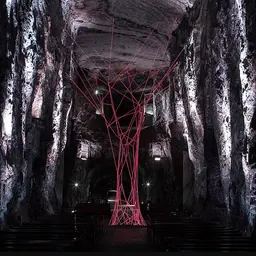
Clouthier created an immersive Day of the Dead installation in 2018 at the Mexican Cultural Institute in Washington DC. The piece, They Silenced Us, was dedicated to the femicide victims in Mexico using elements found in traditional Day of the Dead altars (ofrenda).
As a contributor to the Icebox Collective, Clouthier has been instrumental in the three iterations of the Nomadic House Project Some of these experiences are explored in work like the piece shown in The Looking Glass: Artist Immigrants of Washington. On a personal level, these experiences led her to volunteer work supporting the Latino community in the Washington DC metro area. She continued the non-violent protests she observed as a child and supported non-profit initiatives. She was one of the founding members of Latinas 4 Latinas and currently serves as the Vice Chair for non-profit Nueva Vida.
Reference section
Don’t just read it —
keep it.
Full-length biographies made to live with: read them, listen on the way to work, watch them tonight.
- E-book
- Audio
- Video
Instant download · yours to keep · every purchase keeps this site free
Important facts
People in Irene Clouthier's life
Named in this biography and alive at the same time





Related people
Same field, nearest in time



Contemporaries
People whose lives overlapped Irene Clouthier's


Frequently asked questions
Who is Irene Clouthier?
Mexican artist (born 1974)
When was Irene Clouthier born?
Irene Clouthier was born in 1975 in Culiacán.
What is Irene Clouthier's occupation?
Irene Clouthier is an artist, draftsperson, installation artist and photographer.
What nationality is Irene Clouthier?
Irene Clouthier is American and Mexican.
Sources & further reading
Cite this page
APA: Biography.guide. (2026). Irene Clouthier. https://biography.guide/irene-clouthier/
MLA: "Irene Clouthier." Biography.guide, https://biography.guide/irene-clouthier/.
Chicago: "Irene Clouthier." Biography.guide. https://biography.guide/irene-clouthier/.
Data last updated: 2026-09-20 · Spot an error? Report a correction.
Page generated 2026-09-27 04:57 UTC