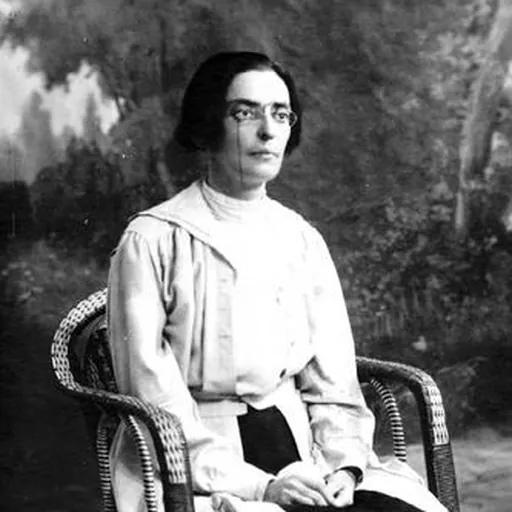
About Ira Yan
Lived 1869 – 1919 (aged 50). Ira Yan was a Russian painter, translator and writer.
A lost painting by Ira Jan. Photo in the archives of Rachel Yanait Ben-Zvi
Ira Jan (Russian: И́ра Ян) is the pseudonym of Russian-born Jewish painter and writer Esther Yoselevitch Slepyan (Эсфи́рь Иосиле́вич Слепя́н; 2 February 1869 – 24 April 1919). She was a member of the commune at Bezalel and among the founders of Gymnasia Rehavia.
Biography Esther Yoselevitch was the youngest of three children of a Jewish family in Kishinev, then in the Russian Empire (now part of Moldova). Her father, Joseph (Osip) Yoselevitch, was an influential Russian lawyer. Recognizing her artistic talent, her father sent her at the age of 16 to study at the Moscow School of Painting, Sculpture and Architecture in Moscow, an uncommon move in Jewish society at that time. After completing her studies in Moscow, she studied in Paris, where her brother, Shimon, was practicing medicine. After returning to Kishinev, she became involved with the Socialist Revolutionary Party, one of whom was the bacteriology student Dmitry Slepian (Дмитрия Слепяна), whom she married and with whom she had a daughter, Elena (Елены). and the poem The Dead of the Desert. Rachel Yanait and Jan became very close, and would walk around Jerusalem, with Jan drawing and painting scenes and people of the city. Jan also published some essays and poems in Eliezer Ben-Yehuda's newspaper HaZvi (later renamed "HaOr"). For lack of an appropriate school framework for their children, the artist group also founded the Gymnasia Rehavia. and upon returning to Tel Aviv she discovered that all had disappeared. She died of the tuberculosis, heartbroken at the loss of her works.
Relationship with Bialik From the 1980s, academic studies uncovered the tangled web of Bialik and Ira Jan's love. With the pogrom in the background, Jan fell in love with the poet, left her husband and prior beliefs, and immigrated to The Land of Israel.
Bialik was married, but heartbroken by the fact that they were childless, and was obviously attracted to the artist. Some scholars, including Ziva Shamir and Hillel Barzel, believe that at least two of Bialik's poems, "Thou Art Leaving Me" (״הולכת את מעמי״) and "To Your Secret Path" (״לנתיבך הנעלם״), were dedicated to Jan.
Bialik apparently concealed his love to her for fear of losing his reputation, cut all contact with her after she left for the Land of Israel, and only went to the Land of Israel himself after she had died. Only in 1972 did some scholars reveal some letters that expressed Bialik's big secret, that were hidden by Moshe Ungerfeld, the second administrator of the Bialik House. Ungerfeld's incentive, too, was protecting Bialik's reputation. Additional related material was found after Ungerfeld's death in 1983.
Ziva Shamir believes that a large portion of Bialik's works were directly inspired by his relationship with Jan, that, in her opinion, were the central love affair of his life.
Don’t just read it —
keep it.
Full-length biographies made to live with: read them, listen on the way to work, watch them tonight.
- E-book
- Audio
- Video
Instant download · yours to keep · every purchase keeps this site free
Important facts
more
Esther Slepjann, Esther Slepian, Esther Slepiann, Esther SlipanPeople in Ira Yan's life
Named in this biography and alive at the same time
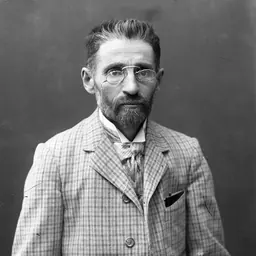

Related people
Same field, nearest in time
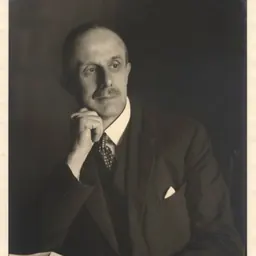


Contemporaries
People whose lives overlapped Ira Yan's






Frequently asked questions
Who was Ira Yan?
Russian painter, Hebrew writer (1869-1919)
When was Ira Yan born?
Ira Yan was born on 2 February 1869 in Chișinău.
When did Ira Yan die?
Ira Yan died on 24 April 1919 in Tel Aviv.
What was Ira Yan's occupation?
Ira Yan was a painter, translator and writer.
What nationality was Ira Yan?
Ira Yan was Russian.
Sources & further reading
Cite this page
APA: Biography.guide. (2026). Ira Yan. https://biography.guide/ira-yan/
MLA: "Ira Yan." Biography.guide, https://biography.guide/ira-yan/.
Chicago: "Ira Yan." Biography.guide. https://biography.guide/ira-yan/.
Data last updated: 2026-09-24 · Spot an error? Report a correction.
Portrait: Wikimedia Commons · author & licence
Page generated 2026-09-27 05:08 UTC