
Ira Sandperl
Anti-war activist and educator
About Ira Sandperl
Lived 1923 – 2013 (aged 89–90). Ira Sandperl was an American.
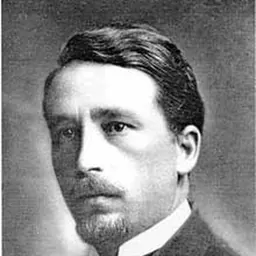
Ira Sandperl (March 11, 1923 – April 13, 2013) was an American anti-war activist and educator. A proponent of nonviolence, he influenced students and heroes of the anti-war, civil rights, and peace movements, including Martin Luther King Jr., David Harris, Bob Dylan, John Lennon, Lawrence Ferlinghetti, Allen Ginsberg, Daniel Ellsberg, Thomas Merton, The school invited a small number of students each year (in order of applications received) to learn the principles of nonviolence, partake in readings, meditation, and discussion. Some local residents of Carmel were frustrated by the image that the school represented and fought the school from continuing operations. The episode is recounted in Joan Didion's essay "Where the Kissing Never Stops", first published in 1966 under the title "Just Folks at a School for Non-Violence" in The New York Times Magazine and reprinted in her 1968 essay collection Slouching Towards Bethlehem.
In 1966, Sandperl accompanied Baez to Grenada, Mississippi to join in a campaign to help desegregate local schools with Martin Luther King Jr. Two years later King visited them in Santa Rita prison, where the two served 45 day sentences for trying to shut down the Oakland, California draft induction center for "Stop the Draft Week." King said that he made the visit "because they helped me so much in the South." King also famously sent members of his organization, the Southern Christian Leadership Conference, to study with Ira on the subjects of organizing and non-violent tactics.
The nationally famous catholic monk and non-violent activist, Thomas Merton, met with Sandperl and Baez in December 1966 at the Abbey of Gethsemani in Kentucky where he lived. Their discussions strongly influenced Merton and his changing philosophy of activism despite being a monk and he wrote about them in his journals and his book New Seeds of Contemplation. Merton also kept up with Sandperl through correspondence during his travels through Asia from 1966 through 1967 and considered Sandperl an authority on Gandhi's teachings of non-violence.
In 1968, Sandperl, Joan Baez and David Harris organized a nation-wide speaking tour to urge draft age men to refuse induction. Harris, mentored by Sandperl, had emerged as the national leader of student resistance to the draft, and would go to prison in 1969 for refusing induction himself. He had also been married to Joan Baez. Their child was born while Harris was serving 20 months of his three-year sentence in federal correctional institutions in Arizona and Texas.
In 1971, at the height of resistance to Nixon's continuation of the war, Sandperl had just finished speaking against the war in Cambridge, MA when an unknown man approached him with questions about how to survive incarceration if one was arrested for war resistance. Sandperl, who had served 45 days for blocking the induction center in Oakland, CA, advised him that it could be managed, and it was even possible to organize among the other prisoners if one took care not to be disruptive, because the guards just didn't want any trouble. The unknown man Daniel Ellsberg told Sandberg that he had been strongly influenced by a talk given by Randy Kehler, a young anti-war activist mentored by Sandperl who had been sentenced to prison for refusing draft induction. On June 13, 1971, Ellsberg's face and the Pentagon Papers he had leaked were on the front page of the New York Times, and the resistance had landed its most solid blow yet against the war machine.
Philosophy Sandperl was a proponent of Gandhi's philosophy of nonviolence. Sandperl's expression of it is simple: "The means determine the ends." We are deceived into believing that we can get the kind of world we seek by doing the very things we are trying to get rid of. "Just a little more violence to end violence." "Just a little more hatred to end hatred." "Just a little more oppression to end oppression" -- and on and on.
We are taken in because good people are doing these things, sincere and brave people. And this is why the finer their qualities, the more dangerous they are, the more thoroughly we are fooled.
All the finest qualities in the world cannot change the simple, immutable fact that the ends cannot justify the means, but, on the contrary, the means determine the ends. In all of man's history this stands out clearly and intellectually indisputable; yet it has been perversely, insistently, sentimentally and tragically ignored. In this universe the means always and everywhere, without doubt and without exception, cannot, in the very nature of things, but determine the ends. This cannot be repeated often enough.
We get what we do; not what we intend, dream, or desire. We simply get what we do.
If we see and act upon this (I will say again, unabashedly, what it is -- the means determine the ends!), then what the prophets of the ages have wistfully called Utopia will become a reality.
Works Sandperl is the author of A Little Kinder, with an Introduction by Joan Baez, a memoir of the civil rights and anti-war movements in the 1960's. His book is really a series of essays, in the form of journal entries sent as letters to a young friend, on the subject of how to live, what to do, and the nature of a life of critical purpose well-lived. In the manner of Montaigne, the inventor of this essay form, it discourses on Sandperl's wide-ranging passionate investments in the philosophy and practice of nonviolence, the study of political history and its dangerous characters, and his reading: he was extraordinarily well-read, worked in a bookstore and lived in a tiny apartment crammed with thousands of books. Included are his personal stories of all the characters he moved with in the movements of his time, including most of the movers, from Martin Luther King to Daniel Ellsberg. It concludes with Sandperl's annotated bibliography of recommended reading, picked from among the thousands of writers whose works influenced him.
Death Sandperl died on April 13, 2013, at his home in Menlo Park, California, surrounded by friends and his books, from complications arising from a respiratory infection.
References and further reading
Don’t just read it —
keep it.
Full-length biographies made to live with: read them, listen on the way to work, watch them tonight.
- E-book
- Audio
- Video
Instant download · yours to keep · every purchase keeps this site free
Important facts
People in Ira Sandperl's life
Named in this biography and alive at the same time




Contemporaries
People whose lives overlapped Ira Sandperl's




Frequently asked questions
Who was Ira Sandperl?
anti-war activist and educator (1923–2013)
When was Ira Sandperl born?
Ira Sandperl was born in 1923 in St. Louis.
When did Ira Sandperl die?
Ira Sandperl died in 2013.
What nationality was Ira Sandperl?
Ira Sandperl was American.
Sources & further reading
Cite this page
APA: Biography.guide. (2026). Ira Sandperl. https://biography.guide/ira-sandperl/
MLA: "Ira Sandperl." Biography.guide, https://biography.guide/ira-sandperl/.
Chicago: "Ira Sandperl." Biography.guide. https://biography.guide/ira-sandperl/.
Data last updated: 2026-09-20 · Spot an error? Report a correction.
Page generated 2026-09-27 05:10 UTC