
Ione Gedye
British conservator and archaeologist
About Ione Gedye
Lived 1907 – 1990 (aged 82–83). Ione Gedye was a British archaeologist, conservator and conservation and restoration of cultural heritage, known for UCL Institute of Archaeology.
Early life and education Ione Gedye was the only daughter (she had one brother) of civil engineer Lieutenant Colonel Nicholas George Gedye (1874–1947), of the Royal Engineers, OBE, who had been a senior figure in engineering at the Ministry of Agriculture and Fisheries, the Admiralty, and the Ministry of Transport, and his wife Vera, daughter of John Thompson, of Radclive.
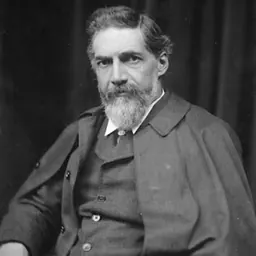
She attended Francis Holland School, Graham Terrace between 1918 and 1925. Gedye was a student of Flinders Petrie in classical archaeology at University College, London. She volunteered to clean items from one of Petrie's excavations for a summer exhibition.
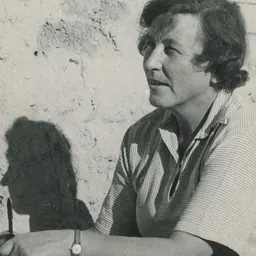
Gedye worked at the Verulamium excavations with Tessa Verney Wheeler and Kathleen Kenyon. Wheeler had her clean metalwork from the excavations and encouraged her interest in artefacts.
Career
Gedye was one of the original staff members in the technical department at the Institute of Archaeology, which opened in 1937. She was the founder of the Repair Department, which was initially housed in a former operating theatre.
There was no formal training programme in conservation in the 1930s, and Gedye conducted experiments to inform her work. She also learned about restoring and cleaning artefacts from people such as Harold Plenderleith at the British Museum Research Laboratory and from staff at the Royal Museums of Art and History in Brussels.
During the war, she worked on reconstructions of Pleistocene mammals.
Gedye taught conservation from 1937 to 1975. After World War II, she headed a conservation course that became increasingly attractive to students, and gradually expanded from a one-year certificate to become a three-year degree course. In the late 1950s, Gedye was joined in her work by Henry W. M. Hodges who helped her to develop the training course. Early broadcasts of archaeological digs by the BBC were informed by Gedye's work. This work educated the public and contributed to the professionalisation of archaeology in the UK.
Gedye retired in July 1975. This prize was created when Gedye requested that her colleagues create a prize for students rather than buy her a retirement gift. Gedye's portrait hangs in the institute.
Don’t just read it —
keep it.
Full-length biographies made to live with: read them, listen on the way to work, watch them tonight.
- E-book
- Audio
- Video
Instant download · yours to keep · every purchase keeps this site free
Important facts
People in Ione Gedye's life
Named in this biography and alive at the same time




Related people
Same field, nearest in time

Contemporaries
People whose lives overlapped Ione Gedye's


Frequently asked questions
Who was Ione Gedye?
British conservator and archaeologist
When was Ione Gedye born?
Ione Gedye was born in 1907.
When did Ione Gedye die?
Ione Gedye died on 12 November 1990.
What was Ione Gedye's occupation?
Ione Gedye was an archaeologist, conservator and conservation and restoration of cultural heritage.
What was Ione Gedye known for?
Ione Gedye was known for UCL Institute of Archaeology.
What nationality was Ione Gedye?
Ione Gedye was British.
Sources & further reading
Cite this page
APA: Biography.guide. (2026). Ione Gedye. https://biography.guide/ione-gedye/
MLA: "Ione Gedye." Biography.guide, https://biography.guide/ione-gedye/.
Chicago: "Ione Gedye." Biography.guide. https://biography.guide/ione-gedye/.
Data last updated: 2026-09-22 · Spot an error? Report a correction.
Page generated 2026-09-27 05:23 UTC