
About Ion Moţa
Lived 1902 – 1937 (aged 34). Ion Moţa was a Hungarian political activist and lawyer.
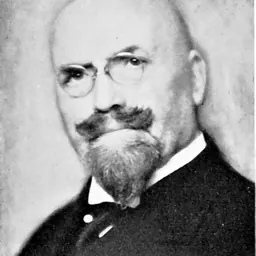
Ion I. Moța (5 July 1902 – 13 January 1937) was the deputy leader of the Romanian fascist Legionary Movement (Iron Guard), killed in battle during the Spanish Civil War.
Biography Son of the nationalist Orthodox priest Ioan Moța, who edited a journal called Libertatea ("Liberty"), Ion I. Moța completed his baccalaureate at Bucharest's Saint Sava National College, then studied law at the University of Paris (1920–1921), Cluj, and Iași. After being suspended from attending university in Romania, he returned to France.
At Cluj, he founded Acțiunea Românească ("Romanian Action"), a nationalist group inspired by Charles Maurras' Action Française. This organization fused with A. C. Cuza's National-Christian Defense League in 1925. Moța met Corneliu Zelea Codreanu at a meeting of antisemitic students in August 1923.
In late 1923, Moța, Codreanu, and other ultranationalist students formed a plan to assassinate Romanian politicians and leaders of Romanian Jewry seen as traitors and corruptors of Romanian national life. They were arrested in Bucharest on 8 October 1923 and sent to Văcărești Prison. At the trial, Moța shot Aurelian Vernichescu, the member of their conspiracy who betrayed it to the authorities. Despite the shooting and a confession of guilt, the jury found the group not guilty and they were released on 29 March 1924. Moța spent two months in Galata prison in Iași for the murder of Vernichescu before being acquitted and released on 29 September 1924.
Codreanu made Moța leader of Frăția de Cruce ("Brotherhood of the Cross"), a fascist organization of peasants and students who would "fight for nationalistic renewal" (founded on 6 May 1924). Moța attended, together with A. C. Cuza, the September 1925 World Anti-Semitic Congress in Budapest; upon the founding of the Iron Guard (the Legion of the Archangel Michael) on 24 June 1927, he became deputy Captain to Codreanu.
Later that year, on 18 August 1927, he married Codreanu's sister, Iridenta. Together they had two children: Mihail and Gabriela.
Ion Moța represented the Legion at the 1934 Fascist International meeting in Montreux. He was vice-president of the Iron Guard political creation, the Everything for the Country Party. From 1934 through 1936, he served as a correspondent for Welt-Dienst ["World-Service"], an anti-Jewish publication founded by Ulrich Fleischhauer in Erfurt, Germany. Fleischhauer was a staunch believer in the veracity of the antisemitic propaganda pamphlet The Protocols of the Elders of Zion, and appeared as an "expert witness" for the pro-Nazis at the famous Berne Trial. Moța had previously translated The Protocols... into Romanian.
Gallery
Don’t just read it —
keep it.
Full-length biographies made to live with: read them, listen on the way to work, watch them tonight.
- E-book
- Audio
- Video
Instant download · yours to keep · every purchase keeps this site free
Important facts
People in Ion Moţa's life
Named in this biography and alive at the same time

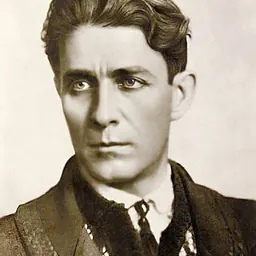
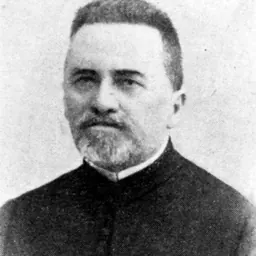
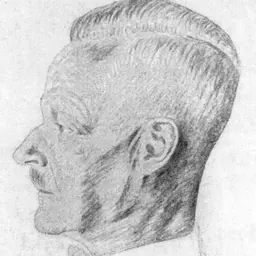
Related people
Same field, nearest in time
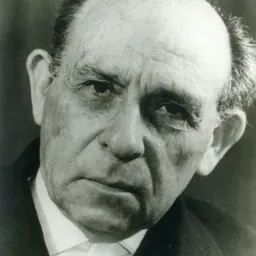

Contemporaries
People whose lives overlapped Ion Moţa's




Frequently asked questions
Who was Ion Moţa?
Romanian politician (1902-1937)
When was Ion Moţa born?
Ion Moţa was born on 5 July 1902 in Orăștie.
When did Ion Moţa die?
Ion Moţa died on 13 January 1937 in Majadahonda.
What was Ion Moţa's occupation?
Ion Moţa was a political activist and lawyer.
What nationality was Ion Moţa?
Ion Moţa was Hungarian.
Sources & further reading
Cite this page
APA: Biography.guide. (2026). Ion Moţa. https://biography.guide/ion-mota/
MLA: "Ion Moţa." Biography.guide, https://biography.guide/ion-mota/.
Chicago: "Ion Moţa." Biography.guide. https://biography.guide/ion-mota/.
Data last updated: 2026-09-26 · Spot an error? Report a correction.
Page generated 2026-09-27 05:13 UTC