
Innocent of Alaska
Russian bishop and saint
About Innocent of Alaska
Lived 1797 – 1879 (aged 81). Innocent of Alaska was a Russian linguist, bible translator, eastern Orthodox priest, missionary and priest.
Innocent of Alaska (; August 26, 1797 – ), also known as Innocent Metropolitan of Moscow, was a Russian Orthodox missionary priest, then the first Orthodox bishop and archbishop in the Americas, and finally the Metropolitan of Moscow and Kolomna. Remembered for his missionary work, scholarship, and leadership in Alaska and the Russian Far East during the 19th century, he is known for his abilities as a scholar, linguist, and administrator, as well as his great zeal for his work.
As a missionary priest he took his wife and family with him. In these territories he learned several languages and dialects of the indigenous peoples. He wrote many of the earliest scholarly works about the native peoples of Alaska, including dictionaries and grammars for their languages for which he devised writing systems; also, he wrote religious works in, and translated parts of the Bible into, several of these languages. His books were published beginning in 1840.
Early life and education Innocent was born Ivan Evseyevich Popov (Иван Евсеевич Попов) on August 26, 1797, into the family of a church server in the village of Anginskoye, Verkholensk District, Irkutsk Governorate, in Russia. His father, Evsey Popov, died when Ivan was six, and Ivan lived with his uncle, the parish deacon, in Anga. where the rector renamed him Veniaminov in honor of the recently deceased Bishop Veniamin of Irkutsk.
In 1817 he married a local priest's daughter named Catherine. On May 18 that year Ivan Veniaminov was ordained a deacon of the Church of the Annunciation in Irkutsk. which was finished the following July.
Father Ioann's parish included the island of Unalaska and the neighboring groups of Fox and Pribilof islands, occupied by indigenous people who had been converted to Christianity before his arrival. They also retained many of their earlier religious beliefs and customs. Father Ioann often traveled between the islands in a canoe, battling the stormy ocean in the Gulf of Alaska.
By his travels through the islands, Father Ioann Veniaminov became familiar with the local dialects. In a short time he mastered six of the dialects. He devised an alphabet using Cyrillic letters for the most widely used dialect, the Unangan dialect of Aleut. In 1828, he translated portions of the Bible and other church material into that dialect. In 1829, he journeyed to the Bering Sea coast of the Alaskan mainland and preached to the people there.
In 1834, Father Ioann was transferred to Sitka Island, to the town of Novoarkhangelsk, later called Sitka. He devoted himself to the Tlingit people and studied their language and customs. From his studies there, he wrote the scholarly works Notes on the Kolushchan and Kodiak Tongues and Other Dialects of the Russo-American Territories, with a Russian-Kolushchan Glossary.
In 1836, Father Veniaminov made the journey south on a pastoral tour of the southernmost extent of Russian America, landing at Fort Ross in Northern California. While there he conducted a census and performed the sacraments of marriage and baptism for the Russian population and local natives.
Kamchatka ministry
In 1838, Father Ioann journeyed to St. Petersburg (where on Christmas Day 1839 he was promoted to archpriest), Moscow and Kiev to report on his activities and request an expansion of the Church's activities in Russian America. While he was there, he received notice that his wife had died during her visit to Irkutsk. He requested permission to return to his hometown. Instead, church officials suggested that he take vows as a monk. Father Ioann at first ignored these suggestions, but, on November 29, 1840, he was tonsured a monk with the name Innocent in honor of Saint Innocent, the first bishop of Irkutsk (†1731, commemorated on November 26). He was elevated to the rank of Archimandrite.
On December 15, 1840, Archimandrite Innocent was consecrated Bishop of Kamchatka and Kuril Islands in Russia and the Aleutian Islands in Russian America. His see was located in Novoarkhangelsk (Sitka), to which he returned in September 1841. He spent the next nine years administering his diocese as well as taking several long missionary journeys to its remote areas.
On April 21, 1850, Bishop Innocent was elevated to archbishop. In 1852 the Yakut area was admitted to the Kamchatka Diocese. In September 1853 Archbishop Innocent took up permanent residence in the town of Yakutsk. Innocent took frequent trips throughout his enlarged diocese. He devoted much energy to the translation of the scriptures and service books into the Yakut (Sakha) language.
In April 1865 Archbishop Innocent was appointed a member of the Holy Governing Synod of the Russian Orthodox Church.
Metropolitan of Moscow On November 19, 1867, he was appointed the Metropolitan of Moscow, succeeding his friend and mentor, Filaret, who had died. As metropolitan, he undertook revisions of many church texts that contained errors, raised funds to improve the living conditions of impoverished priests, and established a retirement home for clergy.
Death and legacy The relics of Saint Innocent of Alaska (reliquary/coffin below and his icon on the opened lid above) in the Assumption Cathedral of the Trinity Lavra of St. Sergius in Sergiyev Posad, Russia Innocent died on March 31, 1879. He was buried on April 5, 1879, at the Trinity Lavra of St. Sergius, outside Moscow.
Sainthood On the Russian Orthodox Church, acting on the official request of the Orthodox Church in America, glorified (canonized) Innocent as a saint, giving him the title "Enlightener of the Aleuts, Apostle to America."
Innocent's feast day is celebrated by the Orthodox Church three times a year: March 31, the date of his repose according to the Julian Calendar (April 13 N.S.); October 6, the anniversary of his canonization (September 23 O.S.); and October 18, the Synaxis of the Moscow Hierarchs (October 5 O.S.).
Innocent is widely venerated with the epithet Equal-to-apostles as the Orthodox apostle of America.
On the liturgical calendar of the Episcopal Church (USA), Innocent is honored with a feast day on March 30.
Works In Aleut language
In Russian
Часть I, географическая
In English
Don’t just read it —
keep it.
Full-length biographies made to live with: read them, listen on the way to work, watch them tonight.
- E-book
- Audio
- Video
Instant download · yours to keep · every purchase keeps this site free
Important facts
Related people
Same field, nearest in time
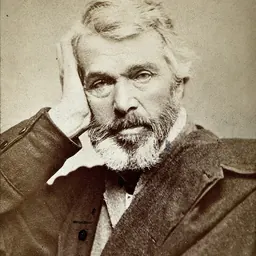
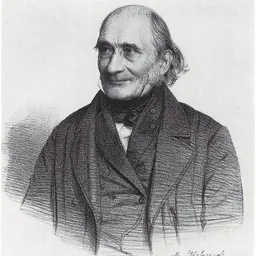
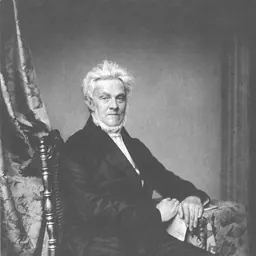
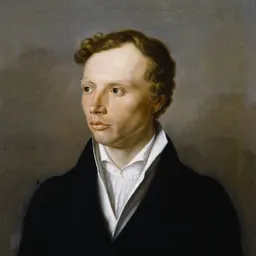
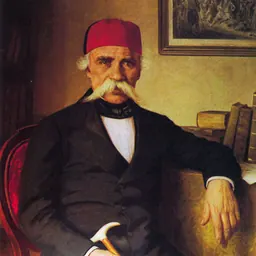

Contemporaries
People whose lives overlapped Innocent of Alaska's






Frequently asked questions
Who was Innocent of Alaska?
Russian bishop and saint (1797–1879)
When was Innocent of Alaska born?
Innocent of Alaska was born on 26 August 1797 in Anga.
When did Innocent of Alaska die?
Innocent of Alaska died on 12 April 1879 in Moscow.
What was Innocent of Alaska's occupation?
Innocent of Alaska was a linguist, bible translator, eastern Orthodox priest, missionary and priest.
What nationality was Innocent of Alaska?
Innocent of Alaska was Russian.
Sources & further reading
· Wikipedia: Innocent of Alaska
Cite this page
APA: Biography.guide. (2026). Innocent of Alaska. https://biography.guide/innocent-of-alaska/
MLA: "Innocent of Alaska." Biography.guide, https://biography.guide/innocent-of-alaska/.
Chicago: "Innocent of Alaska." Biography.guide. https://biography.guide/innocent-of-alaska/.
Data last updated: 2026-09-27 · Spot an error? Report a correction.
Page generated 2026-09-27 05:17 UTC