
About Ingeborg Euler
Lived 1927 – 2005 (aged 77). Ingeborg Euler was a German journalist, writer, filmmaker and artist.
Ingeborg Euler (6 September 1927 – 20 March 2005) began her public career as a cabaret artiste and author. After the early death of her husband, the campaigning "Auschwitz journalist" Thomas Gnielka, she herself became more widely known as a German television journalist.
Life Ingeborg Euler was born in Breslau (now Wrocław), her parents' only child. However, in 1946 she enrolled at Berlin University (subsequently known as "The Humboldt") where she was the youngest female student of her year group at the philosophy faculty. Her piece "Zwischen heut und morgen" ("Between today and tomorrow") appeared in the youth magazine Horizont. (The Soviet occupation zone was relaunched, formally in October 1949, as the Soviet sponsored German Democratic Republic (East Germany).)
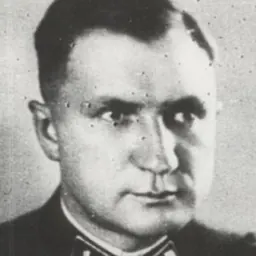
Directly after the war, the full political and practical implications of the military division of Berlin were not immediately apparent, least of all to the city's traumatised residents, preoccupied with simply staying alive. People could move freely between the western enclaves and the eastern half of the city, administered by the Soviet Union, until well into the 1950s. As early as April 1946, she had placed herself on record as an advocate of open free speech. Writing a review in Horizont about a meeting at the local cinema in Rangsdorf, held in anticipation of the first democratic local elections since 1933, she urged her young readers, who had grown up till that point learning the advisability of remaining "silent" on political matters, to speak out: "How can we seek to build a democratic state if we dare not say what we think?". With the twelve Nazi years having come to an end, it was a time of hope. During the next couple of years the cinema became a regular meeting point for a group of young people who founded a theatre group, on the initiative of the local Soviet commander: Ingeborg Euler became a star of this improvised local stage. and her poem "Wer war Andreas?" ("Who was Andreas?"), a literary tribute to her fallen childhood sweetheart. He was working during this time as a regional editor at the Wiesbadener Kurier, until he switched to an equivalent post at the Frankfurter Rundschau in February 1957. In 1960, he became a freelance investigative journalist. In 1963, he embarked on the investigation for which he would become well known across Germany, unearthing important files for what became known as the second Auschwitz trial, which involved the arrest of the former camp commander, Richard Baer. Before and during the trial, which opened on 20 December 1963, Gnielka was able to testify regularly on the atrocities committed. However, he was diagnosed with skin cancer in 1963, and in 1965, before being able to complete his contribution to the court proceedings, he died.
During the early 1960s, she was commissioned to produce several documentaries for Hessischer Rundfunk, the Frankfurt-based broadcaster on contemporary history themes, including a major project on the Second World War and another on workplace accidents in industry. After she was widowed Ingeborg Euler, with her five children now aged between 3 and 15, moved from Wiesbaden to Frankfurt am Main. Both to recover from the shock of her bereavement and to finance the family she now plunged into a full-time career as a television journalist with Hessischer Rundfunk. Her mother, who had been widowed six months earlier, supported her well in combining her family and professional lives. In 1969, she switched to ZDF. The focus of her work, again, was on documentaries including the memorably titled "Beton ist fantastisch" ("Concrete is fantastic") and features on artist-celebrities. She worked on the broadcaster's long-running arts magazine series Aspekte. Her so-called "Bamberg films" were notably successful: her film "Was soll aus Bamberg werden?" ("What should become of Bamberg?") won a prize for the ZDF arts magazine Aspekte.
In 1973, the family moved again, this time to West Berlin. Here, from 1977 until the mid-1980s Ingeborg Eurler produced the series "Berlinische Berichte", a series of films comprising half-hour "Berlin portraits" of different quarters and suburbs of the city, and other films for the ZDF which were transmitted during peak viewing times during the early evenings. In addition to these, she was particularly proud of a "science fiction" film, "Radfahrerstadt" ("Cyclists' city") which dealt with cycling as a serious means of transport. Other topics that she tackled included the city's architecture and more television portraits of celebrity artists such as , Matthias Koeppel, Joachim Schmettau and , along with Christa and .
In 1980, Euler acquired an old workshop, which became a second home, in Eschwege (not far from Kassel). This provided space for her to explore her creativity as a painter and sculptor. Around 1985 she retired from her media career to devote more time to her own artistic ambitions and to her family. At a reunion in 1992, she met up with Alfred Hintze, a classmate half a century early when they were at school together in Zossen. Like her, he was widowed, and their relationship moved on to the point at which they moved together to a new home in Rangsdorf, just outside Berlin on its south side. Hintze retained his Berlin apartment and they were therefore able to keep in touch with city life and became frequent visitors to the university where they were able to attend lectures on subjects that interested them. Towards the end of her life, Ingeborg Euler was diagnosed with inoperable cancer. She died in Berlin well supported by her family. By the time she died she had not merely produced five children, but also acquired eight grand children and two great-grandchildren.
Don’t just read it —
keep it.
Full-length biographies made to live with: read them, listen on the way to work, watch them tonight.
- E-book
- Audio
- Video
Instant download · yours to keep · every purchase keeps this site free
Important facts
Family & relationships
People in Ingeborg Euler's life
Named in this biography and alive at the same time

Related people
Same field, nearest in time


Contemporaries
People whose lives overlapped Ingeborg Euler's


Frequently asked questions
Who was Ingeborg Euler?
German journalist
When was Ingeborg Euler born?
Ingeborg Euler was born on 6 September 1927 in Wrocław.
When did Ingeborg Euler die?
Ingeborg Euler died on 20 March 2005 in Kladow.
What was Ingeborg Euler's occupation?
Ingeborg Euler was a journalist, writer, filmmaker and artist.
What nationality was Ingeborg Euler?
Ingeborg Euler was German.
Sources & further reading
Cite this page
APA: Biography.guide. (2026). Ingeborg Euler. https://biography.guide/ingeborg-euler/
MLA: "Ingeborg Euler." Biography.guide, https://biography.guide/ingeborg-euler/.
Chicago: "Ingeborg Euler." Biography.guide. https://biography.guide/ingeborg-euler/.
Data last updated: 2026-09-22 · Spot an error? Report a correction.
Page generated 2026-09-27 05:26 UTC