
About Ingar Roggen
Lived 1934 – 2023 (aged 89). Ingar Roggen was a Norwegian scientist, known for Social informatics.
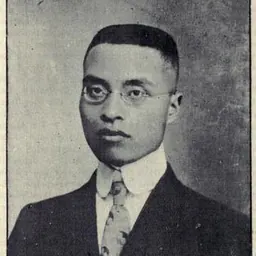
Dich Ingar Emil Roggen (26 April 1934 – 19 October 2023) was a Norwegian sociologist, and has been described as one of the European social informatics pioneers. His field of work is focused on the social aspects of virtual space, the social analysis of the Internet, the interaction between man and computer, and with the implications of the information technology usage communication in all fields of society. In 1996 he introduced the Sociology of the World Wide Web (web sociology) as a web science, based on the principles of social informatics.
Roggen earned the PhD (mag.art.) degree in sociology in 1970 with a dissertation on social time, where he developed a theory of Relative Social Time with tense logic as method. In 1974 he was appointed assistant professor in sociology at the University of Oslo, where he was employed until his retirement in 2004. Through a series of studies of health risk factors in Norwegian industries and social services in 1970-1990 he developed a system for detection, prediction and prevention of supermortality in workplaces.
From a global historical viewpoint Stein Bråten must be considered as the founder of the science of social informatics, which he originally called "socioinformatics" (Norwegian: sosioinformatikk). He defined it as the common field of psychology, sociology and informatics. (Stein Bråten: Dialogens vilkår i datasamfunnet. Universitetsforlaget 1983.) At the Department of Sociology, University of Oslo (UiO) Stein Bråten inspired a group of pioneers in this field, including Eivind Jahren, Arild Jansen and Ingar Roggen. When web sociology was introduced in 1996, the first World Wide Web Virtual Laboratoratory (known as Weblab at UiO) was established at the Department of Sociology, directed by Ingar Roggen in collaboration with Knut A. G. Hauge and Trond Enger. The Department offered degrees up to the master (Norwegian: Cand.Polit.) level in these fields until 2000. While Kristen Nygaard's Simula was the programming language shared by the early socioinformaticians, the web sociologists gathered around Bill Atkinson's HyperCard with the programming language HyperTalk, the forerunner of the WWW-languages. The late Rob Kling, who had been given a personal introduction by Stein Bråten to the ongoing research on social informatics at the University of Oslo in 1986, and also had noted the introduction of web sociology in January 1996, established the American branch of social informatics at Indiana University later that year.
Roggen died on 19 October 2023, at the age of 89.
Don’t just read it —
keep it.
Full-length biographies made to live with: read them, listen on the way to work, watch them tonight.
- E-book
- Audio
- Video
Instant download · yours to keep · every purchase keeps this site free
Important facts
People in Ingar Roggen's life
Named in this biography and alive at the same time



Related people
Same field, nearest in time




Contemporaries
People whose lives overlapped Ingar Roggen's





Frequently asked questions
Who was Ingar Roggen?
Spanish academic
When was Ingar Roggen born?
Ingar Roggen was born on 26 April 1934 in Valencia.
When did Ingar Roggen die?
Ingar Roggen died on 19 October 2023.
What was Ingar Roggen's occupation?
Ingar Roggen was a scientist.
What was Ingar Roggen known for?
Ingar Roggen was known for Social informatics.
What nationality was Ingar Roggen?
Ingar Roggen was Norwegian.
Sources & further reading
Cite this page
APA: Biography.guide. (2026). Ingar Roggen. https://biography.guide/ingar-roggen/
MLA: "Ingar Roggen." Biography.guide, https://biography.guide/ingar-roggen/.
Chicago: "Ingar Roggen." Biography.guide. https://biography.guide/ingar-roggen/.
Data last updated: 2026-09-20 · Spot an error? Report a correction.
Page generated 2026-09-27 05:21 UTC