About Inés de Bobadilla
Lived 1505 – 1543 (aged 37–38). Inés de Bobadilla was a Cuban politician.
Isabel de Bobadilla, or Inés de Bobadilla (c. 1505–1554) was the first female governor of Cuba from 1539 to 1543. She was the third child of Pedro de Arias and Isabel de Bobadilla y Peñalosa. Pedro de Arias was one of conquerors of Central America and also the governor of Nicaragua. Isabel's mother was niece to Beatriz de Bobadilla, a close acquaintance of Isabella I of Castile and served as the matriarch of two of the most powerful and richest families in Spain, the Bobadillas and Peñalosas. Isabel de Bobadilla (daughter) is also granddaughter to Francisco de Bobadilla, who was appointed to succeed Christopher Columbus as the second governor of the Indies in 1499.
Marriage and kinship Isabel de Bobadilla married the prominent explorer and conquistador Hernando de Soto in 1537, who was in charge of one of the first European expeditions into what is now the United States. In 1535–36, Isabel must have been in her late twenties or early thirties, which suggests that she may have been a widow or, in some way, seen as an undesirable mate because women from powerful families were typically married before they reached their late twenties. This document verifies the wealth of Bobadilla's family and also shows how Isabel's marriage to de Soto was a business arrangement between a very powerful Spanish family and an established conquistador.
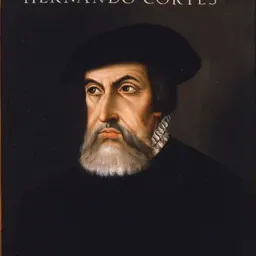
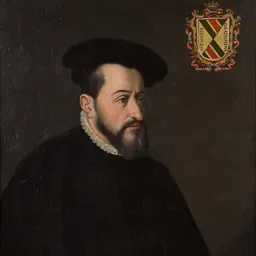
Hernando de Soto was named governor of Cuba and Adelantado de Florida, and both arrived in Cuba in 1538. Documents show that Isabel brought to Cuba her slaves, including three white slaves who were Christians, possibly baptized Moors. Within the first couple weeks of 1539, the first couple of Cuba purchased at least four plantations near the city of Havana, with the largest plantation at Cojimar on the coast just east of the bay. De Soto also appointed Juan de Rojas to serve as Bobadillas deputy in Havana and Francisco de Guzman to serve as her deputy in Santiago. Both of these men had served in this capacity before de Soto and Bobadilla arrived in Cuba. There were several political factions who were competing for power and control in Spain through exploration and control of unexplored territories. Among the important people involved in these "grand plans of exploration" were Álvar Núñez Cabeza de Vaca, Hernán Cortés, Pedro de Alvarado, Hernando de Soto, and Antonio de Mendoza. This illustrates how in the midst of the Spanish conquistadors, Isabel de Bobadilla was appointed to a highly politicized and powerful role.
Historians have conflicting opinions on why Isabel de Bobadilla was given the power to govern Cuba; Márquez Sterling indicates that Isabel was made governor only because de Soto did not want to stay in Cuba while surviving documents show that Isabel was the governor both de jure and de facto. De Soto also confirmed Isabel's abilities by giving her the power of attorney, naming her governor of the island of Cuba. In 16th century Spain, it was extremely rare that a woman would be appointed to a high office position. Isabel became the first female governor of Cuba and the first woman governor of a territory in the Western Hemisphere. The only other woman who served in high office in the 16th century Spanish colonies was Aldonza Villalobos Manrique of Venezuela (es), who inherited the governorship of the Margarita Province when her father, Marcelo Villalobas, died in 1526. Bobadilla was also acknowledged as governor by the King of Spain in letters directly sent to her. Ponce de Leon was a former partner of de Soto in his explorations of Peru and Nicaragua. The lawsuit recounts the controversies among the inheritors of De Soto and Francisco Vasquez de Coronado, Hernán Cortés, and the viceroy of Mexico; and also includes de Soto's Residencia, which was the investigation carried out in 1554 (after his death) to determine whether or not he had fulfilled all of his responsibilities outlined in his asiento.
Death and legend
Death In December 1543, Rodrigo Arangel brought the news to Doña Isabel in Havana of de Soto's death. After his death, Isabel auctioned off thousands of items belonging to her and her husband before she left Cuba for Spain. These items included everything from a ranch in Mayabeque Province, complete with native laborers, several hundred heads of cattle, and 500 yucca plants to Soto's house in Havana containing eighteen household slaves, a rosary made of thirty-two solid-gold beads, and a collar and cap made of black velvet. After auctioning off her and her husband's items she raised "more than four thousand pesos of gold," which she used to move back to Spain.
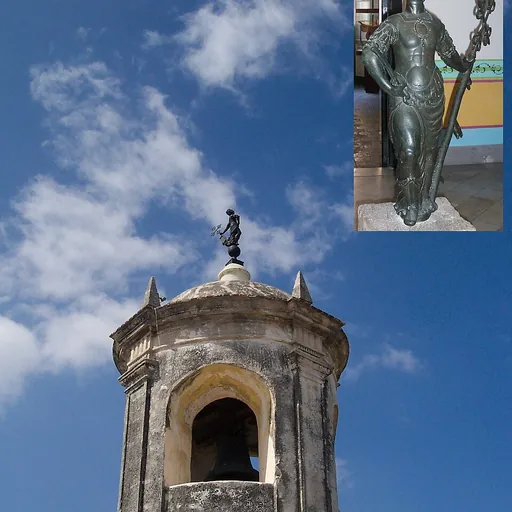
Legend La Giraldilla is a bronze wind statue of a woman who is surveying the horizon to her north and is located on top of the Castillo de la Real Fuerza in Old Havana, Cuba. The local Cuban people claim that this bronze statue is a depiction of Doña Isabel de Bobadilla and it is suggested that it was placed there to honor Inès de Bobadilla, who is said to have watched every day for the return of her husband.
Don’t just read it —
keep it.
Full-length biographies made to live with: read them, listen on the way to work, watch them tonight.
- E-book
- Audio
- Video
Instant download · yours to keep · every purchase keeps this site free
Important facts
Family & relationships
People in Inés de Bobadilla's life
Named in this biography and alive at the same time


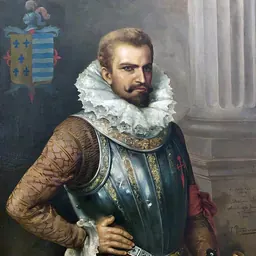
Related people
Same field, nearest in time
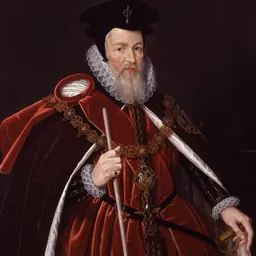
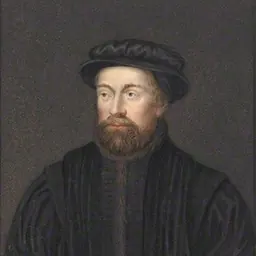

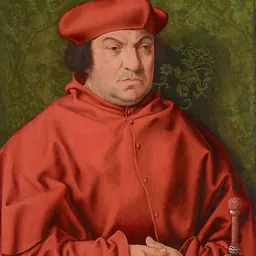

Contemporaries
People whose lives overlapped Inés de Bobadilla's





Frequently asked questions
Who was Inés de Bobadilla?
governor of Cuba, wife of Hernando de Soto
When was Inés de Bobadilla born?
Inés de Bobadilla was born in 1505 in Spain.
When did Inés de Bobadilla die?
Inés de Bobadilla died in 1543 in Spain.
What was Inés de Bobadilla's occupation?
Inés de Bobadilla was a politician.
What nationality was Inés de Bobadilla?
Inés de Bobadilla was Cuban.
Sources & further reading
· Wikipedia: Inés de Bobadilla
· DBpedia: Isabel de Bobadilla
Cite this page
APA: Biography.guide. (2026). Inés de Bobadilla. https://biography.guide/ines-de-bobadilla/
MLA: "Inés de Bobadilla." Biography.guide, https://biography.guide/ines-de-bobadilla/.
Chicago: "Inés de Bobadilla." Biography.guide. https://biography.guide/ines-de-bobadilla/.
Data last updated: 2026-09-23 · Spot an error? Report a correction.
Portrait: Wikimedia Commons · author & licence
Page generated 2026-09-27 05:05 UTC