
About Indira Nath
Lived 1938 – 2021 (aged 83). Indira Nath was an Indian immunologist, pathologist and scientist.
Indira Nath (14 January 1938 – 24 October 2021) was an Indian immunologist. Her major contribution in medical science deals with mechanisms underlying immune unresponsiveness in man, reactions and nerve damage in leprosy and a search for markers for viability of the Leprosy bacillus. Prof. Nath's fields of specialisations are Immunology, Pathology, Medical biotechnology, and communicable diseases.
Career Nath received her MBBS from All India Institute of Medical Sciences (AIIMS), New Delhi. She joined AIIMS as MD (pathology) after mandatory hospital training in the UK. During the 1970s, India has the world's largest number of leprosy patients of 4.5 million.
In 1970, Nath was in the UK with a Nuffield Fellowship. During this period, she came to specialise in immunology. She worked in the area of infectious diseases, particularly leprosy, with Professor John Turk at the Royal College of Surgeons and Dr. RJW Rees at the National Institute for Medical Research, London.
She saw the importance of getting experience abroad but did not want to add to the brain drain out of India. She and her husband made a pact to return to India after 3 years abroad. She returned to India in the early 1970s.
“Still, it was quite an exciting time to come back because you felt you could really play a role in building up research,” she said in an interview published on Nature Medicine in 2002. She has over 120 publications, invited reviews, opinion/comments on recent developments in international journals. Her discovery and her pioneering work are a significant step towards the development of treatment and vaccines for leprosy.
On Leprosy In a televised interview in the programme Eureka by India's state TV Doordashan, Indira said that the stigma around leprosy never affected her. She also mentions that the leprosy bug doesn't kill, calling it a clever bug that just wants to survive peacefully in the body. "So we should look at it kindly." She said: "Leprosy is in fact not infectious at all. In fact, cold, flu etc are much more infectious. The leprosy bug grows very slowly and it doesn't enter very quickly. The incubation period takes years." It is the nerve damage and the deformities you see on the body frightens patients, she adds.
Thanks to World Health Organization (WHO)'s introduction of Multi Drug Therapy introduced in India in 1982, the disease incidence in the country saw a reduction from a prevalence rate of 57.8/10,000 in 1983 to less than 1/10,000 by the end of 2005 when India declared to have reached the WHO target of elimination as a public health problem. Contributions of scientists like Indira have been instrumental in this progress.
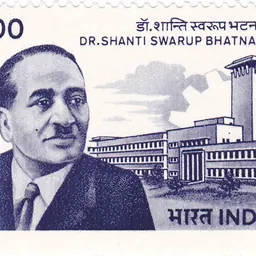
Awards Year of award or honour Name of award or honour Awarding organisation 2003 Silver Banner Tuscany, Italy 2003 Chevalier Ordre National du Merite Government of France 2002 Women in Science (Asia Pacific)award L'Oreal UNESCO 1999 Padmashri Government of India 1995 RD Birla Award 1995 Cochrane Research Award UK Government 1994 Basanti Devi Amir Chand Award ICMR 1990 Om Prakash Bhasin Award 1988 Clayton Memorial Lecture Award 1987 1st Nitya Anand Endowment Lecture Award INSA 1984 Kshanika Award ICMR 1983 Shanti Swaroop Bhatnagar Award Government of India 1981 JALMA Trust Oration ICMR
Honours She was elected Fellow of the National Academy of Sciences, India, Allahabad (1988), Indian Academy of Sciences, Bangalore (1990), Indian National Science Academy (INSA; 1992), National Academy of Medical Sciences (India) (1992), Royal College of Pathology (1992) and the Academy of Sciences for the Developing World (TWAS) (1995). She was Member, Scientific Advisory Committee to Cabinet, Foreign Secretary INSA (1995–97), Council Member (1992–94, 1998–2006) and Vice President (2001–03) of the National Academy of Sciences (India), Allahabad, and chairperson, Women Scientists Programme, Department of Science and technology, India (2003).
She was awarded the Padma Shri by Government of India in 1999, and L'Oréal-UNESCO Awards for Women in Science in 2002 and several other awards (see table above).
Don’t just read it —
keep it.
Full-length biographies made to live with: read them, listen on the way to work, watch them tonight.
- E-book
- Audio
- Video
Instant download · yours to keep · every purchase keeps this site free
Important facts
People in Indira Nath's life
Named in this biography and alive at the same time




Related people
Same field, nearest in time





Contemporaries
People whose lives overlapped Indira Nath's




Frequently asked questions
Who was Indira Nath?
Indian immunologist
When was Indira Nath born?
Indira Nath was born on 14 January 1938 in Guntur.
When did Indira Nath die?
Indira Nath died on 24 October 2021 in New Delhi.
What was Indira Nath's occupation?
Indira Nath was an immunologist, pathologist and scientist.
What nationality was Indira Nath?
Indira Nath was Indian.
Sources & further reading
Cite this page
APA: Biography.guide. (2026). Indira Nath. https://biography.guide/indira-nath/
MLA: "Indira Nath." Biography.guide, https://biography.guide/indira-nath/.
Chicago: "Indira Nath." Biography.guide. https://biography.guide/indira-nath/.
Data last updated: 2026-09-20 · Spot an error? Report a correction.
Page generated 2026-09-27 05:32 UTC