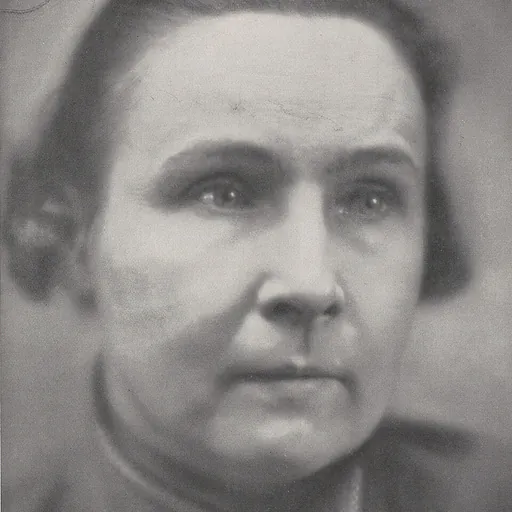
About Ina Seidel
Lived 1885 – 1974 (aged 89). Ina Seidel was a German writer, poet, librettist and lyric poetry.
Ina Seidel (15 September 1885 – 3 October 1974) was a German lyric poet and novelist. In 1930, she published the novel generally regarded as her most famous work, Das Wunschkind ("The Wished-For Child"); two years later she became the first woman admitted to the Prussian Academy of Arts. Her reputation has been shadowed by her enthusiastic support of Adolf Hitler and the Nazi Party. In 1933 she was one of 88 artists to swear the Vow of Total Loyalty ("Gelöbnis treuester Gefolgschaft") to Hitler. Seidel provided a celebratory poem on the occasion of the Führer's birthday in 1939 and was personally named in Joseph Goebbels' 1944 God-Graced List ("Gottbegnadeten List") of artists considered crucial to German culture. She has maintained some relevance in German popular culture despite a dramatic post-1945 decline in popularity.
Biography Family provenance Johanna Mathilde "Ina" Seidel was born in Halle, to Hermann Seidel and Emmy Loesevitz, the eldest of her parents' three children . Half a year later, the family relocated to Braunschweig for the next ten years. Her father, Seidel was a senior surgeon at the city's main hospital. His suicide in 1895 left his widow and her children to live in seriously reduced circumstances. After her father's suicide her mother took the children to live in Marburg in 1896 and then to Munich in 1897. As a teenager, around the turn of the century Ina Seidel became involved with the exuberant arts scene focused on Munich's Schwabing quarter. Writing became a prominent part of her life.
War years Like many of her social background in Germany and England, Ina Seidel's initial reaction to the outbreak of war in July 1914 was to welcome it. In Das Labyrinth (1922) Seidel told the life story of Georg Forster. During this period, she also became involved with the women's rights movement.
On 29 January 1932, Ina Seidel was admitted to membership of the Prussian Academy of Arts. She was only the second woman to receive this honour. Seidel's public support for the Hitler government would remain steady till the regime's collapse. In 1934 she moved out of Berlin and settled in Starnberg, a Bavarian lakeside resort town. In 1938, her second major novel, "Lennacker", was published.
Seidel's poem "Lichtdom" appeared in 1941 in the volume Anthologie dem Führer (Anthology to the Leader). The final two lines of her tribute read, "Hier stehn wir alle einig um den Einen, und dieser Eine ist des Volkes Herz" (loosely, "Here we all stand united around the one [man], and that one man comes from the heart of the people"). The poem was one she had originally presented to Adolf Hitler two years earlier on the occasion of the leader's (widely celebrated) fiftieth birthday.
After the war Postwar, Seidel immediately resigned her membership of the Prussian Academy of Arts. She faced strong criticism because of her record of strong public support for the Hitler government. However, within the American, British and French occupation zones her books soon returned to favor with the reading public, well into the 1960s. During the 1950s she produced two further novels with which she sought to rescue her reputation. In Das unverwesliche Erbe (1954; loosely, "The inalienable legacy") she expanded on the Christian aspects of her work. In her final novel, Michaela, she expressly accepted a share in the responsibility for National Socialism. In 1955 Ina Seidel was admitted to membership of the western Academy of Arts in West Berlin. Long before she died, in 1974, her principal works had been translated into a number of foreign languages. A less than flattering obituary in Die Zeit nevertheless described the report of her demise as one of those to which one's first reaction is surprise that the deceased had not already died many years earlier ("Ja, hat sie noch gelebt?").
Honours and memberships (selection)
Don’t just read it —
keep it.
Full-length biographies made to live with: read them, listen on the way to work, watch them tonight.
- E-book
- Audio
- Video
Instant download · yours to keep · every purchase keeps this site free
Important facts
People in Ina Seidel's life
Named in this biography and alive at the same time

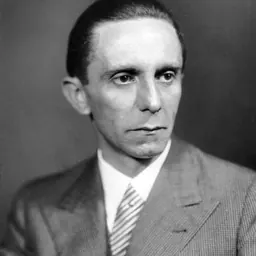
Related people
Same field, nearest in time





Contemporaries
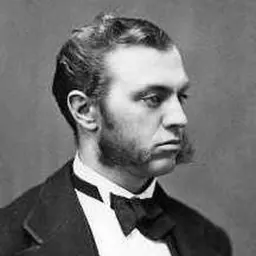
People whose lives overlapped Ina Seidel's





Frequently asked questions
Who was Ina Seidel?
German writer (1885-1974)
When was Ina Seidel born?
Ina Seidel was born on 15 September 1885 in Halle (Saale).
When did Ina Seidel die?
Ina Seidel died on 2 October 1974 in Schäftlarn.
What was Ina Seidel's occupation?
Ina Seidel was a writer, poet, librettist and lyric poetry.
What nationality was Ina Seidel?
Ina Seidel was German.
Sources & further reading
Cite this page
APA: Biography.guide. (2026). Ina Seidel. https://biography.guide/ina-seidel/
MLA: "Ina Seidel." Biography.guide, https://biography.guide/ina-seidel/.
Chicago: "Ina Seidel." Biography.guide. https://biography.guide/ina-seidel/.
Data last updated: 2026-09-23 · Spot an error? Report a correction.
Portrait: Wikimedia Commons · author & licence
Page generated 2026-09-27 05:07 UTC