
About Imtiaz Ali Taj
Lived 1900 – 1970 (aged 69). Imtiaz Ali Taj was a Pakistani playwright and writer.
Syed Imtiaz Ali Taj (; ; 1900–1970) was a Pakistani dramatist who wrote in the Urdu language.
Early life Born Syed Imtiaz Ali in Lahore (then in British India) on 13 October 1900, he was the son of Sayyid Mumtaz Ali (1860 – 1935), who was also known as Shams-ul-Ulema (Sun of the Scholars), in recognition of his pioneering contribution to Urdu drama. It tells the story of a beautiful slave girl named Anarkali (a courtesan) who falls in love with Prince Salim, but the romance ultimately leads to her tragic death. Anarkali (birth name was Nadira Begum or Sharf-un-Nissa) had come to Lahore from Iran with a traders' caravan as a young girl. The theatre activities in Bombay and Calcutta had a strong influence from the Urdu heartland group and Taj was one of the pioneers of this group. In the post-Hashr days, Taj was considered the best playwright of the time.
In the film titled Anarkali, produced in 1953 and based on Imtiaz's plot, the ending was tragic, similar to the ending in the drama. Later the play formed the basis for the highly successful Indian feature film Mughal-e-Azam, released in 1960. In this film produced by K. Asif, there was a twist to the story through a happy ending with Emperor Akbar finally being clement towards Anarkali. Though Imtiaz Ali Taj claimed that the film had no historical authenticity, he still gave snippets of historical evidence. In the preface to his book published in 1931 (designed to impress the middle class intelligentsia), he refers to Anarkali's existence during the historical period of Emperor Akbar (1556–1605) and his son Prince Salim (later Emperor Jahangir) as well as to the Persian couplet inscribed on the marble tomb in Agra dedicated to Anarkali by her lover Prince Salim who becomes Emperor Jahangir after the death of his father. The couplet reads "Ta Kiyamat shukr geom kardgate khwesh ra, Aah garman bez benaam roo-e yare khwesh ra", meaning: "Ah! could I behold the face of my love once more, I would give thanks to my God until the day of resurrection." In writing the love story of Anarkali, a love story with hidden meanings of the times, the author's intention, according to the critic Balwant Gargi, was "to represent tyrannical forms of patriarchal authority through the relationship between Crown Prince Saleem and his father 'Akbar the Great', which Taj portrays as domineering, and a 'complex father-son relationship' marked by 'filial love interlaced with hate'."
Magazine In 1918, Taj also published a monthly magazine called the Kahkashan from the publishing firm of Darul Ishat which he owned. Chakkan is said to be based on Jerome K. Jerome's character Uncle Podger. He was active in the theatre both as an actor and a director.
Radio Pakistan After Pakistan gained independence in 1947, he hosted the daily feature Pakistan Hamara Hai (Pakistan is ours) on Radio Pakistan. It continued as one of the most popular radio programmes for several years.
Publications Of Taj's many works, estimated at "more than 100 books", the most important publications in the Urdu language are: Anārkalī, about the love between Anārkalī, d. 1599, maid-servant, and Salīm, Mogul prince, later known as Jahangir, Emperor of Hindustan, 1569-1627 Sayyid Imtiyāz ʻAlī Tāj ke yak bābī ḍrāme, one-act plays based on social themes Urdū kā klāsīkī adab, anthology of classical Urdu plays, includes biographical sketches and critical appreciation of the playwrights Rail kahānīyān̲ : rail ke safar ke daurān pesh aanay vāle intihāʼī pur isrār vāqiʻāt Chacha Chhakkan, Chacha Chakkan is a very funny & famous character of Urdu literature Gharelū āzmūdah nusk̲h̲on̲ kā insāʼiklopīḍiyā, original herbal medicines which can be prepared at home Majlis-i Taraqqī-yi Adab, report on the foundation, early years and publications of the institution Qurt̤ubah kā qāz̤ī aur dusre yakbābī khel, plays Lailā, yā, Muạ̄ṣira-i-G̲h̲arnātā, Urdu translation from the English of Edward Bulwer-Lytton's Leila; or, The Siege of Granada
The books written about Taj include: Sayyid Imtiyāz ʻAlī Tāj : shak̲h̲ṣīyyat aur fann by Gauhar Naushāhī Sayyid Imtiyāz ʻAlī Tāj kī tams̲īl shināsī by Muḥammad Salīm Malik Imtiyāz : taḥqīq va tanqīd by Muḥammad Salīm Malik Tāj ke ḍarāme Anārkalī par ek naẓar by Rūh Afzā Raḥmān
Awards and recognition Pride of Performance Award in 1965 by the President of Pakistan. On 13 October 2001, Pakistan Post issued a commemorative postage stamp to honor him in its 'Men of Letters' series.
Don’t just read it —
keep it.
Full-length biographies made to live with: read them, listen on the way to work, watch them tonight.
- E-book
- Audio
- Video
Instant download · yours to keep · every purchase keeps this site free
Important facts
Family & relationships
People in Imtiaz Ali Taj's life
Named in this biography and alive at the same time



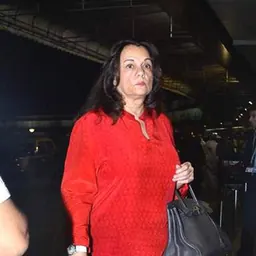
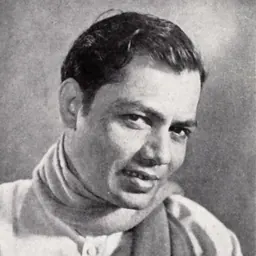

Related people
Same field, nearest in time
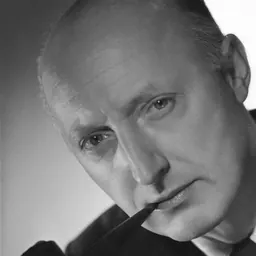



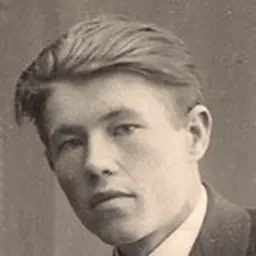

Contemporaries
People whose lives overlapped Imtiaz Ali Taj's



Frequently asked questions
Who was Imtiaz Ali Taj?
Pakistani dramatist
When was Imtiaz Ali Taj born?
Imtiaz Ali Taj was born on 13 October 1900 in Lahore.
When did Imtiaz Ali Taj die?
Imtiaz Ali Taj died on 19 April 1970 in Lahore.
What was Imtiaz Ali Taj's occupation?
Imtiaz Ali Taj was a playwright and writer.
What nationality was Imtiaz Ali Taj?
Imtiaz Ali Taj was Pakistani.
Sources & further reading
Cite this page
APA: Biography.guide. (2026). Imtiaz Ali Taj. https://biography.guide/imtiaz-ali-taj/
MLA: "Imtiaz Ali Taj." Biography.guide, https://biography.guide/imtiaz-ali-taj/.
Chicago: "Imtiaz Ali Taj." Biography.guide. https://biography.guide/imtiaz-ali-taj/.
Data last updated: 2026-09-20 · Spot an error? Report a correction.
Page generated 2026-09-27 05:14 UTC