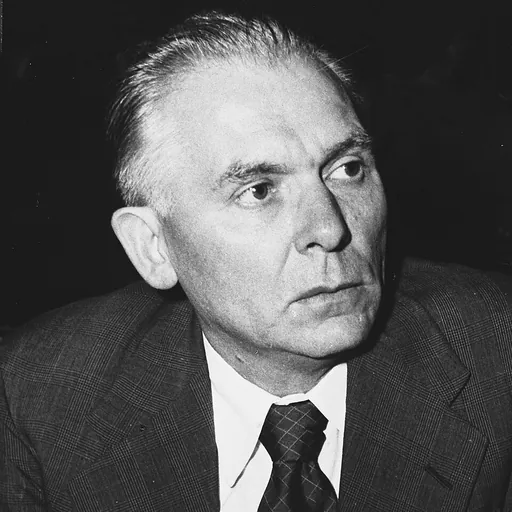
About Imre Horváth
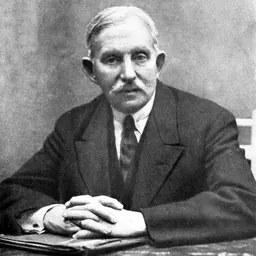
Lived 1901 – 1958 (aged 56). Imre Horváth was a Hungarian painter, mechanical engineer, diplomat and politician.
Imre Horváth (19 November 1901 – 2 February 1958) was a Hungarian politician, who served as Minister of Foreign Affairs twice: in 1956 and after the Hungarian Revolution of 1956 until his death. In 1918, he joined the Communist Party of Hungary (KMP). Despite his young age, he was one of the organizers of the labour movements. During the Hungarian Soviet Republic, he worked for the political police. After the fall of the communist system, he was interned. After prison, he made connections with the illegal communist party. He was again imprisoned, for 10 years. He was sent to the Soviet Union in a prisoner exchange. He finished his studies and worked as an engineer in Moscow. In 1933, he returned home, but was soon arrested. For 10 years, he was held in prison at Szeged.
Life He was born into a working-class family, the son of Mihály Horváth and Anna Troszler. He trained as a journeyman in a telephone factory. In 1916, he became one of the main organizers of the telephone factory journeyman strike. In 1918, he was a founding member of the Communist Party of Hungary. In 1919, he participated in the establishment of the Hungarian Soviet Republic, served as a political officer in the Red Army, and served in the political police alongside Ottó Korvin. After the fall of the proletarian dictatorship, he was interned, and after his release, in 1920, he helped reorganize the illegal KMP, for which he was arrested by the authorities in the spring of 1921 and sentenced to ten years in prison.
Released in 1922 in a prisoner exchange with the Soviet Union, he emigrated to Moscow. In 1926, he became a librarian at the Marx–Engels Institute, and in 1932, as a student at the Technical University, he earned a degree in mechanical engineering. On the orders of the Communist Party, he came to Hungary in 1933 to help the Communist Party, which had gone underground. He was arrested again in November 1934. He was imprisoned in the Csillag prison in Szeged until the German occupation of Hungary (March 1944).
In the spring of 1944, the Nazis sent him to Dachau. In 1945, he returned to Hungary. He worked for some embassies. From 1956 to 1958, he was foreign affairs minister, except during the 1956 Revolution when Imre Nagy held this position. Horváth was the leader of the Hungarian delegation to the United Nations after the revolution.
On 31 January 1958, he underwent surgery for gallstones and died at dawn on 3 February due to complications from the operation.
Don’t just read it —
keep it.
Full-length biographies made to live with: read them, listen on the way to work, watch them tonight.
- E-book
- Audio
- Video
Instant download · yours to keep · every purchase keeps this site free
Important facts
People in Imre Horváth's life
Named in this biography and alive at the same time
Related people
Same field, nearest in time


Contemporaries
People whose lives overlapped Imre Horváth's


Frequently asked questions
Who was Imre Horváth?
Hungarian politician (1901-1958)
When was Imre Horváth born?
Imre Horváth was born on 19 November 1901 in Budapest.
When did Imre Horváth die?
Imre Horváth died on 2 February 1958 in Budapest.
What was Imre Horváth's occupation?
Imre Horváth was a painter, mechanical engineer, diplomat and politician.
What nationality was Imre Horváth?
Imre Horváth was Hungarian.
Sources & further reading
Cite this page
APA: Biography.guide. (2026). Imre Horváth. https://biography.guide/imre-horvath/
MLA: "Imre Horváth." Biography.guide, https://biography.guide/imre-horvath/.
Chicago: "Imre Horváth." Biography.guide. https://biography.guide/imre-horvath/.
Data last updated: 2026-09-22 · Spot an error? Report a correction.
Portrait: Wikimedia Commons · author & licence
Page generated 2026-09-27 05:03 UTC