
About Ilya Starinov
Lived 1900 – 2000 (aged 100). Ilya Starinov was a Russian military personnel.
Colonel Ilya Grigoryevich Starinov (; – 18 November 2000) was a Soviet military officer, the most famous Soviet saboteur.
Career Starinov joined the Red Army in 1918 and participated in the Russian Civil War. In 1921 he attended a military college for railway troops and served with the Soviet railway troops in the 1920s. He joined the staff of the Ukrainian Military District in 1930 and took part in planning partisan warfare. He is known as the "grandfather of the Russian Spetsnaz".
The Russian military theorist Mikhail Svechnikov, executed by Stalin in 1938, had previously proposed the use of very well-trained forces in unequal combat situations. This idea was realised by Ilya Starinov. The two men thought similarly about the use of such forces.
The most famous sabotage operation of Colonel Ilya Starinov is the mining of the most important strategic objects with powerful high–explosive radio mines R-10 before the surrender of Kharkov by Soviet troops in the autumn of 1941, and then at the right time their remote detonation from Voronezh (distance from Kharkov is almost 300 km) by encoded radio signal.
On 23 February 1942, during one of the "Ice campaigns", Colonel Starinov's sabotage group under the leadership of foreman Maxim Repin seized the captured "atomic notebook" of the officer they killed. The murdered German turned out to be nuclear physicist Hans Vandervelde. Starinov handed the notebook to the office of the Commissioner of the USSR State Defense Committee for Science, Professor Sergey Kaftanov. The notebook contained formulas for the nuclear transformations of uranium and information on the development of the atomic bomb by the Germans. Ilya Starinov first openly described the operation of seizing the atomic notebook in January 1975 in a letter to the Rostov physicist Ivan Builo, with whom he was familiar from his work in the experimental workshops of the Rostov State University: Sergey Vasilyevich wrote that it was this "atomic notebook", along with the warning of physicist George Flerov, that prompted him and academician Abram Ioffe to contact the State Defense Committee with a letter about the urgent need to create a scientific center on nuclear weapons problems in the USSR. Kaftanov said that at the meeting of the State Defense Committee, where this proposal was considered, some key departments, including Gosplan, were against it. However, Joseph Stalin walked, walked and said: "We must do it." The captured "atomic notebook" captured by Colonel Starinov's saboteurs became a "trigger hook" to the creation of atomic weapons in the USSR. Due to this, by the time Soviet intelligence received the drawings of the "Fat Man" bomb dropped on Nagasaki, the USSR had already created its own nuclear industry. This reduced the production time of the atomic bomb in the USSR to no less than two years.
Honours and awards Two Orders of Lenin Order of the October Revolution Five Orders of the Red Banner Order of the Patriotic War 2nd class Order of Friendship of Peoples (Russian Federation) Order of Courage (Russian Federation) Medal of Zhukov (Russian Federation) Medal "Partisan of the Patriotic War" 1st class Medal "For Distinction in Guarding the State Border of the USSR" Medal "For the Defence of Stalingrad" Medal "For the Defence of Moscow" Medal "For the Defence of the Caucasus" Medal "For the Victory over Germany in the Great Patriotic War 1941–1945" Jubilee Medal "Twenty Years of Victory in the Great Patriotic War 1941-1945" Jubilee Medal "Thirty Years of Victory in the Great Patriotic War 1941-1945" Jubilee Medal "Forty Years of Victory in the Great Patriotic War 1941-1945" Medal "For Valiant Labour in the Great Patriotic War 1941-1945" Medal "Veteran of the Armed Forces of the USSR" Jubilee Medal "XX Years of the Workers' and Peasants' Red Army" Jubilee Medal "30 Years of the Soviet Army and Navy" Jubilee Medal "40 Years of the Armed Forces of the USSR" Jubilee Medal "50 Years of the Armed Forces of the USSR" Jubilee Medal "60 Years of the Armed Forces of the USSR" Jubilee Medal "70 Years of the Armed Forces of the USSR" Medal "In Commemoration of the 800th Anniversary of Moscow" Medal "In Commemoration of the 1500th Anniversary of Kiev" Jubilee Medal "50 Years of Victory in the Great Patriotic War 1941-1945" (Russian Federation)
Don’t just read it —
keep it.
Full-length biographies made to live with: read them, listen on the way to work, watch them tonight.
- E-book
- Audio
- Video
Instant download · yours to keep · every purchase keeps this site free
Important facts
People in Ilya Starinov's life
Named in this biography and alive at the same time


Related people
Same field, nearest in time

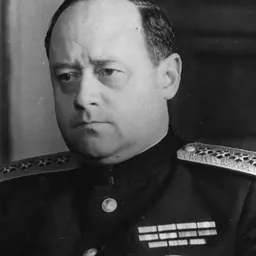


Contemporaries
People whose lives overlapped Ilya Starinov's



Frequently asked questions
Who was Ilya Starinov?
Soviet partisan (1900–2000)
When was Ilya Starinov born?
Ilya Starinov was born on 20 July 1900 in Voinovo.
When did Ilya Starinov die?
Ilya Starinov died on 18 November 2000 in Moscow.
What was Ilya Starinov's occupation?
Ilya Starinov was a military personnel.
What nationality was Ilya Starinov?
Ilya Starinov was Russian.
Sources & further reading
Cite this page
APA: Biography.guide. (2026). Ilya Starinov. https://biography.guide/ilya-starinov/
MLA: "Ilya Starinov." Biography.guide, https://biography.guide/ilya-starinov/.
Chicago: "Ilya Starinov." Biography.guide. https://biography.guide/ilya-starinov/.
Data last updated: 2026-09-25 · Spot an error? Report a correction.
Page generated 2026-09-27 05:13 UTC