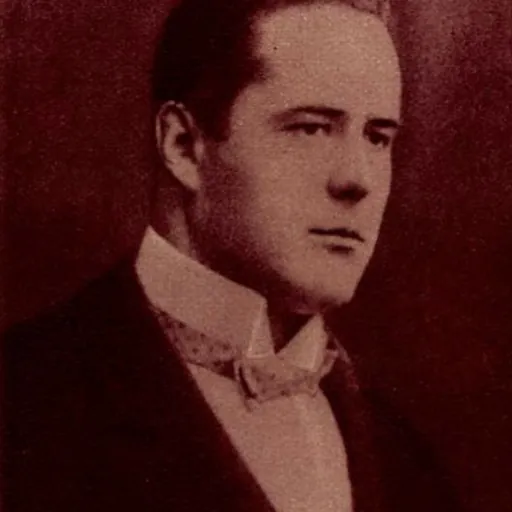
Ilie Cătărău
Romanian political adventurer
About Ilie Cătărău
Lived 1888 – 1952 (aged 63–64). Ilie Cătărău was a Romanian drug trafficker, amateur wrestler, military officer, military personnel, spy and adventurer.
Ilie V. Cătărău (, reportedly born Katarov, last name also Cătărău-Orhei; 21 July 1888 – 1955) was a Bessarabian-born political adventurer, soldier and spy, who spent parts of his life in the Kingdom of Romania. A mysterious figure, he is widely held to have been the main perpetrator of two bomb attacks, which sought to exacerbate tensions between Romania and Austria-Hungary in the buildup to World War I. Beyond his cover as a refugee from the Russian Empire, and his public commitment to Romanian nationalism, Cătărău was a double agent, working for both Russian and Romanian interests; he may also have been linked to the Black Hundreds. His terrorist actions, and especially the letter bomb which he sent to the Hungarian Catholic Bishopric in Debrecen, occurred shortly before, and are probably connected with, the Sarajevo Assassination.
Cătărău managed to flee prosecution, settling in Egypt (which deported him), and later in China. He continued to make return trips to Romania, which finally arrested him upon entering the war—though he managed to escape, he remained on Romanian soil, only leaving on return visits to the Russian Republic. By 1917, as leader of the "Romanian Nationalist-Revolutionary Party", Cătărău was formally committed to anarchism and communism, allying himself with Bessarabia's Bolshevik insurgents. Profiting from favorable circumstances, and nominally serving the anti-Bolshevik Moldavian Democratic Republic, he became commander of its 1st Moldavian Regiment in late 1917. In short time, his position and his application of a communist program eroded the Republic's prestige, and his soldiers began openly threatening the Bessarabian government. Cătărău was deposed and arrested by Military Director Gherman Pântea and a unit of Amur Cossacks, and sent into exile.
Cătărău reportedly became a habitual murderer and robber, playing both sides in the Russian Civil War. Briefly emerging as a drill instructor for the White movement in Vladivostok, he made efforts to settle in the Empire of Japan, but was chased out for engaging in fraudulent business deals. After creating scandal in the Shanghai International Settlement, he spent the early interwar mainly on the French and Italian Rivieras, finding himself at odds with police. After more adventures, which took him as far afield as Polynesia, Cătărău was presumed dead; in 1937, Romanian media circulated a farewell letter he had sent from San Francisco. During World War II, he was reportedly in Transnistria Governorate, having been chased into hiding by Governor Pântea. He only returned to history in the 1940s, a conjectural ally of the Soviet Union and the Romanian communist regime. He became critical of the latter, and was once arrested by its secret police (the Securitate). In old age, he retreated from political affairs and became a Romanian Orthodox monk, serving a community in Transylvania.
Early years
Cătărău's origins and early life are shrouded in mystery. Though credited in some biographical records as a native of Orhei (Orgeyev), he was in fact from the nearby village of Marcăuți; both places were at the time Russia's Bessarabia Governorate (Orgeyevsky Uyezd). His birth certificate is presumed lost, but a sworn testimony he provided in 1948 gives his birth date as 21 July 1888, naming his parents as Vasile and Alexandra. or a landless peasant, is sometimes credited as "Vasile Constantin". According to the Bessarabian activist Anton Crihan, Ilie had a brother, Vasile, who in 1905 was working at the Romanian consulate in Odessa; by other accounts, he also had two sisters, who lived in the same city.
Romanian sources traditionally claim that Cătărău was not a member of the ethnic Romanian community, but rather a Bessarabian Bulgarian. Author N. Porsenna, who met him when they were both in their twenties, contrarily surmises that Cătărău stood as "a fine example of the Romanian race—for he was indeed unquestionably Romanian, and not a Moskal"; he refers to Cătărău's imposing stature of almost 2 meters (6.5 feet) and athletic build. Porsenna also notes that Cătărău was strongly acculturated into the "Russian spirit", being "one-third of a decent man, one-third of a nihilist, and the remaining third a prankster." Later accounts suggest that he was merely a cavalry soldier. A polyglot and visibly cultured man, he once claimed to have still been studying theology at a Russian college.
In his final period in Russia's service, Cătărău was recorded at the 1st Cavalry Regiment in Grodno. At some point before 18 March 1910, he crossed the Russian border into the Kingdom of Romania, at Dorohoi, After short stays in Botoșani and Iași, After obtaining his visa, he became involved with the cell of Bessarabian exiles, including anarchist Zamfir Arbore and his Milcovul Society. Cătărău made no secret of his being protected by the Siguranța, and intimated that he could impose himself on other Bessarabian exiles, to the point of raping a female colleague who had rejected his advances. Such episodes earned Cătărău the trust of his party colleagues. Through Iorga, he even gained access to Crown Prince Carol. He is thus known to have visited Serbia during the First Balkan War, officially acting as a press correspondent for the Romanian newspaper Epoca. or Bulgarian The two men probably met each other while Kiriloff was trying to set up a business in haulage.
Cătărău and Kiriloff were suspected of attacking symbols of Hungarian identity, Austria-Hungary being Romania's rival neighbor. The two are credited as responsible for dynamiting the Árpád statue, a Hungarian monument on Tâmpa Hill, which heavily damaged the structure in September 1913. They were assisted in this effort by some local Romanian nationalists. In a 1941 interview, one of these men was holding on to the belief that Cătărău had been a traveling salesman, and that he was guided in his political action by his "warm Romanian heart"—namely, that he wanted to protest for Romanian ethnic rights in Transylvania. An investigation found that Cătărău and his accomplice had crossed into Transylvania several times using false papers, He had told his Romanian contacts that the Okhrana had actively sought to prevent him from reaching Transylvania, and that he had escaped arrest by its agents by going into hiding—first at Bender, then in the Danube Delta—before heading back into Austria-Hungary, by way of Bucharest and Temesvár. After it emerged that Árpád's severed head had landed in an amusement park, or "house of illusions," a liberal Hungarian newspaper covered this turn of events as reflecting the status of Hungarian nationalism in Romanian-inhabited Transylvania. They managed to kill six people (including a vicar, a secretary, a valet, and the valet's wife), with Bishop István Miklósy escaping unharmed. Other reports claim that he traveled to Hungary-proper (using the fake name "Avramescu"), and that he then mailed his package through Magyar Posta.
Manhunt and cover-up allegations
A manhunt followed these attacks: Cătărău was identified as a suspect for his lavish spending of money, despite being officially unemployed; Romanian Police identified the manufacturer of a seal, which Cătărău had used to stamp his letter, as well as the person who had sold him a panther's pelt, which had been used in wrapping the bomb. Romanian journalist Em C. Grigoraș, reporting the claims of unnamed sources among the Siguranța staff, suggests that Cătărău's getaway car was provided by Internal Affairs, and that intelligence officials had pretended not to understand the queries sent in from Austria-Hungary. Over 10,000 lei were said to have been spent on telegrams between police stations during the time it took for Cătărău and Kiriloff to drive out of Bucharest and make themselves lost in Ploiești. Some speculated that they then left for a Danube port, either Brăila or Galați, or that they made their way to the Bessarabian border. in Skopje, or at Herceg Novi. The Skopje sighting proved to be a hoax, pulled on Hungarian detectives by a Serbian police officer, who had collected the large reward and had swiftly disappeared.
Coprian allegedly informed other accomplices that Cătărău and Kiriloff had sailed out of Constanța at night, disguised as part of a regular crew; the ship captain objected to their presence, and wanted them "thrown into the sea" at Istanbul, but the other sailors stood by the escapees, and they continued their journey unharmed. One investigation, carried in 1918 by journalist L. Iliescu, found that Cătărău had been taken to Alexandria in Egypt on the NMS Regele Carol, and was under the personal protection of Commodore Stoianovici. The local Romanian consulate refused to welcome him there, but covered most of his expenses in return for an affidavit, which included details on his being a Siguranța operative; the latter institution had reportedly obtained him a Bulgarian passport. Cătărău spent some time in Egypt, but its government reportedly expelled him, citing to his reputation as a spy "for two opposing countries." Years later, skippers Eugeniu Botez and Nicolae Ionescu-Johnson noted with pride that they had helped Cătărău flee aboard that ship. In her 1935 memoir, the unidentified female accomplice reports that a man from the Black Hundreds had personally arranged Cătărău and Kiriloff's escape from Bucharest, and that a "great power" protected them as they sailed out of Romania. Other sections of the Romanian public opinion were less adamant that Cătărău and Kiriloff were the guilty parties, placing the blame directly on the Russian Empire (accused of wanting to encourage a conflict between Romanians and Hungarians) or, contrarily, on Transylvanian Rusyns incited by Bobrinsky. Grigoraș claims that it was Czernin himself who buried the affair: Archduke Franz Ferdinand ordered his diplomat not to answer in kind to the warmongers. Grigoraș argues that, because of this disengagement, the Entente's hawks changed their tactic and organized Franz Ferdinand's own assassination at Sarajevo. Russian records claim that he was asked to leave, and allowed to settle for a while in the Kingdom of Italy. With his unexpected returns to still-neutral Romania, he made himself an official nuisance. He was again arrested by the Romanian authorities and secretly detained in Pângărați. He spent his time there performing scientific experiments on small animals, as well as acts of charity for the rural community. Instead, the authorities negotiated with Russia to accept him, hoping that he would be sent to the Caucasian front.
This political enterprise counted among its recruits the Bessarabian Simeon G. Murafa, Porsenna, who read one of his manifestos, noted that it urged Romanians to "revolt and join their Russian brethren in an uprising for the sake of liberty". However, the Russian Republic considered Cătărău a Romanian separatist, and arrested him as such. He was sent to the stockade in Chișinău, where he met and closely befriended communist Grigory Kotovsky.
Chișinău soldiers' soviet
In late 1917, anti-Bolshevik forces were setting up a Moldavian Democratic Republic with its capital in Chișinău. Cătărău presented himself as a supporter of the new regime, and was even a guest speaker at the first session of Sfatul Țării (its legislative assembly). Military historian Vitalie Ciobanu argues that some of the Republic's main problems of maintaining authority stemmed from Cătărău's activity in Chișinău and from the parallel appointment of Stabskapitän Anatol Popa as head of the Bălți garrison.
Cătărău is reported to have engaged in intrigues during the legislative election of 1917: he initially proposed Vladimir Cristi as a soldiers' deputy, and managed to obtain him a seat, but immediately after informed his loyalists that Cristi was a "boyar", and therefore that Sfatul itself was a tool of the oligarchy. In this context, he is also said to have advanced himself to the rank of colonel.
The conflict between the Moldavian Republic's Military Director Gherman Pântea and the city garrison flared in late December 1917. Cătărău and his soldiers refused to swear allegiance to God and the Republic and participate in a loyalist parade. Instead they announced their own parade on 1 January to celebrate the notions of freedom and proletarian internationalism. A quarter of Cătărău's soldiers disobeyed his orders and represented the Regiment in the loyalist parade. and allegedly threatened to blow up Sfatul Țării Palace. Pântea took a preemptive measure. He co-opted Filip Levenzon, informing him about the improbability of Cătărău's schemes. As noted by Călugăru: "The Bessarabians had to invest a lot of effort into isolating this dangerous figure from his lieutenants, so that they could then neutralize him." Crihan provides a diverging account, namely that Levenzon only supported the move because he and Cătărău were fighting over the same woman. The latter was "bought off" into getting Cătărău drunk, accounting for his successful capture. As far as the Bessarabian authorities cared to explain, the "foreign state" alluded to here was not Russia, but Romania; Levenzon confiscated Cătărău's Romanian passport. However, as argued by Patria, the Inculeț administration was bent on killing him with discretion. Cătărău, it argued, was able to talk his captors into sparing his life. To the consternation of Bessarabian officials, Poplavko was satisfied with that answer, ordering Cătărău's release. In April 1918, the Hungarian paper Az Est purported that Cătărău had been "shot dead by a Romanian man, out in the open streets of Chișinău. The reasons for this incident are not understood in Bucharest, since Cătărău was the advocate of Romanian interests in Chișinău." In mid-1918, a Progressive Conservative government took power in Romania, and signed a peace with the Central Powers; during that interval of co-operation between Romania and Austria-Hungary, the Parliament of Romania opened an inquiry into the Debrecen case. Cătărău's name was held by the government newspapers as a negative example of what Ententist politics had meant. As a pro-Entente daily, Mișcarea retorted: "Let's remind them that [Cătărău] is by now a member of the Bolshevik government in Moscow, his work carried out under the authority of Mr Hellferich and Rakovski."
In July 1918, Gazeta Bucureștilor published a letter supposedly sent by Cătărău, in which he described himself as a "mere instrument, back when I was carrying out that strike on Debrecen", adding: "In fact, Bolshevik gazettes have been shedding light on [my] crime." The Soviets were at the time publishing embarrassing selections from the Russian Empire's diplomatic correspondence, allegedly including letters that openly discussed the Debrecen affair. Around the time of Bessarabia's union with Romania, Cătărău had actually left Europe. Characterized by Patria as "handsome and intelligent", he had mastered as many as eight languages and, according to one account, sailed to England, then to the Far East, and began trafficking in opium. Another version places the incident in Japanese-occupied Siberia. According to this source, Cătărău was only freed from Yokohama Prison when a Romanian official intervened in his favor. and investigated as such by the Paris Police Prefecture. As a Bessarabian member of the delegation, Ion Pelivan reports having met Cătărău in that context, rejecting his plea for a return visa to Romania. According to Pelivan, Cătărău resented the rejection, and took his revenge by throwing a chemical grenade into the Pelivans' apartment, nearly injuring his wife.
The conference ensured international recognition for the union of Transylvania with Romania, which established a Transylvanian Hungarian minority within the borders of Greater Romania. In early 1920, Cătărău was jailed in Nice for stealing jewels from his American fiancée, Sentenced to 18 months in confinement,
Rosetti viewed Cătărău as a "Bolshevist adventurer" and a byproduct "of the awful slaughter" that was World War I. As Cătărău's former sponsor, Nicolae Iorga was perplexed by echoes of his participation in "the Bolshevik resistance". In his 1930s autobiography, he briefly mentions Cătărău as "my bizarre former student and 'political supporter', a combatant in the Fălticeni elections". Other supporters of Greater Romania were also in the process of reconsidering Cătărău's activity, glorifying his early attack on Hungarian nationalism. Writing in April 1920, the Romanian physician and nationalist militant Vasile Bianu placed Cătărău in "the vanguard of the holy war to reunite the [Romanian] nation", calling him "a guiding light" of patriotic feeling. In its Socialismul newspaper, the Romanian Communist Party rejoiced that the Bolsheviks had opened up the archives, since these had exposed the role of Romanian cabinets in fomenting war. In that context, the Romanian communists labeled Cătărău an "adventurer", whose only real function was that of a nationalist pawn. When, in 1935, Naum Nartsov produced a Soviet account of wartime events, he described Cătărău as an "international spy", and identified him as an inspiration behind the Moldavian Democratic Republic, itself condemned as a "bourgeois nationalist" entity.
After 1925, Cătărău was spotted in the Republic of China, a gunrunner for the National Revolutionary Army in its Northern Expedition. He is said to have approached several Romanian expatriates, conning them out of their money. he was somewhere in Alaska in 1930.
Cătărău had indeed survived his hospitalization, and lived throughout World War II. He was in Romania, incognito, around the time of the Munich Agreement (September 1938), speaking to his friends about his adversity toward Nazi Germany. He also began drawing up plans for assassinating Adolf Hitler in Memel. In March 1939, he was spotted and photographed walking about Bucharest. He was now denying any involvement in the Debrecen bombing, only claiming responsibility for the victimless Tâmpa attack; For a while, Romanian rule was extended into Transnistria Governorate, which included Odessa; Cătărău's old nemesis, Gherman Pântea, took over as governor. Cătărău was in the city, but went into hiding; he later claimed that Pântea was responsible for various war crimes, including the killing of Cătărău's two sisters. By one interpretation, Groza wanted to reactivate Cătărău as a Securitate spy, but Cătărău died before this could happen.
Don’t just read it —
keep it.
Full-length biographies made to live with: read them, listen on the way to work, watch them tonight.
- E-book
- Audio
- Video
Instant download · yours to keep · every purchase keeps this site free
Important facts
People in Ilie Cătărău's life
Named in this biography and alive at the same time

Related people
Same field, nearest in time





Contemporaries
People whose lives overlapped Ilie Cătărău's



Frequently asked questions
Who was Ilie Cătărău?
Romanian political adventurer
When was Ilie Cătărău born?
Ilie Cătărău was born in 1888 in Orhei.
When did Ilie Cătărău die?
Ilie Cătărău died in 1952 in Transylvania.
What was Ilie Cătărău's occupation?
Ilie Cătărău was a drug trafficker, amateur wrestler, military officer, military personnel, spy and adventurer.
What nationality was Ilie Cătărău?
Ilie Cătărău was Romanian.
Sources & further reading
Cite this page
APA: Biography.guide. (2026). Ilie Cătărău. https://biography.guide/ilie-catarau/
MLA: "Ilie Cătărău." Biography.guide, https://biography.guide/ilie-catarau/.
Chicago: "Ilie Cătărău." Biography.guide. https://biography.guide/ilie-catarau/.
Data last updated: 2026-09-24 · Spot an error? Report a correction.
Portrait: Wikimedia Commons · author & licence
Page generated 2026-09-27 05:09 UTC