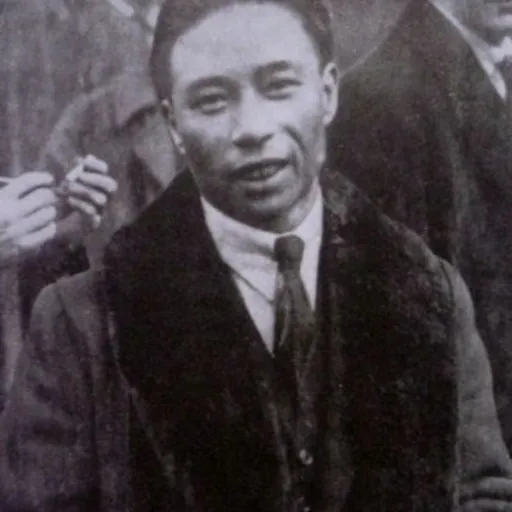
About Brilliant Chang
Born 1886. Brilliant Chang was a drug trafficker and businessperson.
Brilliant (Billy) Chang (real name Chan Nan; born c. 1886, The British popular press portrayed him as an international drug mastermind and the "Dope King" of London. He was part of a wealthy mercantile family with interests in Hong Kong and Shanghai. He was highly educated, spoke several languages and had studied chemistry. He traveled to England in 1913 as a student and opened a restaurant in Birmingham. Chang's Chinese name was loosely translated as Brilliant Chang and Brilliant was then shortened to Billy.
Drug dealing
It is unclear exactly when Chang began to deal in drugs. It may have been in Birmingham but by the time he was in London he was dealing in cocaine, heroin and opium, and to a lesser extent hashish and other substances. The sale and use of these substances had been legal in Britain up to 1916 and there was an established market in London for them. According to Marek Kohn, Chang was introduced to the "dope scene" by Jamaican musician Edgar Manning who had arrived in London in 1916.
Newspaper reports mention that Chang dealt exclusively with young women. One of his methods was to have a waiter pass a note to pretty girls in his restaurants saying that he admired them and would like to have a quiet dinner with them sometime. Many then went on to become his customers, and some his lovers. His easy manners, charisma and exotic appeal meant that he was able to build up a large female clientele that was close to a fan club. In order to distance himself from the actual transaction, the goods and money were exchanged over a high wall so that the parties were invisible to each other.
Death of Freda Kempton Freda Eileen Kempton, age 21, was a "dance instructress" (hostess) who died of an overdose of cocaine about midday on 6 March 1922 at her rooms at Westbourne Grove, Bayswater, London. She danced with partners for money, helping to keep the bar where she worked busy, often working until the early morning and apparently with endless energy which was fuelled by the drugs she took. of the inquest into Kempton's death by her friend Rose Heinberg, Kempton was at the New Court Club in Percy Street with Heinberg, when a man called "Micky" told her that a Chinese man named "Billy" wanted to meet her. The four of them went by taxi to a Chinese restaurant in Regent Street. There Billy asked her to come outside and according to Heinberg, when Kempton returned her mouth was twitching. Heinberg asked if Kempton was eating something to which Kempton replied "I have been drugged ... I know I have been drugged, because a year ago, when I used to take drugs, my mouth used to twitch. I used to have to eat chewing-gum to make people think I was eating sweets."
This time Hennessy and Chang were both represented by lawyers. Hennessy did not enter the witness box but his lawyer said that his message to Heinberg had been to make no statement "except to the police". Chang in evidence described himself as a "general merchant and Admiralty contractor" with an office in Leadenhall Street. He stated that he imported silks, tea and other goods but not cocaine. He denied giving Kempton any drugs, bottles or powders but acknowledged that he had given her sums of money on several occasions. He said that he had never seen cocaine and denied that he knew what the word "dope" meant. He denied discussing with Kempton whether you could kill yourself with cocaine. He acknowledged that he had seen people smoke opium. Asked what he had done after learning of Kempton's death, Chang replied that he had gone to the Forty Three Club to dance.
In May 1922, just two months after Kempton's death, the film Cocaine was released which told the tale of a girl from the country who becomes a cocaine addict in London, helped by a Chinese dealer. Publicity from the distributors reported that they had been "snowed under" with interest and promised "If you're down in the mouth, dull, depressed and feel like nothing on earth, take a dose of COCAINE It will 'buck up' your box-office receipts. It will drive away depression."
In 1925, Sax Rohmer's Yellow Shadows was published which featured a Chinese villain by the name of Burma Chang, which it has been suggested was based on Brilliant Chang.
Limehouse
The police were convinced that Chang was running a large operation and several staff from his restaurant were found selling drugs and convicted. He sold his interest in the Regent Street restaurant and opened the Palm Court Club in nearby Gerrard Street, in what is now London's Chinatown, but which then was just another London street. Police interest continued, however, and after a number of raids, Chang was forced to move to Limehouse in October 1923, on the middle floor of a three-story house, with just a kitchen and bedroom at his disposal. The bedroom was decorated luxuriously with a blue and silver design featuring dragons. Chang's customers were far more conspicuous in Limehouse, however, than they had been in the West End and a police detective noted the stream of glamorous young ladies who visited him. Chang's home was raided twice, and on one of those occasions, the police found two chorus girls in his bed. near Tottenham Court Road. On 23 February 1924, police saw Payne in the Commercial Tavern, Pennyfields, with packets of an unknown substance. She was taken to the police station, searched, and found to have cocaine hidden in the lining of her coat. There were marks on her body indicating the use of a hypodermic syringe. Payne made a statement to the police, and Chang's home was searched at 11:30 pm the same day. A single bag of cocaine was found behind a loose board in a cupboard. Chang subsequently was arrested and charged with possessing and supplying cocaine. Payne already had been sentenced to three months' hard labour for possession of cocaine and was serving her sentence at the time of Chang's trial. According to The Times, Carlin had started his career in 1890 in Limehouse, "at a time when the growth of the Chinese colony in the district gave great anxiety to the authorities, for quite apart from the prevalence of opium smoking there was the problem of the association of white girls with the Chinese."
The popular press had a field day with the story, employing crude racial stereotypes and presenting Chang as the head of an international drug operation that recruited unwitting girls to act as agents, got them to smuggle drugs from Paris to London in their underwear, and organised wild orgies. The image was repeated in coverage across the U.S. The Payne case, however, was the only offence for which Chang was convicted in Britain. There was a fall in the number of drug convictions in Britain in the years following Chang's jailing, but that may be attributable to increased police activity following national publicity about the issue. It seems most likely that Chang's operation was limited to supplying young women he met in London and that he was not the international drug king that he was made out to be.
Later life Chang was deported from Britain in 1925, being taken straight from prison at Wormwood Scrubs by taxi to Fenchurch Street Station and then by train to the Royal Albert Dock from where he left by sea. There were persistent stories in the popular press that he had returned, or that he was operating in France, Belgium or Switzerland. In 1927, he was described as having risen to become the "Dope Emperor of Europe". In 1928, he was said to have been forced by his enemies to flee to Hong Kong where the French police had found him, blind through excessive drug use.
Don’t just read it —
keep it.
Full-length biographies made to live with: read them, listen on the way to work, watch them tonight.
- E-book
- Audio
- Video
Instant download · yours to keep · every purchase keeps this site free
Important facts
Related people
Same field, nearest in time





Frequently asked questions
Who was Brilliant Chang?
Chinese restaurateur and drug dealer
When was Brilliant Chang born?
Brilliant Chang was born in 1886 in Guangzhou.
What was Brilliant Chang's occupation?
Brilliant Chang was a drug trafficker and businessperson.
Sources & further reading
Cite this page
APA: Biography.guide. (2026). Brilliant Chang. https://biography.guide/brilliant-chang/
MLA: "Brilliant Chang." Biography.guide, https://biography.guide/brilliant-chang/.
Chicago: "Brilliant Chang." Biography.guide. https://biography.guide/brilliant-chang/.
Data last updated: 2026-09-23 · Spot an error? Report a correction.
Portrait: Wikimedia Commons · author & licence
Page generated 2026-09-27 05:07 UTC