
About Ilia II of Georgia
Lived 1933 – 2026 (aged 93). Ilia II of Georgia was a Russian and Georgian patriarch, religious leader, bishop, catholicos-Patriarch and theologian.
Ilia II (secular name Irakli Gudushauri-Shiolashvili; 4 January 1933 – 17 March 2026) was the Catholicos-Patriarch of All Georgia from 1977 until his death in 2026. He was the longest serving patriarch in the history of the Georgian Orthodox Church, which spans more than a millennium.
Born in Ordzhonikidze (modern-day Vladikavkaz, Russia), to a Georgian Orthodox family, he studied at the Moscow Theological Academy from 1956 to 1960. During that time he became a monk and was also ordained to the priesthood. Ilia served as bishop of Batumi and Shemokmedi from 1963 to 1967 and as bishop of Sukhumi and Abkhazia from 1967 to 1977. He also led the church's external relations department from 1964 to 1977. In that position, he worked to secure the recognition of the autocephaly of the Georgian Orthodox Church by other Eastern Orthodox churches. He was elected as Catholicos-Patriarch of All Georgia in 1977.
During his patriarchate, Ilia II led the growth and restoration of the Church in Georgia, especially after the fall of the Soviet Union. The Georgian Orthodox Church had a central role in cultural development during the early post-Soviet years, and an increased role in social welfare. Ilia II founded educational centers, expanded the church hierarchy, encouraged parish life, and opened hundreds of new churches and monasteries. He consistently polled as the most trusted public figure in Georgia up until his death. Considered a social conservative, he advocated for a constitutional monarchy in Georgia. Ilia II also obtained the recognition of the Church's autocephaly by the Ecumenical Patriarch of Constantinople in 1990, and worked to improve diplomatic relations between Russia and Georgia in the wake of the 2008 Russo-Georgian War. In 2010, he was appointed Metropolitan Bishop of Bichvinta and Tskhum-Abkhazia. He died in March 2026, at the age of 93.
Early life and education Ilia II was born Irakli Gudushauri-Shiolashvili on 4 January 1933 in Ordzhonikidze (modern-day Vladikavkaz, Russia) to Georgian parents. His father, Giorgi Shiolashvili (1883–1967), was from the village of Sno, and his mother, Natalia Kobaidze (1895–1962), from the village Sioni. The Gudushauri family was established by a close associate of the 5th-century Georgian king Vakhtang Gorgasali, and the Shiolashvili are a branch of that family, with a fortress honoured in their name in the Kazbegi Municipality.
When he was growing up, his parents provided refuge to clergymen who were in hiding from the Soviet government, and they had an influence on his worldview. His family were acquaintances of Callistratus, the Catholicos-Patriarch of All Georgia and head of the Georgian Orthodox Church. They had bought a house in Vladikavkaz in 1927, and the patriarch maintained contact with the Georgian Orthodox community in the city through his father. In 1947, his parents and some of their associates built an Orthodox church there. They also knew members of the local Muslim community, who also visited the family during that time. Ilia II also pushed the government to register existing parishes and monasteries, while also reclaiming historic buildings of the Church, some of which had been used for other purposes by the Soviet state. This peaceful demonstration was dispersed by the Soviet troops, leaving behind 22 dead and hundreds injured.
In the post-Soviet years, his patriarchate expanded the Church's role in social welfare,
Initiative to increase the birth rate In December 2007, concerned with Georgia's declining birth rate, Ilia II offered to personally baptize any child born to a family that already has at least two children, as long as the new child was to be born after his announcement. He conducted mass baptism ceremonies four times a year. The patriarch's initiative contributed to a national baby boom, and in the following year of 2008, Georgia recorded the highest number of births in a decade, as being baptized by the Patriarch is a considerable honour among adherents of the Orthodox Church. Ilia II had more than 47,000 godchildren.
Relations with other churches
The growing role of the Georgian Orthodox Church under Ilia II was acknowledged by the World Council of Churches. He was one of the presidents of the WCC from 1979 to 1983. On 4 March 1990, the Georgian Orthodox Church received the recognition of its autocephaly during a meeting between Demetrios I of Constantinople and Ilia II. He continued to have good relations with the Ecumenical Patriarchate during his tenure, marked by mutual visits.
Later on, the Church turned against ecumenism. In the early years of Georgia's independence, Protestant "sects" and the Catholic Church in Georgia were accused by the Georgian Orthodox Church of using their wealth to buy support among Georgians. Although he met Pope John Paul II again during the latter's visit to Georgia in November 1999, the Church rejected interfaith agreements with the Vatican in September 2003. He and the Church were encouraged by President Mikheil Saakashvili to engage in diplomacy and to lay the foundation for the restoration of political dialogue with Russia.
In April 2008, he expressed regret at the low state of relations between Russia and Georgia. Ilia II also blessed the 1 September 2008 "Stop Russia" demonstrations, in which tens of thousands organized human chains across Georgia.
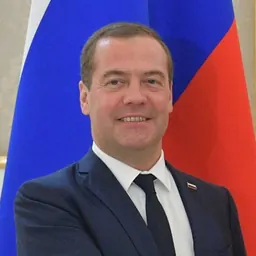
Ilia II meets Russian President Vladimir Putin and Patriarch Kirill of Moscow, 23 January 2013. In December 2008, Ilia II visited Moscow to participate in the funeral service of Russia's Patriarch Alexy II. On 9 December 2008, he met Russia's President Dmitry Medvedev, which was the first high-level official contact between the two countries since the August war. Later, Ilia II announced that he had some "positive agreements" with Medvedev which needed "careful and diplomatic" follow-up by the politicians. United States Ambassador John F. Tefft described Ilia II as an "astute diplomat" who "expressed his desire to serve a positive role in normalizing and stabilizing relations with Russia." In April 2019, a statement was issued indicating that the Georgian Patriarchate was waiting for decisions to be made by other churches, noting that the OCU was only recognized by three other Orthodox churches at the time.
In March 2023, Ilia II wrote a letter to Ecumenical Patriarch Bartholomew I expressing "great heartache" over the ongoing Russo-Ukrainian war and expressing his concern over the non-renewal of the right of the Ukrainian Orthodox Church (UOC), which is subordinate to the Moscow Patriarchate and is not recognized by Bartholomew, to use the Kyiv Pechersk Lavra monastery. Ilia's statement prompted criticism in Georgia, where it was interpreted by some as support for the Moscow Patriarchate and Russia.
Death and legacy The state funeral procession of Catholicos-Patriarch Ilia II through the streets of Tbilisi, Georgia. Ilia died in Tbilisi on 17 March 2026, at the age of 93, after a brief hospitalisation earlier that day for gastrointestinal bleeding. He was the longest serving patriarch in the 1,500-year history of the Georgian Orthodox Church. pending the election of a new patriarch. This was confirmed by the Holy Synod of the Church that convened on 18 March. The Holy Synod also stated that a funeral commission will be established, to hold the funeral of Ilia II on 22 March. The government of Georgia announced a period of national mourning. Tens of thousands of people attended the procession of his coffin to the Holy Trinity Cathedral, Tbilisi. On 22 March, the funeral service took place at the cathedral. It was attended by Ecumenical Patriarch Bartholomew I and the heads of four other Orthodox Churches, the president and prime minister of Georgia, the speaker of parliament, the head of the Georgian Dream party, and several international diplomatic and religious delegations. where he was buried. Hundreds of thousands of people lined the path leading to the cathedral.
Views Western world Georgia underwent significant social and political change during the patriarchate of Ilia II.
Liberalism In his sermons, Ilia II condemned homosexuality and abortion, demanded television be censored to remove sexual content, denounced school textbooks for "insufficient patriotism", lectured against what he called "extreme liberalism", and warned against "pseudo-culture" from abroad. He opposed attempts to give other Christian denominations equal status under Georgian law and condemned international educational exchanges and working abroad as "unpatriotic".
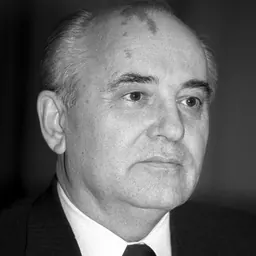
Death penalty Ilia II regularly visited correctional institutions and conversed with inmates. In 1990, he sent a letter to Soviet President Mikhail Gorbachev asking him to abolish the death penalty and find an alternative, calling for mercy towards those who acknowledged their errors, repented, and wanted to reform their lives. Prayer rooms have been established at almost every detention facility in Georgia, and at the insistence of Ilia II, Orthodox clergy have been given permission to not only visit inmates but to petition for their pardon. The call coincided with rising confrontation between the government of President Mikheil Saakashvili and the opposition, many members of which welcomed the patriarch's proposal. Ilia II favored the ancient house of Prince David Bagration of Mukhrani and initiated a marriage between this genealogically senior royal line and the Gruzinsky branch. He later personally baptized the offspring of this union, Prince Giorgi Bagration Mukhrani, his godson, styling him "Prince of Georgia" in a ceremony including the whole Synod.
Nationalism Illia II was considered a proponent of Georgian nationalism. In 1987, a prominent 19th century Georgian nationalist Ilia Chavchavadze was canonized by the Georgian Orthodox Church. Since 1980, Illia II elaborated the notion of "heavenly Georgia", an otherworldly Georgia where Orthodox Christian Georgians could acquire an eternal place in paradise. This, as well as canonization of Chavchavadze, served as a basis for this religious-nationalist discourse. The notion of the "heavenly Georgia" drew on the biblical notion of the "Heavenly Jerusalem". He also believed that Georgian national identity must include Christian Orthodoxy.
In November 2024, the Georgian Orthodox Church released a statement signed by Ilia II congratulating the socially conservative governing party Georgian Dream on its victory in a parliamentary election reportedly marred by fraud. Amid the 2024–2026 Georgian protests, in December 2024, he called for dialogue and that everyone should denounce violence.
Homosexuality In 2013, Ilia II described homosexuality as a "disease". He urged the Georgian authorities to stop a gay rights rally planned for Tbilisi on 17 May 2013 In his response, Ilia II said he did not endorse violence.
Approval ratings Ilia II was called "the most trusted man in Georgia" by CNN in 2010, and had the highest favourability rating among Georgian politicians (94%), according to a November 2013 National Democratic Institute for International Affairs poll. Similarly, Ilia II had 91% favorability rating in 2023, far surpassing all of the country's contemporary political leaders. However, trust in the church overall has been declining in recent years after peaking in the early 2000s, with the majority no longer able to trust the church fully, accompanied by a multi-fold increase in ambivalence towards the church. Actual church attendance has also been generally low.
Awards and recognition As patriarch, he received the highest Church awards from the Patriarchs of the Orthodox Churches of Antioch, Jerusalem, Alexandria, Russia, Greece, Bulgaria, and Romania. He was also awarded an Honorary Doctorate of Theology from several institutions, including St. Tikhon's Orthodox Theological Seminary, the New York Theological Academy, and Tbilisi State University. In 2003, he was awarded the Ilia Medal, "for special contribution to Georgian culture and spirituality". In 2008, Ilia II was awarded the first David Guramishvili Prize. He was also an honorary member of the Georgian Academy of Sciences.
State awards that he received include Russia's Order of Friendship of Peoples (1993), Georgia's Order of David the Builder (1997), Azerbaijan's Order of Glory (2005), and Ukraine's Order of Prince Yaroslav the Wise (2008).
Don’t just read it —
keep it.
Full-length biographies made to live with: read them, listen on the way to work, watch them tonight.
- E-book
- Audio
- Video
Instant download · yours to keep · every purchase keeps this site free
Important facts
People in Ilia II of Georgia's life
Named in this biography and alive at the same time






Related people
Same field, nearest in time



Contemporaries
People whose lives overlapped Ilia II of Georgia's



Frequently asked questions
Who was Ilia II of Georgia?
Patriarch of Georgia (1933–2026)
When was Ilia II of Georgia born?
Ilia II of Georgia was born on 4 January 1933 in Vladikavkaz.
When did Ilia II of Georgia die?
Ilia II of Georgia died on 17 March 2026 in Tbilisi.
What was Ilia II of Georgia's occupation?
Ilia II of Georgia was a patriarch, religious leader, bishop, catholicos-Patriarch and theologian.
What nationality was Ilia II of Georgia?
Ilia II of Georgia was Russian and Georgian.
Sources & further reading
· Wikipedia: Ilia II of Georgia
Cite this page
APA: Biography.guide. (2026). Ilia II of Georgia. https://biography.guide/ilia-ii-of-georgia/
MLA: "Ilia II of Georgia." Biography.guide, https://biography.guide/ilia-ii-of-georgia/.
Chicago: "Ilia II of Georgia." Biography.guide. https://biography.guide/ilia-ii-of-georgia/.
Data last updated: 2026-09-20 · Spot an error? Report a correction.
Page generated 2026-09-27 05:30 UTC