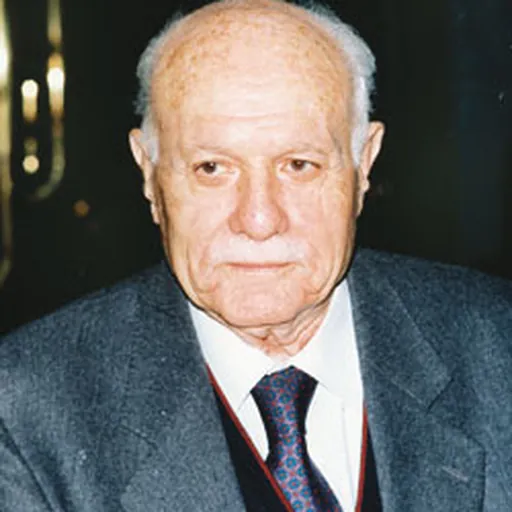
About Ihsan Abbas
Lived 1920 – 2003 (aged 82). Ihsan Abbas was a Jordanian literary scholar, historian and writer.
Ihsan Abbas (December 2, 1920 – July 30, 2003) was a Palestinian professor at the American University of Beirut, and was considered a premier figure of Arabic and Islamic studies in the East and West during the 20th century. The "author of over one hundred books", during his career, Abbas was renowned as one of the foremost scholars of Arabic language and literature and was a respected literary critic. Upon his death, Abbas was eulogized by University College London historian Lawrence Conrad as a custodian of Arabic heritage and culture, and a figure whose scholarship had dominated the Middle East's intellectual and cultural life for decades.
Life Ihsan Abbas (إحسان عباس) was born in the former Palestinian village of Ayn Ghazal (عين غزال) near Haifa on December 2, 1920. As a child, the only books in his family's impoverished home were the Qur'an and a famous 15th-century Arabic encyclopedia known as . In later life, Abbas would often sadden at the mention of the latter due to the memories it brought him.
Growing up in Mandate Palestine, Abbas completed high school in Haifa and Acre before attending the Arab College in Jerusalem from 1937 to 1941. Abbas then spent the next four years teaching at a college in Safed and went on to earn a Bachelor of Arts degree in Arabic literature from Cairo University in 1950. For the next ten years, Abbas traveled between his studies in Cairo, where he earned a Master of Arts and Doctor of Philosophy, and his work at Gordon Memorial College or, as it became known during his tenure, the University of Khartoum.
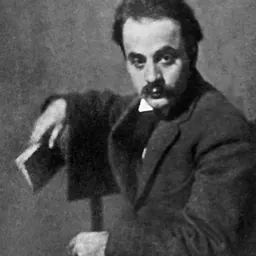
Views Abbas was a critic of the focus on the North–South divide, emphasizing improvement of quality of life in the Third World rather than conflict between the north and the south. Abbas was also distinguished as a Palestinian figure who defended contributions to Arabic and Islamic studies by Israeli scholarship, on one occasion reacting angrily to when a student claimed that Israeli academia was unable to master the Arabic language, a claim that Abbas found to be racist. He also echoed the sentiment that in Arabic poetry, the description of the city as a genre and the details of urban life revealed the writer's ideological biases. Abbas was also a defender of Kahlil Gibran's maligned Al-Mawakib, considering it a measuring stick for the literature produced by the Arabic renaissance in the United States. Abbas' analysis of Abd al-Wahhab Al-Bayati's poetry and the significance of Bayati's references to Sisyphus and Prometheus was criticized as Shmuel Moreh; Abbas saw the references as being philosophical allegory, while Moreh tied them to the fall of the Iraqi Communist Party. Abbas contributed significantly to the history of Arabic literature and writers, and was responsible for collecting and compiling the work of Abd al-Hamid al-Katib in 1988, uncovering archived letters between the Umayyad secretary and the empire's last caliph which shed light on the inner workings of the dynasty in its last days. He was also one of the few writers to critically analyze the Kharijites, a now extinct sect of Islam.
Though reserved in revealing his own beliefs, Abbas adhered to Sunni Islam and leaned toward the Zahiri school of Islamic jurisprudence. He was responsible for reviving the works of Ibn Hazm, one of the main philosophers of the school and of Islam in general, editing and republishing many of them and even uncovering previously unpublished works on Ibn Hazm's legal theory from various archives; Abbas' 1983 edition of Ibn Hazm's book on legal theory Ihkam is considered a key moment in Arab intellectual history and the modernist revival of Zahirite legal method.
Abbas also participated in a number of collaborative projects during his career. He served, alongside Clifford Edmund Bosworth, Jacob Lassner, Ehsan Yarshater and Franz Rosenthal, on the editorial board for William Montgomery Watt's book Muhammad at Mecca, itself a partial translation and summary of Muhammad ibn Jarir al-Tabari's History of the Prophets and Kings. From 1951 to 1952, Abbas assisted fellow scholar Ahmad Amin and his student Shawqi Daif in editing and republishing an anthology of Egyptian contributions to Arabic poetry during the Middle Ages, which had previously been thought to be minimal or non-existent. He was also a significant contributor to the cultural magazine Al-Arabi.
Edited and republished works Ahmed Mohammed al-Maqqari, Nafh at-tibb min ghusn al-andalus al-ratib. Beirut: 1968. Al-Baladhuri, Ansab al-Ashraf. Wiesbaden: 1979. Ibn al-Kattani, Kitab al-Tashbihat. Beirut: 1966. Ibn Bassam, Dhakhira fî mahâsin ahl al-Gazira. Beirut: 1979. Ibn Hazm, al-Ihkam fi usul al-ahkam. Beirut: Dar al-Afaq al-Jadida, 1980. Ibn Hazm, Al-Taqrib li Hadd al-Mantiq bi al-Alfaz al-`Ammiyya. Beirut: 1959. Ibn Hazm, Rasa`il Ibn Hazm al-Andalusi. Beirut, 1981. Ibn Hazm, Ṭawq al-Ḥamāmah. Cairo: Dar al-huda lil-thaqafah wal-nashr, 2002. Ibn Khallikan, Wafayāt al-aʿyān wa-anbāʾ abnāʾ az-zamān. Beirut: 1968–1977.
Don’t just read it —
keep it.
Full-length biographies made to live with: read them, listen on the way to work, watch them tonight.
- E-book
- Audio
- Video
Instant download · yours to keep · every purchase keeps this site free
Important facts
People in Ihsan Abbas's life
Named in this biography and alive at the same time




Related people
Same field, nearest in time



Contemporaries
People whose lives overlapped Ihsan Abbas's





Frequently asked questions
Who was Ihsan Abbas?
Palestinian literary scholar and Arabist
When was Ihsan Abbas born?
Ihsan Abbas was born on 2 December 1920 in Ayn Ghazal.
When did Ihsan Abbas die?
Ihsan Abbas died on 29 January 2003 in Amman.
What was Ihsan Abbas's occupation?
Ihsan Abbas was a literary scholar, historian and writer.
What nationality was Ihsan Abbas?
Ihsan Abbas was Jordanian.
Sources & further reading
Cite this page
APA: Biography.guide. (2026). Ihsan Abbas. https://biography.guide/ihsan-abbas/
MLA: "Ihsan Abbas." Biography.guide, https://biography.guide/ihsan-abbas/.
Chicago: "Ihsan Abbas." Biography.guide. https://biography.guide/ihsan-abbas/.
Data last updated: 2026-09-20 · Spot an error? Report a correction.
Portrait: Wikimedia Commons · author & licence
Page generated 2026-09-27 04:58 UTC