
About Ignatius Abded Aloho II
Lived 1833 – 1915 (aged 82). Ignatius Abded Aloho II was a Turkish eastern Orthodox priest.
Ignatius Abdullah II (Syriac: ܐܝܓܢܛܝܘܣ ܥܒܕ ܕܐܠܘܗܘ) also Ignatius Abdullah II Stephan (June 7, 1833 – November 26, 1915) was the Patriarch of Antioch, and head of the Syriac Orthodox Church from 1906 until his death in 1915.
Biography Abdullah was born on June 7, 1833, in the village of Sadad, a predominantly Syriac Orthodox village, south of Homs. He became a monk at an early age, and was later ordained priest. In 1870, he toured the Tur Abdin region and recorded the names of villages, monasteries, churches, clergy and the families living in the area.
He was appointed bishop of Jerusalem in 1872 by Patriarch Ignatius Peter IV, taking the name Gregorios, and in August 1874 accompanied him to Britain to persuade the British government to assist the church in India. They stayed here until April 1875, when they left for India to reorganise the church in India with the help of the British governor. Whilst in India, Abdullah fraternised with Protestant missionaries. After returning to Syria he spread Protestant ideas.
They left India in May 1877 and remained in Syria before returning to London in 1879, where he secured a printing press for the Monastery of Mor Hananyo. Upon his return, Abdullah was ordained Metropolitan of Syria and left to attend the 1888 Lambeth Conference, and secured a second printing press.
After the death of Ignatius Peter IV in 1894, a rivalry began between Abdullah and Abdulmasih to be elected to the patriarchal throne. According to American missionaries operating in Syria at the time, the Ottoman government interfered and intimidated bishops based on the highest bidder. However, in 1895, Abdulmasih was elected and consecrated patriarch.
The following year, in 1896, Abdullah joined the Syriac Catholic Church. He was a Syriac Catholic for 9 years and had participated in the synod that elected Ephrem Rahmani as the Patriarch of Antioch. In 1905, Abdullah renounced the church and took up his position as Syriac Orthodox Metropolitan of Amid again, under the promise of becoming the Patriarch upon its vacancy.
Whilst in London, Abdullah met with King Edward VII twice and received a medal. He travelled to India in 1908 and began ordaining Indian bishops much to the chagrin of the local church. This led to the demand of a Maphrian or Catholicos to prevent the Malankara Church coming under Abdullah's control. In 1910, Abdullah established the Knanaya (Autonomous Archdioceses) and consecrated Geevarghese Mor Severios on August 28, 1910. In 1912, the dispute over authority between supporters of the Metropolitan of Malankara and supporters of the Patriarch finally divided the Malankara Church into two rival factions. The patriarch excommunicated Dionysios Giwargis Vattasseril, the metropolitan of Malankara, and appointed Pawlos Kurillos Kochuparambil in his stead. Vattasseril sought help from Ignatius Abdulmasih, who visited India and established a maphrianate for the Malankara Church at his insistence. This resulted in a full-fledged schism in the Indian Syriac Orthodox Church with the supporters of the metropolitan becoming the essentially independent Malankara Orthodox Syrian Church headed by the Catholicos of the East and the supporters of Patriarch Abdullah II maintaining ties with the Patriarch of Antioch as the Malankara Jacobite Syrian Christian Church. Motions by the church leaders and two Supreme Court decisions in the 20th century failed to heal the rift.
He also travelled to Jerusalem in 1912.
Abdullah resided at the Monastery of Saint Mark from March 17, 1912, until his death on November 26, 1915, where he was also buried.
Episcopal succession During Ignatius Elias time as Patriarch and Metropolitan, he had the duty to ordain and consecrate many Metropolitans in the Syria Orthodox church in addition to hundreds of priests, monks, and deacons. The list includes one future patriarch also
Iyawannis Elias (1908-1912). Metropolitan of Diyarbakir and later Metropolitan of Mosul (1912-1916). Later, he was elected as Ignatius Elias III, the 119th Patriarch of Syriac Orthodox Church (1917-1932). Dionysios VI Giwargis Vattasseril (1908-1912), Metropolitan of Malankara Pawlos Kurillos Kochuparambil (1908-1917), bishop for India Giwargis Severios Edavazhikkal, bishop of the newly founded Knanaya Jacobite Diocese Phlixinous Abdulahad (1908-1915). Metropolitan of Monastery of Mor Augin in Tur-Abdin Julius Ibraheem (1908). Bishop for Syria Severus Samu'il (1908-1926). Bishop for Monastery of Mor Malke Gregorius Ephraim (1908). Metropolitan of Mor Hananyo then Metropolitan of Jerusalem Athanasius Tuma Qasir (1908–1912). Metropolitan of Mardin, then Metropolitan of Amid (1912-1914), then Metropolitan of Mosul (1917-1929), Metropolitan of Aleppo (1929-1933), and later Metropolitan of Mosul (1933-1951) Clement John (1909). Ecumenical Metropolitan Eustasius Saliba (1908-1930). Ecumenical Metropolitan in India
Don’t just read it —
keep it.
Full-length biographies made to live with: read them, listen on the way to work, watch them tonight.
- E-book
- Audio
- Video
Instant download · yours to keep · every purchase keeps this site free
Important facts
People in Ignatius Abded Aloho II's life
Named in this biography and alive at the same time


Related people
Same field, nearest in time
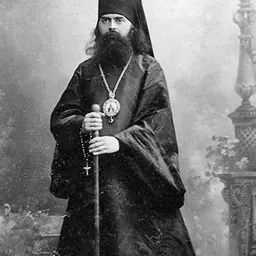

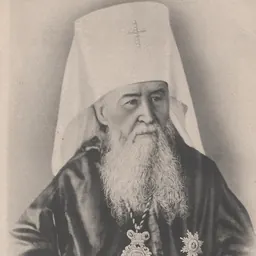
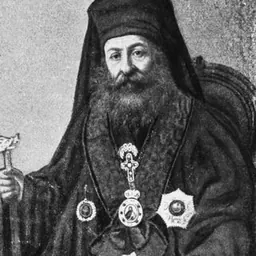

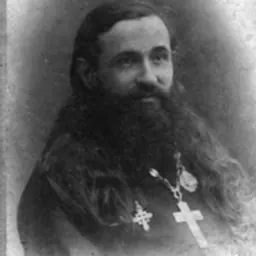
Contemporaries
People whose lives overlapped Ignatius Abded Aloho II's



Frequently asked questions
Who was Ignatius Abded Aloho II?
Syriac Orthodox Patriarch (1833-1915)
When was Ignatius Abded Aloho II born?
Ignatius Abded Aloho II was born on 7 June 1833 in Sadad.
When did Ignatius Abded Aloho II die?
Ignatius Abded Aloho II died on 17 July 1915 in Jerusalem.
What was Ignatius Abded Aloho II's occupation?
Ignatius Abded Aloho II was an eastern Orthodox priest.
What nationality was Ignatius Abded Aloho II?
Ignatius Abded Aloho II was Turkish.
Sources & further reading
· Wikipedia: Ignatius Abded Aloho II
· DBpedia: Ignatius Abdullah II
Cite this page
APA: Biography.guide. (2026). Ignatius Abded Aloho II. https://biography.guide/ignatius-abded-aloho-ii/
MLA: "Ignatius Abded Aloho II." Biography.guide, https://biography.guide/ignatius-abded-aloho-ii/.
Chicago: "Ignatius Abded Aloho II." Biography.guide. https://biography.guide/ignatius-abded-aloho-ii/.
Data last updated: 2026-09-20 · Spot an error? Report a correction.
Page generated 2026-09-27 05:23 UTC