
About Ignace-Gaston Pardies
Lived 1636 – 1673 (aged 36). Ignace-Gaston Pardies was a French physicist, mathematician, catholic priest and catholic theologian.
Ignace-Gaston Pardies (5 September 1636 – 21 April 1673) was a French Catholic Jesuit priest and scientist.
Career Pardies was born in Pau, France, the son of an advisor at the local assembly. He entered the Society of Jesus on 17 November 1652 and for a time taught classical literature; during this period he composed a number of short Latin works, in prose and verse. After his ordination, he taught philosophy and mathematics at the Collège de Clermont in Paris, which would eventually become the Lycée Louis-le-Grand. His earliest scientific work is the Horologium Thaumanticum Duplex (Paris, 1662), in which is described an instrument he had invented for constructing various kinds of sundials. Three years later appeared his Dissertatio de Motu et Natura Cometarum, published separately in Latin and in French (Bordeaux, 1665). His La Statique (Paris, 1673) argued that Galileo's theory was not exact. This, along with Discours du mouvement local (Paris, 1670), and the manuscript Traité complet d'Optique, in which he followed the undulatory theory of light (which identifies it as a harmonic vibration), form part of a general work on physics which he had planned. Traité complet d'Optique had been studied by Pierre Ango (1640–1694) a confrere of Pardies for his Book L`Optique which he published in 1682 after Pardies early death. The Manuscript has also been mentioned by Christiaan Huygens in his Treatise on Light. Huygens himself mentioned in 1668 that it has been Pardies' Theory that the speed of light is finite.
He initially opposed Isaac Newton's theory of refraction and his letters together with Newton's replies (which so satisfied Pardies that he withdrew his objections) are found in the Philosophical Transactions of the Royal Society for 1672 and 1673. A proponent of mechanism, his Discours de la Connaissance des Bestes (Paris, 1672) combated Descartes's views on animals, but did so very weakly, which led many to view it as a covert defence rather than a refutation, an impression which Pardies himself afterwards endeavoured to destroy. His Elémens de géométrie (Paris, 1671) was translated into Latin and English. He left in manuscript a work entitled Art de la Guerre and a celestial atlas comprising six charts, published after his death (Paris, 1673–74). His collected mathematical and physical works were published in French (The Hague, 1691) and in Latin (Amsterdam, 1694). He was a member of the academy of anatomist Pierre Michon Bourdelot.
In 1674, Pardies published the star atlas Globi coelestis in tabulas planas redacti descriptio in Paris. The atlas was partially based on the work of another French Jesuit scientist Thomas Gouye. The atlas was engraved by G. Vallet and dedicated to Johan Friedrich, Duke of Braunschweig-Luneburg. The constellation figures are drawn from Uranometria, but they were carefully reworked and adapted to a broader view of the sky. Pardies died of fever contracted whilst ministering to the prisoners of Bicêtre Hospital, near Paris.
In 1690, the Elémens was translated into Manchu for the Kangxi Emperor under the title Gi ho yuwan ben bithe.
Works
Images
Don’t just read it —
keep it.
Full-length biographies made to live with: read them, listen on the way to work, watch them tonight.
- E-book
- Audio
- Video
Instant download · yours to keep · every purchase keeps this site free
Important facts
People in Ignace-Gaston Pardies's life
Named in this biography and alive at the same time
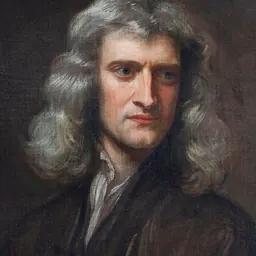
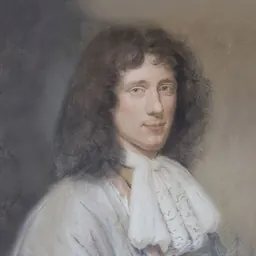


Related people
Same field, nearest in time





Contemporaries
People whose lives overlapped Ignace-Gaston Pardies's





Frequently asked questions
Who was Ignace-Gaston Pardies?
French physicist
When was Ignace-Gaston Pardies born?
Ignace-Gaston Pardies was born on 5 September 1636 in Pau.
When did Ignace-Gaston Pardies die?
Ignace-Gaston Pardies died on 22 April 1673 in Paris.
What was Ignace-Gaston Pardies's occupation?
Ignace-Gaston Pardies was a physicist, mathematician, catholic priest and catholic theologian.
What nationality was Ignace-Gaston Pardies?
Ignace-Gaston Pardies was French.
Sources & further reading
· Wikipedia: Ignace-Gaston Pardies
· DBpedia: Ignace-Gaston Pardies
Cite this page
APA: Biography.guide. (2026). Ignace-Gaston Pardies. https://biography.guide/ignace-gaston-pardies/
MLA: "Ignace-Gaston Pardies." Biography.guide, https://biography.guide/ignace-gaston-pardies/.
Chicago: "Ignace-Gaston Pardies." Biography.guide. https://biography.guide/ignace-gaston-pardies/.
Data last updated: 2026-09-20 · Spot an error? Report a correction.
Page generated 2026-09-27 04:57 UTC