
About Idwal Pugh
Lived 1918 – 2010 (aged 92). Idwal Pugh was a British civil servant and ombudsman.
Sir Idwal Vaughan Pugh KCB (10 February 1918 – 21 April 2010) was a civil servant who was Permanent Secretary at the Welsh Office and distinguished himself as Parliamentary Commissioner for Administration and Health Service Commissioner for England, Scotland and Wales (Parliamentary and Health Service Ombudsman).
Early life and war service
Pugh was born in 1918 in Blaenau Ffestiniog, Gwynedd to Rhys, a quarryman and later bus conductor, and Elizabeth, a schoolteacher. He was raised by relatives Thomas and Mary Vaughan in Ton Pentre in the Rhondda Valley and educated at Cowbridge Grammar School. He won an Open Scholarship to study Mods and Greats at St John's College, Oxford and graduated in 1940 whereupon he joined the Army.
Pugh served in the Royal Army Service Corps before transferring to the 7th Armoured Division (desert rats), with which he served in North Africa, Sicily and Italy. He served on the staff of Field Marshal Alexander in Caserta. Pugh had reached the rank of Major when he was demobilised in 1946.
Civil service Pugh joined the Ministry of Civil Aviation as an Assistant Principal in 1946, where he organised supplies and chartered aircraft for the Berlin Airlift. He was also a delegate to the International Civil Aviation Organisation in Montreal. Pugh moved to the Ministry of Transport as Assistant Secretary, where he was put in charge of the Road Transport Division in 1956.
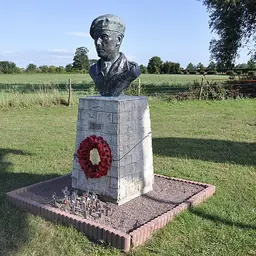
After investigating a particularly serious instance of maladministration by the Department of Health and Social Security, Pugh was scathing in his criticism. It was discovered that the department had denied Lieutenant-Colonel Terence Otway the full amount of his disability war pension for 23 years despite knowing what the full amount should be. Pugh blasted this deceit and branded it deplorable. Twenty-five officers were found to have been treated similarly and the Director of Public Prosecutions considered whether charges should be brought against the officials concerned. Such was the public outcry, the Secretary of State for Social Services David Ennals was forced to apologise and new rules were established that forbade civil servants from denying a claimant their entitlement when owed money by a government department. Jack Ashley MP referred a complaint to Pugh concerning the policy about whooping cough vaccination. It was complained that the Government had not made available to parents all the information that they should have had before agreeing to have their children vaccinated.
For Health Service complaints, Pugh was aided in his desire to publicise the functions of the office by the ability of the public to take their complaints directly to the Office. Pugh commented that this gives my jurisdiction a directness and immediacy which I welcome.
During his tenure, Pugh uncovered a number of shocking examples of National Health Service maladministration. A doctor who discharged a 103-year-old patient at 2am on a winter's night who subsequently died was called inhuman by Pugh. Pugh found that a consultant had acted wrongly when he sterilised a woman who had gone into hospital for an abortion without her knowledge.
A woman was found to have been wrongfully admitted to a hospital under the Mental Health Act 1959 and detained for 29 days longer than she should have been. When Pugh reported, the health authority offered just £150 in compensation, a figure the Select Committee increased to £1,000. The volume of health complaint cases grew rapidly during Pugh's time at the Office: from 582 in 1976–7 to 712 in 1978–9. Notably, there was a high uphold rate in the cases fully investigated. It was also pointed out that it was rare for the Health Ombudsman's recommendations not to be accepted.
When Pugh handed over to his successor, he urged civil servants to take note of the mounting complaints from the public about their rudeness and oppressive behaviour. Idwal's ashes were scattered in the waters of the Afon Mawddach at Penmaenpool, Gwynedd, in a private ceremony. A permanent memorial to Idwal and Mair was added to the prominent Vaughan family tomb of Mary and Thomas Vaughan in Treorchy Cemetery, Rhondda, in accordance with his wishes.
Don’t just read it —
keep it.
Full-length biographies made to live with: read them, listen on the way to work, watch them tonight.
- E-book
- Audio
- Video
Instant download · yours to keep · every purchase keeps this site free
Important facts
People in Idwal Pugh's life
Named in this biography and alive at the same time


Related people
Same field, nearest in time



Contemporaries
People whose lives overlapped Idwal Pugh's


Frequently asked questions
Who was Idwal Pugh?
Welsh civil servant (1918-2010)
When was Idwal Pugh born?
Idwal Pugh was born on 10 February 1918 in Blaenau Ffestiniog.
When did Idwal Pugh die?
Idwal Pugh died on 21 April 2010 in Oxford.
What was Idwal Pugh's occupation?
Idwal Pugh was a civil servant and ombudsman.
What nationality was Idwal Pugh?
Idwal Pugh was British.
Sources & further reading
Cite this page
APA: Biography.guide. (2026). Idwal Pugh. https://biography.guide/idwal-pugh/
MLA: "Idwal Pugh." Biography.guide, https://biography.guide/idwal-pugh/.
Chicago: "Idwal Pugh." Biography.guide. https://biography.guide/idwal-pugh/.
Data last updated: 2026-09-20 · Spot an error? Report a correction.
Page generated 2026-09-27 05:28 UTC