
About Ibn Ishaq
Lived 704 – 768 (aged 63–64). Ibn Ishaq was a historian and biographer.
Abu Abd Allah Muhammad ibn Ishaq ibn Yasar al-Muttalibi (; circa.699-767, known simply as Ibn Ishaq, was an 8th-century Muslim historian and hagiographer who collected oral traditions that formed the basis of an important biography of the Islamic prophet Muhammad. His biography is known as the Al-Sirah al-Nabawiyyah, and it has mainly survived through several recensions.
Life Born in Medina c.704AD (A.H. 85), ibn Isḥaq's grandfather was Yasār ibn Khiyar (according to some ibn Khabbar, Kuman or Kutan), After being found in one of Khalid ibn al-Walid's campaigns, Yasār was taken to Medina and enslaved to Qays ibn Makhrama ibn al-Muṭṭalib ibn ʿAbd Manāf ibn Quṣayy. On his conversion to Islam, he was manumitted as "mawlā" (client), thus acquiring the surname, or "nisbat", al-Muṭṭalibī. His three sons, Mūsā, ʿAbd al-Raḥmān, and Isḥāq, were transmitters of "akhbār", i.e. they collected and recounted written and oral testaments of the past. Isḥāq married the daughter of another mawlā and from this marriage Ibn Isḥāq was born. Also ibn Ishaq disputed with the young Malik ibn Anas, famous for the Maliki School of Fiqh. Leaving Medina (or forced to leave), he traveled eastwards towards "al-Irāq", stopping in Kufa, also al-Jazīra, and into Iran as far as Ray, before returning west. Eventually he settled in Baghdad. There, the new Abbasid dynasty, having overthrown the Umayyad dynasty, was establishing a new capital.
Ibn Isḥaq moved to the capital and found patrons in the new regime. He became a tutor employed by the Abbasid caliph Al-Mansur, who commissioned him to write an all-encompassing history book starting from the creation of Adam to the present day, known as "al-Mubtadaʾ wa al-Baʿth wa al-Maghāzī" (lit. "In the Beginning, the mission [of Muhammad], and the expeditions"). It was kept in the court library of Baghdad. He died in Baghdad in 767.
Biography of Muhammad (Sīrat Rasūl Allāh)
Original versions, survival Ibn Isḥaq collected oral traditions about the life of the Islamic prophet Muhammad. These traditions, which he orally dictated to his pupils, Ibn Hisham edited out of his work "things which it is disgraceful to discuss; matters which would distress certain people; and such reports as al-Bakka'i told me he could not accept as trustworthy." An edited copy, or recension, prepared by his student Salamah ibn Fadl al-Ansari. This also has perished, and survives only in the copious extracts to be found in the voluminous History of the Prophets and Kings by Muhammad ibn Jarir al-Tabari. Fragments of several other recensions. Guillaume lists them on p. 30 of his preface, but regards most of them as so fragmentary as to be of little worth.
According to Donner, the material in ibn Hisham and al-Tabari is "virtually the same".
Following the publication of previously unknown fragments of ibn Isḥaq's traditions, recent scholarship suggests that ibn Isḥaq did not commit to writing any of the traditions now extant, but they were narrated orally to his transmitters. These new texts, found in accounts by Salama al-Ḥarranī and Yūnus ibn Bukayr, were hitherto unknown and contain versions different from those found in other works.
Reconstruction of the text by Guillaume
The original text of the Sīrat Rasūl Allāh by Ibn Ishaq did not survive. However, much of the original text was copied over into a work of his own by Ibn Hisham (Basra; Fustat, died 833 AD).
Ibn Hisham also "abbreviated, annotated, and sometimes altered" the text of Ibn Ishaq, according to Guillaume (on p. 17). Interpolations made by Ibn Hisham are said to be recognizable and can be deleted, leaving as a remainder, a so-called "edited" version of Ibn Ishaq's original text (otherwise lost). In addition, Guillaume (on p. 31) points out that Ibn Hisham's version omits various narratives in the text which were given by al-Tabari in his History. In these passages al-Tabari expressly cites Ibn Ishaq as a source.
Thus can be reconstructed an 'improved' "edited" text, i.e., by distinguishing or removing Ibn Hisham's additions, and by adding from al-Tabari passages attributed to Ibn Ishaq. Yet the result's degree of approximation to Ibn Ishaq's original text can only be conjectured. Such a reconstruction is available, e.g., in Guillaume's translation. Here, Ibn Ishaq's introductory chapters describe pre-Islamic Arabia, before he then commences with the narratives surrounding the life of Muhammad (in Guillaume at pp. 109–690).
Reception
Notable scholars like the jurist Ahmad ibn Hanbal appreciated his efforts in collecting sīra narratives and accepted him on maghāzī, despite having reservations on his methods on matters of fiqh.
The most widely discussed criticism of his sīra was that of his contemporary Mālik ibn Anas. These same stories have also been denounced as "odd tales" (gharāʾib) later by ibn Hajar al-Asqalani.
The best-known translation in a Western language is Alfred Guillaume's 1955 English translation, but some have questioned the reliability of this translation. In it Guillaume combined ibn Hisham and those materials in al-Tabari cited as ibn Isḥaq's whenever they differed or added to ibn Hisham, believing that in so doing he was restoring a lost work. The extracts from al-Tabari are clearly marked, although sometimes it is difficult to distinguish them from the main text (only a capital "T" is used).
Other works Ibn Isḥaq wrote several works. His major work is al-Mubtadaʾ wa al-Baʿth wa al-Maghāzī—the Kitab al-Mubtada and Kitab al-Mab'ath both survive in part, particularly al-Mab'ath, and al-Mubtada otherwise in substantial fragments. He is also credited with the lost works Kitāb al-kh̲ulafāʾ, which al-Umawwī related to him (Fihrist, 92; Udabāʾ, VI, 401) and a book of Sunan (Ḥād̲j̲d̲j̲ī Ḵh̲alīfa, II, 1008).
Reliability of his hadith
In hadith studies, ibn Isḥaq's hadith (considered separately from his prophetic biography) is generally thought to be "good" (ḥasan) (assuming an accurate and trustworthy isnad, or chain of transmission) and himself having a reputation of being "sincere" or "trustworthy" (ṣadūq). However, a general analysis of his isnads has given him the negative distinction of being a mudallis, meaning one who did not always name his teacher, claiming instead to narrate directly from his teacher's teacher.
Others, like Ahmad ibn Hanbal, rejected his narrations on all matters related to fiqh.
Don’t just read it —
keep it.
Full-length biographies made to live with: read them, listen on the way to work, watch them tonight.
- E-book
- Audio
- Video
Instant download · yours to keep · every purchase keeps this site free
Important facts
People in Ibn Ishaq's life
Named in this biography and alive at the same time
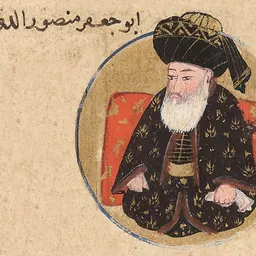

Related people
Same field, nearest in time

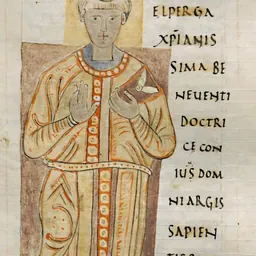



Contemporaries
People whose lives overlapped Ibn Ishaq's


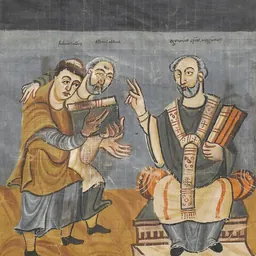

Frequently asked questions
Who was Ibn Ishaq?
Arab hagiographer and historian (704–767)
When was Ibn Ishaq born?
Ibn Ishaq was born in 704 in Medina.
When did Ibn Ishaq die?
Ibn Ishaq died in 768 in Baghdad.
What was Ibn Ishaq's occupation?
Ibn Ishaq was a historian and biographer.
Sources & further reading
Cite this page
APA: Biography.guide. (2026). Ibn Ishaq. https://biography.guide/ibn-ishaq/
MLA: "Ibn Ishaq." Biography.guide, https://biography.guide/ibn-ishaq/.
Chicago: "Ibn Ishaq." Biography.guide. https://biography.guide/ibn-ishaq/.
Data last updated: 2026-09-20 · Spot an error? Report a correction.
Portrait: Wikimedia Commons · author & licence
Page generated 2026-09-27 04:58 UTC