
About Ibn Bassal
Born 1050. Ibn Bassal was a botanist, known for Agronomy and Horticulture.
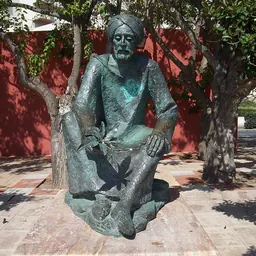
Ibn Bassal was an 11th-century Andalusian Muslim botanist and agronomist in Toledo and Seville, Spain who wrote about horticulture and arboriculture. He is best known for his book on agronomy, the Dīwān al-filāha (An Anthology of Husbandry).
Life and work
Ibn Bassal worked at the Abbadid dynasty court of Al-Mutamid, for whom he created the Hā’īṭ al-Sulṭān botanical garden in Seville. Originally from Toledo, Ibn Bassal moved to Seville after Alfonso VI conquered Toledo in 1085.
He travelled (on pilgrimage) to the Hejaz, visiting Egypt, Sicily, Syria, and seemingly also countries from Abyssinia and Yemen to Iraq, Persia, and India. He returned with knowledge of the cultivation of cotton, and he may well have brought seeds and plants with him for the Toledo botanical garden.
His book, 'Kitāb al-Kasd wa 'l-bayān' is primarily about horticulture. and many years later into Spanish.
Ibn Bassal's practical and systematic book Dīwān al-filāha lacks references to other agronomists, and appears to be a record of his own experience. In the book, he describes over 180 cultivated plants, including chickpeas, beans, rice, peas, flax, henbane, sesame, cotton, safflower, saffron, poppies, henna, artichoke; herbs and spices including cumin, caraway, fennel, anise, and coriander; vegetables requiring irrigation or plentiful watering such as cucumbers, melons, mandrake, watermelons, pumpkins and squash, eggplant, asparagus, caper, and colocynth; the root vegetables carrots, radish, garlic, onion, leek, parsnip, the Sudanese pepper, and the dye-yielding madder; leaf vegetables including cabbage, cauliflower, spinach, purslane, amaranth, and chard. He also covers arboriculture, detailing the propagation of the palm, olive, pomegranate, quince, apple, fig, pear, cherry, apricot, plum, peach, almond, walnut, hazelnut, grape, citron, orange, pistachio, pine, cypress, chestnut, holm-oak, deciduous oak, tree of paradise, arbutus, elm and ash.
He describes manure with straw or sweeping mixed in as mudaf, implying that it is not composed of only one material (animal dung) but is a mixture. The sweepings from hot baths included urine and human wastes, which Ibn Bassal describes as dry and salty, unsuitable for use as fertilizer unless mixed with other types of manure. Ibn Bassal gives two recipes for composting pigeon (hamam) and possibly donkey (himar) manure, though the translation is uncertain. Bassal says the excessive heat and moist qualities of pigeon dung works well for weaker and less hardy plants, especially those affected by cold temperatures. Human waste, on the other hand, Bassal advises using in hot temperatures because there is no heat to it. Pig dung, he cautions, will destroy pastures and poison plants, a view also shared by non-Arab writers like Columella and Cassianus Bassus. Compost made without manure is considered less desirable; Ibn Bassal calls this type muwallid, made with herbage, straw and grass, ashes from ovens, and water. Some of Bassal's text was copied by the Yemeni writers Al-Malik al-Afḍal.
Legacy
Ibn Bassal's works were studied several centuries later by Abu Jafar Ahmad Ibn Luyūn al-Tujjbi (d.1349) of Almeria who based his treatise Kitāb Ibdā' al-malāha wa-inhā' al-rajāha fī usūl sinā'at al-filāha on Bassal's work.
Don’t just read it —
keep it.
Full-length biographies made to live with: read them, listen on the way to work, watch them tonight.
- E-book
- Audio
- Video
Instant download · yours to keep · every purchase keeps this site free
Important facts
Related people
Same field, nearest in time




Frequently asked questions
Who was Ibn Bassal?
botanist
When was Ibn Bassal born?
Ibn Bassal was born in 1050 in Toledo.
When did Ibn Bassal die?
Ibn Bassal died in Seville.
What was Ibn Bassal's occupation?
Ibn Bassal was a botanist.
What was Ibn Bassal known for?
Ibn Bassal was known for Agronomy and Horticulture.
What nationality was Ibn Bassal?
Ibn Bassal's recorded nationality: Al-Andalus.
Sources & further reading
Cite this page
APA: Biography.guide. (2026). Ibn Bassal. https://biography.guide/ibn-bassal/
MLA: "Ibn Bassal." Biography.guide, https://biography.guide/ibn-bassal/.
Chicago: "Ibn Bassal." Biography.guide. https://biography.guide/ibn-bassal/.
Data last updated: 2026-09-20 · Spot an error? Report a correction.
Page generated 2026-09-27 05:13 UTC