
About Ian Barbour
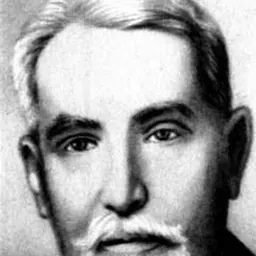
Lived 1923 – 2013 (aged 90). Ian Barbour was an American physicist, university teacher, writer, philosopher, theologian and naturalist.
Ian Graeme Barbour (October 5, 1923 – December 24, 2013) was an American scholar on the relationship between science and religion. According to the Public Broadcasting Service, his mid-1960s Issues in Science and Religion "has been credited with literally creating the contemporary field of science and religion."
In the citation nominating Barbour for the 1999 Templeton Prize, John B. Cobb wrote, "No contemporary has made a more original, deep and lasting contribution toward the needed integration of scientific and religious knowledge and values than Ian Barbour. With respect to the breadth of topics and fields brought into this integration, Barbour has no equal."
Biography Barbour was born on October 5, 1923, in Beijing, China, the second of three sons of an American Episcopal mother (who was the daughter of the obstetrician Robert Latou Dickinson) and a Scottish Presbyterian father.
He received his Bachelor of Science degree in physics from Swarthmore College and his Master of Science degree in physics from Duke University in 1946.
Philosophy and theology In his efforts to link science and religion in Issues in Science and Religion, Barbour coined the term critical realism. This has been adopted by other scholars. He claimed the basic structure of religion is similar to that of science in some ways but also differs on some crucial points. They are part of the same spectrum in which both display subjective as well as objective features. The subjective include the theory on data, the resistance of comprehensive theories to falsification, and the absence of rules for choice among paradigms. Objective features include the presence of common data, evidence for or against a theory, and criteria which are not paradigm-dependent. The presence of subjective and objective features in both science and religion makes his thinking valuable and original. Barbour's arguments have been developed in significant and diverse ways by a variety of scholars, including Arthur Peacocke, John Polkinghorne, Sallie McFague, and Robert John Russell. His subjective / objective approach is prominent in the evolving paradigm of religious naturalism.
Barbour considered critical realism an alternative to the competing interpretations of scientific theories: classical or naive realism, instrumentalism, and idealism. A critical realist perspective sees scientific theories yielding partial, revisable, abstract, but referential knowledge of the world that can be expressed through metaphors and models.
During the 1970s Barbour presented a program of interdisciplinary courses that dealt with ethical issues in the applications of science, exploring the social and environmental consequences of a variety of technologies. In 2000 in When Science Meets Religion (2000) he used a fourfold typology (Conflict, Independence, Dialogue, Integration) to relate religion and science that he had developed in his earlier writings. In his works, Barbour writes from a Christian perspective.
Barbour compared methods of inquiry in science and religion, and has explored the theological implications of the natural and social sciences. He also has lectured widely on ethical issues in such fields as climate change, technology policy, energy, agriculture, computers, and cloning.
In his acceptance speech for the 1999 Templeton Prize, Barbour spoke about the need to break down barriers, using cloning as an example of science's ability to say what is possible and of religion to reflect on what is desirable.
Don’t just read it —
keep it.
Full-length biographies made to live with: read them, listen on the way to work, watch them tonight.
- E-book
- Audio
- Video
Instant download · yours to keep · every purchase keeps this site free
Important facts
People in Ian Barbour's life
Named in this biography and alive at the same time






Related people
Same field, nearest in time

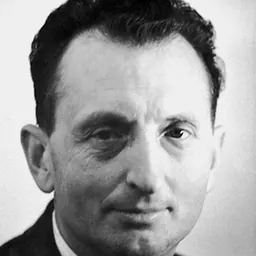
Contemporaries
People whose lives overlapped Ian Barbour's

Frequently asked questions
Who was Ian Barbour?
American academic (1923–2013)
When was Ian Barbour born?
Ian Barbour was born on 5 October 1923 in Beijing.
When did Ian Barbour die?
Ian Barbour died on 24 December 2013 in Minneapolis.
What was Ian Barbour's occupation?
Ian Barbour was a physicist, university teacher, writer, philosopher, theologian and naturalist.
What nationality was Ian Barbour?
Ian Barbour was American.
Sources & further reading
Cite this page
APA: Biography.guide. (2026). Ian Barbour. https://biography.guide/ian-barbour/
MLA: "Ian Barbour." Biography.guide, https://biography.guide/ian-barbour/.
Chicago: "Ian Barbour." Biography.guide. https://biography.guide/ian-barbour/.
Data last updated: 2026-09-20 · Spot an error? Report a correction.
Page generated 2026-09-27 05:13 UTC