
About Humphry Morice
Lived 1723 – 1785 (aged 61–62). Humphry Morice was a British politician and art collector.
Humphry Morice (1723 – 18 October 1785) was a Whig Member of Parliament for the Cornish parliamentary borough of Launceston from 2 February 1750 until 1780.
He was the son of Humphry Morice, MP, who embezzled large sums of money from the Bank of England and his daughter's trust fund and was widely believed to have poisoned himself to forestall exposure.
The death of his second cousin in 1750 brought Morice great wealth and the electoral control of two Cornish boroughs, but his poor health and perhaps his personality prevented him from achieving high office. After 1760, he was frequently abroad in Italy, where he was a patron of the painter Pompeo Batoni.
He briefly achieved ministerial office in 1762 as Comptroller of the Household, possibly by accident; however, he was removed from that office in 1763, and although he was appointed Lord Warden of the Stannaries and was sworn of the Privy Council, he was not a significant political figure thereafter. Declining health and great expense made him sell out his electoral interests to the Duke of Northumberland in 1775. After 1782, he lived entirely abroad, dying in Naples in 1785. His love of animals was reflected in his will, wherein he left a substantial legacy to care for his horses and hounds.
Early life He was the firstborn son of Humphry Morice, Governor of the Bank of England, by Morice's second wife Catherine. He succeeded his father in 1731, but did not inherit any great estate from him, as his father was discovered to have been embezzling on a large scale for years. In 1750, however, the younger Humphry inherited considerable wealth and the estate of Werrington, Cornwall (then in Devon) upon the death of his second cousin, Sir William Morice, 3rd Baronet. The estate brought with it electoral patronage which allowed Morice to select the members of parliament for the Cornish boroughs of Newport and Launceston; Morice had himself returned for the latter to replace his cousin after inheriting the estate. He intended to support George Brydges Rodney as a candidate at Launceston, but found that the corporation there entirely supported Humphry Morice and did not contest the latter's return in place of Sir William. After Bedford fell out with the Whigs Pelham and Newcastle, the Duke offered Morice complete freedom to choose candidates for the two boroughs if he would go into opposition against the ministry. Morice refused, and reported to Pelham that he would only nominate supporters of the ministry, and intended to turn out the sitting members (Tories chosen by Sir William) at the next election. Bedford, who had taken a personal resentment to Morice's refusal, put up his man of business in the Commons, Richard Rigby, and Jeffrey French for the seat to vex Morice, albeit with little prospect of winning. The "vianders", the returning officers of Newport, were appointed by Morice as lord of the manor of Werrington, and Rigby reported to Bedford that they had been blatantly partisan in their disqualification of votes. Rigby and French were outpolled, even so, and Bedford did not think an election petition worthwhile. For the time being, however, he received only an assurance from Newcastle that he would receive a suitable office when one became available. he was returned without opposition at Launceston at the ensuing ministerial by-election. When a vacancy did occur at Launceston upon the death of Sir George Lee, Newcastle proposed to replace him with Edward Simpson, Lee's successor as Dean of Arches. Morice thought success doubtful, and Newcastle did not want to subject Simpson to the expense of a hotly contested election. Morice instead chose Peter Burrell, who had previously sought a borough seat from Newcastle but could not be provided with one. The by-election was indeed contested: Sir John St Aubyn, a Tory and nephew of Sir William Morice, had held a seat at Launceston until Humphry turned him out in 1754, and now returned to try conclusions again. He was victorious over Burrell by 15 votes to 14, but the result was reversed on petition on 21 February 1759, and Burrell was seated instead. Morice prosecuted them for extortion, and two were sentenced to prison and the pillory, but the strain badly affected his health, and he went to Italy in 1760 to recover. The trip also allowed him to gratify his sense of aesthetics. A friend of the architect John Chute, he took with him a letter of introduction from Horace Walpole to Sir Horace Mann in Florence, through which he passed on the way to Naples. Morice was also an avid sportsman and foxhunter, and particularly tender to animals; in Batoni's portrait, he is depicted after a day's hunting outside Rome, with three of his hounds about him. Morice again put forth his candidates unchallenged at the 1768 election, He did not attend Parliament during the turbulent early months of 1780, and stood down from Parliament at that year's general election. He also resigned his office as recorder of Launceston. Mrs. Luther was the wife of John Luther and stepdaughter of Richard Bull; Morice left his estate to her for life, and to her half-sisters Elizabeth and Catherine Bull after her death, but the three agreed to divide the estate equally. His collection of art was sold to the Earl of Ashburnham.
Don’t just read it —
keep it.
Full-length biographies made to live with: read them, listen on the way to work, watch them tonight.
- E-book
- Audio
- Video
Instant download · yours to keep · every purchase keeps this site free
Important facts
People in Humphry Morice's life
Named in this biography and alive at the same time
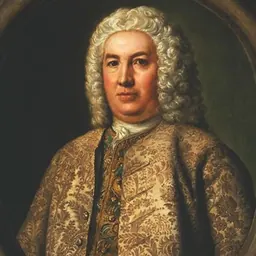
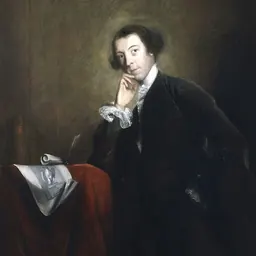




Related people
Same field, nearest in time

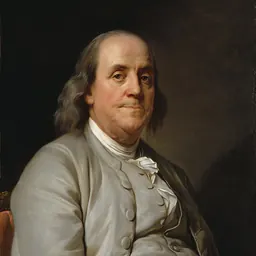


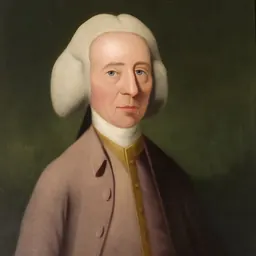
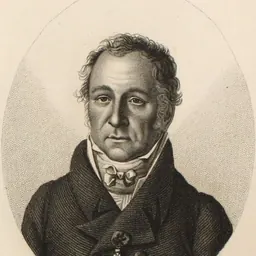
Contemporaries
People whose lives overlapped Humphry Morice's
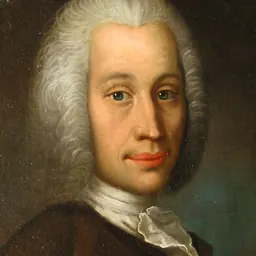

Frequently asked questions
Who was Humphry Morice?
politician (1723–1785)
When was Humphry Morice born?
Humphry Morice was born in 1723.
When did Humphry Morice die?
Humphry Morice died on 18 October 1785 in Naples.
What was Humphry Morice's occupation?
Humphry Morice was a politician and art collector.
What nationality was Humphry Morice?
Humphry Morice was British.
Sources & further reading
· DBpedia: Humphry Morice (MP for Launceston)
Cite this page
APA: Biography.guide. (2026). Humphry Morice. https://biography.guide/humphry-morice-politician/
MLA: "Humphry Morice." Biography.guide, https://biography.guide/humphry-morice-politician/.
Chicago: "Humphry Morice." Biography.guide. https://biography.guide/humphry-morice-politician/.
Data last updated: 2026-09-20 · Spot an error? Report a correction.
Page generated 2026-09-27 05:25 UTC