
About Hulegu Khan
Lived 1217 – 1265 (aged 47). Hulegu Khan was a Mongolian khan, ruler and military leader.
Hulegu Khan, also known as Hülegü or Hulagu ( 8 February 1265), was a Mongol ruler who conquered much of West Asia. As a son of Tolui and the Keraite princess Sorghaghtani Beki, he was a grandson of Genghis Khan and brother of Ariq Böke, Möngke Khan, and Kublai Khan.
Hulegu's army greatly expanded the southwestern portion of the Mongol Empire, founding the Ilkhanate in Persia. Under Hulegu's leadership, the Mongols sacked and destroyed Baghdad, ending the Islamic Golden Age and the Abbasid dynasty. They also weakened Damascus, causing a shift of Islamic influence to the Mamluk Sultanate in Cairo.
Early life
Hulegu was born to Tolui, one of Genghis Khan's sons, and Sorghaghtani Beki, an influential Keraite princess and a niece of Toghrul in 1217. Not much is known of Hulegu's childhood except of an anecdote given in Jami' al-Tawarikh and he once met his grandfather Genghis Khan with Kublai in 1224.
Military campaigns
Hulegu's brother Möngke Khan had been installed as Great Khan in 1251. Möngke charged Hulegu with leading a massive Mongol army to conquer or destroy the remaining Muslim states in southwestern Asia. Hulegu's campaign sought the subjugation of the Lurs of southern Iran, Möngke ordered Hulegu to treat kindly those who submitted and utterly destroy those who did not. Hulegu vigorously carried out the latter part of these instructions.
Hulegu marched out with perhaps the largest Mongol army ever assembled – by order of Möngke, two-tenths of the empire's fighting men were gathered for Hulegu's army in 1253. He arrived at Transoxiana in 1255. He easily destroyed the Lurs, and the Assassins surrendered their impregnable fortress of Alamut without a fight, accepting a deal that spared the lives of their people in early 1256. He chose Azerbaijan as his power base, while ordering Baiju to retreat to Anatolia. From at least 1257 onwards, Muslims and Christians of every major religious variety in Europe, the Middle East, and mainland Asia were a part of Hulegu's army.
Siege of Baghdad
Hulegu's Mongol army set out for Baghdad in November 1257. Once near the city he divided his forces to threaten the city on both the east and west banks of the Tigris. Hulegu demanded surrender, but the caliph, Al-Musta'sim, refused. Due to the treason of Abu Alquma, an advisor to Al-Musta'sim, an uprising in the Baghdad army took place and Siege of Baghdad began. The attacking Mongols broke dikes and flooded the ground behind the caliph's army, trapping them. Much of the army was slaughtered or drowned.
The Mongols under Chinese general Guo Kan laid siege to the city on 29 January 1258, constructing a palisade and a ditch and wheeling up siege engines and catapults. The battle was short by siege standards. By 5 February the Mongols controlled a stretch of the wall. The caliph tried to negotiate but was refused. On 10 February Baghdad surrendered. The Mongols swept into the city on 13 February and began a week of destruction. The Grand Library of Baghdad (also called 'Bayt al-Hikmah), containing countless precious historical documents and books on subjects ranging from medicine to astronomy, was destroyed. Citizens attempted to flee but were intercepted by Mongol soldiers.
Hulegu (left) imprisons the Caliph among his treasures to starve him to death. Medieval depiction from "Le livre des merveilles", 15th century.
Death counts vary widely and cannot be easily substantiated: A low estimate is about 90,000 dead; higher estimates range from 200,000 to a million. The Mongols looted and then destroyed buildings. Mosques, palaces, libraries, hospitals—grand buildings that had been the work of generations—were burned to the ground. The caliph was captured and forced to watch as his citizens were murdered and his treasury plundered. Il Milione, a book on the travels of Venetian merchant Marco Polo, states that Hulegu starved the caliph to death, but there is no corroborating evidence for that. Most historians believe the Mongol and Muslim accounts that the caliph was rolled up in a rug and the Mongols rode their horses over him, as they believed that the earth would be offended if touched by royal blood. All but one of his sons were killed. Baghdad underwent a severe decline in importance after the siege, although according to historian Michal Biran, Hulegu ordered the city rebuilt and the libraries were reopened within two years. Smaller states in the region hastened to reassure Hulegu of their loyalty, and the Mongols turned to Syria in 1259, conquering the Ayyubid dynasty and sending advance patrols as far ahead as Gaza.
A thousand squads of northern Chinese sappers accompanied Hulegu during his conquest of West Asia.
Conquest of Syria (1260)
Hulegu and Queen Doquz Qatun depicted as the new Constantine and Helen in a Syriac bible.
In 1260, Mongol forces combined with those of their Christian vassals in the region, including the army of the Armenian Kingdom of Cilicia under Hethum I, King of Armenia and the Franks of Bohemond VI of Antioch. This force conquered Muslim Syria, a domain of the Ayyubid dynasty. They captured Aleppo by siege and, under the Christian general Kitbuqa, seized Damascus on 1 March 1260. A Christian Mass was celebrated in the Umayyad Mosque and numerous mosques were profaned. Many historical accounts describe the three Christian rulers Hethum, Bohemond, and Kitbuqa entering the city of Damascus together in triumph, though some modern historians such as David Morgan have questioned this story as apocryphal.
The invasion effectively destroyed the Ayyubids, which was until then a powerful dynasty that had ruled large parts of the Levant, Egypt, and the Arabian Peninsula. The last Ayyubid king, An-Nasir Yusuf, had been killed by Hulegu this same year. With Baghdad ravaged and Damascus weakened, the center of Islamic power shifted to the Mamluk sultan's capital of Cairo.
Hulegu intended to send forces southward through Palestine toward Cairo. So he had a threatening letter delivered by an envoy to the Mamluk Sultan Qutuz in Cairo demanding that Qutuz open his city or it would be destroyed like Baghdad. Then, because food and fodder in Syria had become insufficient to supply his full force, and because it was a regular Mongol practice to move troops to the cooler highlands for the summer, Hulegu withdrew his main force to Iran near Azerbaijan, leaving behind one tumen (10,000 men or less) under Kitbuqa, accompanied by Armenian, Georgian, and Frankish volunteers, which Hulegu considered sufficient. Hulegu then personally departed for Mongolia to play his role in the imperial succession conflict occasioned by the death some eight months earlier of Great Khan Möngke. But upon receiving news of how few Mongols now remained in the region, Qutuz quickly assembled his well-trained and equipped 20,000-strong army at Cairo and invaded Palestine. He then allied himself with a fellow Mamluk leader, Baybars in Syria, who not only needed to protect his own future from the Mongols but was eager to avenge for Islam the Mongol capture of Damascus, looting of Baghdad, and conquest of Syria.
The Mongols, for their part, attempted to form a Frankish-Mongol alliance with (or at least, demand the submission of) the remnant of the Crusader Kingdom of Jerusalem, now centered on Acre, but Pope Alexander IV had forbidden such an alliance. Tensions between Franks and Mongols also increased when Julian of Sidon caused an incident resulting in the death of one of Kitbuqa's grandsons. Angered, Kitbuqa had sacked Sidon. The Barons of Acre, contacted by the Mongols, had also been approached by the Mamluks, seeking military assistance against the Mongols. Although the Mamluks were traditional enemies of the Franks, the Barons of Acre recognized the Mongols as the more immediate menace. Instead of taking sides, the Crusaders opted for a position of cautious neutrality between the two forces. In an unusual move, however, they allowed the Egyptian Mamluks to march northward without hindrance through Crusader territory and even let them camp near Acre to resupply.
Battle of Ain Jalut
When news arrived that the Mongols had crossed the Jordan River in 1260, Sultan Qutuz and his forces proceeded southeast toward the 'Spring of Goliath' (Known in Arabic as 'Ain Jalut') in the Jezreel Valley. They met the Mongol army of about 12,000 in the Battle of Ain Jalut and fought relentlessly for many hours. The Mamluk leader Baybars mostly implemented hit-and-run tactics in an attempt to lure the Mongol forces into chasing him. Baybars and Qutuz had hidden the bulk of their forces in the hills to wait in ambush for the Mongols to come into range. The Mongol leader Kitbuqa, already provoked by the constant fleeing of Baybars and his troops, decided to march forwards with all his troops on the trail of the fleeing Egyptians. When the Mongols reached the highlands, Egyptians appeared from hiding, and the Mongols found themselves surrounded by enemy forces as the hidden troops hit them from the sides and Qutuz attacked the Mongol rear. Estimates of the size of the Egyptian army range from 24,000 to 120,000. The Mongols broke free of the trap and even mounted a temporarily successful counterattack, but their numbers had been depleted to the point that the outcome was inevitable. Refusing to surrender, the whole Mongol army that had remained in the region, including Kitbuqa, were cut down and killed that day. The battle of Ain Jalut established a high-water mark for the Mongol conquest.
Civil War with the Golden Horde
After the succession was settled and his brother Kublai Khan was established as Great Khan, Hulegu returned to his lands by 1262. When he massed his armies to attack the Mamluks and avenge the defeat at Ain Jalut, however, he was instead drawn into civil war with Batu Khan's brother Berke. Berke Khan, a Muslim convert and the grandson of Genghis Khan, had promised retribution in his rage after Hulegu's sack of Baghdad and allied himself with the Mamluks. He initiated a large series of raids on Hulegu's territories, led by Nogai Khan. Hulegu suffered a severe defeat in an attempted invasion north of the Caucasus in 1263. This was the first open war between Mongols and signaled the end of the unified empire. In retaliation for his failure, Hulegu killed Berke's ortogh, and Berke did the same in return.
Even while Berke was Muslim, out of Mongol brotherhood he at first resisted the idea of fighting Hulegu. He said, "Mongols are killed by Mongol swords. If we were united, then we would have conquered all of the world." But the economic situation of the Golden Horde due to the actions of the Ilkhanate led him to declare jihad because the Ilkhanids were hogging the wealth of North Iran and because of the Ilkhanate's demands for the Golden Horde not to sell slaves to the Mamluks.
Communications with Europe Hulegu's mother Sorghaghtani successfully navigated Mongol politics, arranging for all of her sons to become Mongol leaders. She was a Christian of the Church of the East (often referred to as "Nestorianism") and Hulegu was friendly to Christianity. Hulegu's favorite wife, Doquz Khatun, was also a Christian, as was his closest friend and general, Kitbuqa. Hulegu sent multiple communications to Europe in an attempt to establish a Franco-Mongol alliance against the Muslims. In 1262, he sent his secretary Rychaldus and an embassy to "all kings and princes overseas". The embassy was apparently intercepted in Sicily by Manfred, King of Sicily, who was allied with the Mamluk Sultanate and in conflict with Pope Urban IV, and Rychaldus was returned by ship.
On 10 April 1262, Hulegu sent a letter, through John the Hungarian, to Louis IX of France, offering an alliance. It is unclear whether the letter ever reached Louis IX in Paris – the only manuscript known to have survived was in Vienna, Austria. The letter stated Hulegu's intention to capture Jerusalem for the benefit of the Pope and asked for Louis to send a fleet against Egypt:
Despite many attempts, neither Hulegu nor his successors were able to form an alliance with Europe, although Mongol culture in the West was in vogue in the 13th century. Many new-born children in Italy were named after Mongol rulers, including Hulegu: names such as Can Grande ("Great Khan"), Alaone (Hulegu), Argone (Arghun), and Cassano (Ghazan) are recorded.
Family Hulegu had fourteen wives and concubines with at least 21 issues with them:
Principal wives: Guyuk Khatun (died in Mongolia before reaching Iran) – daughter of Toralchi Güregen of the Oirat tribe and Checheikhen Khatun Jumghur (died en route to Iran in 1270s) Bulughan agha – married Jorma Güregen, son of Jochi (from Tatar tribe, brother of Nukdan khatun) and Chechagan Khatun, daughter of Temüge (Otchi Noyon) Qutui Khatun – daughter of Chigu Noyan of Khongirad tribe and Tümelün behi (daughter of Genghis khan and Börte) Takshin (d. 12 September 1270 of urinary incontinence) Tekuder (1246–1284) Todogaj Khatun – married to Tengiz Güregen, married secondly to Sulamish his son, married thirdly to Chichak, son of Sulamish Yesunchin Khatun (d. January/February 1272) – a lady from the Suldus tribe Abaqa (1234–1282) Dokuz Khatun, daughter of Uyku (son of Toghrul) and widow of Tolui Öljei Khatun – half-sister of Guyuk, daughter of Toralchi Güregen of the Oirat tribe Möngke Temür (b. 23 October 1256, d. 26 April 1282) Jamai Khatun – married Jorma Güregen after her sister Bulughan's death Manggugan Khatun – married firstly to her cousin Chakar Güregen (son of Buqa Timur and niece of Öljei Khatun), married secondly to his son Taraghai Baba Khatun – married to Lagzi Güregen, son of Arghun Aqa
Concubines:
Nogachin Aghchi, a lady from Cathay; from camp of Qutui Khatun Yoshmut – Viceroy of Arran and Shirvan Tubshin – Viceroy of Khorasan during Abaqa's reign Tuqtani (or Toqiyatai) Egechi (d. 20 February 1292) – sister of Irinjin, niece of Dokuz Khatun Boraqchin Agachi, from camp of Qutui Khatun Taraghai (died by lightning strike on his way to Iran in 1260s) Baydu Eshil – married to Tuq Temür and then his brother (son of Abdullah Aqa, a general of Abaqa) Arighan Agachi (d. 8 February 1265) – daughter of Tengiz Güregen; from camp of Qutui Khatun Ajai (d. February 1265) – Viceroy of Anatolia during reign of Abaqa and of Georgia during reign of Arghun Ildar (executed by Ghazan in 1296) Ajuja Agachi, a lady from China or Khitans, from camp of Dokuz Khatun Qonqurtai (executed on 18 January 1284 by Tekuder) Yeshichin Agachi, a lady from the Kür'lüüt tribe; from camp of Qutui Khatun Yesüder – Viceroy of Khorasan during Abaqa's reign A daughter (married to Esen Buqa Güregen, son of Noqai Yarghuchi) Khabash – posthumous son El Agachi – a lady from the Khongirad tribe; from camp of Dokuz Khatun Hulachu (executed by Arghun in October 1289) His tomb has never been found.
Assessment
Hülegü's historical legacy is complex, combining exceptionally destructive military conquest with the establishment of a durable Mongol state in Iran and Mesopotamia. He was dispatched westward by his brother, the Great Khan Möngke, to extend Mongol authority over the remaining independent powers of western Asia, and his campaigns resulted in the destruction of the Nizari Ismaili state, the overthrow of the Abbasid Caliphate at Baghdad in 1258, and the Mongol conquest of much of Syria before the Mongol advance was checked by the Mamluk Sultanate at Ain Jalut. The destruction accompanying these campaigns, particularly the sack of Baghdad and the termination of the Abbasid caliphate there, gave Hülegü an especially negative reputation in much of later Muslim historical memory; modern scholarship has noted that he could be portrayed, particularly outside the Ilkhanid realm, as one of the great destroyers of Islam.
His rule nevertheless had consequences extending beyond military destruction. Hülegü established the political foundations of the Ilkhanate, the Mongol-ruled state that dominated Iran and Mesopotamia for much of the following century. The emerging Ilkhanid state increasingly relied upon indigenous administrative elites and institutions to govern its predominantly sedentary territories, beginning a process through which Mongol rule became integrated with the political and cultural traditions of Iran. Peter Jackson likewise discusses the embassy in the context of Hülegü's attempts to secure cooperation with Western Christian powers. Such rhetoric provides evidence for an anti-Muslim dimension to Hülegü's diplomacy, although its context as an appeal for Christian cooperation against the Mamluks makes it difficult to determine from the correspondence alone the extent to which it represented Hülegü's personal religious convictions. It is recorded however that he converted to Buddhism as he neared death, against the will of Doquz Khatun. The erection of a Buddhist temple at Ḵoy testifies his interest in that religion.
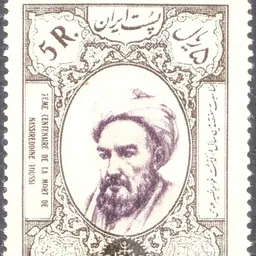
Hulegu patronized Nasir al-Din Tusi and supported the establishment of the Maragheh observatory. He also employed the Juvayni brothers: Shams al-Din Juvayni served as sahib-divan, while Ata-Malik Juvayni governed Baghdad and participated in repairing damage caused by the Mongol conquest. Portrayed by Zhang Jingda and Zhang Bolun in The Legend of Kublai Khan (2013)
Don’t just read it —
keep it.
Full-length biographies made to live with: read them, listen on the way to work, watch them tonight.
- E-book
- Audio
- Video
Instant download · yours to keep · every purchase keeps this site free
Important facts
People in Hulegu Khan's life
Named in this biography and alive at the same time



Related people
Same field, nearest in time


Contemporaries
People whose lives overlapped Hulegu Khan's

Frequently asked questions
Who was Hulegu Khan?
Western Asian Mongol ruler (c. 1217–1265)
When was Hulegu Khan born?
Hulegu Khan was born on 21 February 1217.
When did Hulegu Khan die?
Hulegu Khan died on 8 February 1265 in Maragheh.
What was Hulegu Khan's occupation?
Hulegu Khan was a khan, ruler and military leader.
What nationality was Hulegu Khan?
Hulegu Khan was Mongolian.
Sources & further reading
Cite this page
APA: Biography.guide. (2026). Hulegu Khan. https://biography.guide/hulegu-khan/
MLA: "Hulegu Khan." Biography.guide, https://biography.guide/hulegu-khan/.
Chicago: "Hulegu Khan." Biography.guide. https://biography.guide/hulegu-khan/.
Data last updated: 2026-09-20 · Spot an error? Report a correction.
Page generated 2026-09-27 05:31 UTC