
About Al-Musta'sim
Lived 1213 – 1258 (aged 44–45). Al-Musta'sim was an Arab politician and caliph.
Before the siege of Baghdad The Talisman Gate, built in 1220–1221 by al-Nasir, protected the eastern walls of Baghdad at the time of the siege.
Hulagu sent word to al-Musta'sim, demanding his acquiescence to the terms imposed by Möngke. Al-Musta'sim refused, in large part due to the influence of his advisor and grand vizier, Ibn al-Alkami. Historians have ascribed various motives to Ibn al-Alkami's opposition to submission, including treachery and incompetence, and it appears that he lied to the caliph about the severity of the invasion, assuring al-Musta'sim that, if the capital of the caliphate was endangered by a Mongol army, the Islamic world would rush to its aid. al-Musta'sim neglected to summon armies to reinforce the troops at his disposal in Baghdad. Nor did he strengthen the city's walls. By 11 January, the Mongols were close to the city,
On 29 January, the Mongol army began its siege of Baghdad, constructing a palisade and a ditch around the city. Employing siege engines and catapults, the Mongols attempted to breach the city's walls, and, by 5 February, had seized a significant portion of the defenses. Realizing that his forces had little chance of retaking the walls, al-Musta'sim attempted to open negotiations with Hulagu, who rebuffed the caliph. Around 3,000 of Baghdad's notables also tried to negotiate with Hulagu but were murdered.
Five days later, on 10 February, the city surrendered, but the Mongols did not enter the city until the 13th, beginning a week of massacre and destruction.
Destruction and massacre Many historical accounts detailed the cruelties of the Mongol conquerors. Contemporary accounts state Mongol soldiers looted and then destroyed mosques, palaces, libraries, and hospitals. Priceless books from Baghdad's thirty-six public libraries were torn apart, the looters using their leather covers as sandals. Grand buildings that had been the work of generations were burned to the ground. The House of Wisdom (the Grand Library of Baghdad), containing countless precious historical documents and books on subjects ranging from medicine to astronomy, was destroyed. Claims have been made that the Tigris ran red from the blood of the scientists and philosophers killed. Citizens attempted to flee, but were intercepted by Mongol soldiers who spared no one, not even children.
The caliph al-Musta'sim was captured and forced to watch as his citizens were murdered and his treasury plundered. According to most accounts, the caliph was killed by trampling. The Mongols rolled the caliph up in a rug, and rode their horses over him, as they believed that the earth would be offended if it were touched by royal blood. All but one of al-Musta'sim's sons were killed, and the sole surviving son was sent to Mongolia, where Mongolian historians report he married and fathered children, but played no role in Islam thereafter.
Several Abbasid genealogical sources state that one of al-Musta'sim’s sons, Abū al-Manāqib Mubārak, was spared during the Mongol conquest of Baghdad on account of his young age. He was reportedly taken captive, later released during the reign of Ghazan, and is said to have petitioned for the restoration of Baghdad. His descendants are recorded in multiple genealogical works as the family of Mubārak ibn al-Musta'sim, and they later founded the Abbasid Emirates of Bahdinan and Hakkari.
Hulagu had to move his camp upwind of the city, due to the stench of decay from the ruined city.
Baghdad was a depopulated, ruined city for several decades and only gradually recovered some of its former glory. The historian David Morgan has quoted Wassaf (who himself was born seven years after the razing of the city in 1265) describing the destruction: They swept through the city like hungry falcons attacking a flight of doves, or like raging wolves attacking sheep, with loose reins and shameless faces, murdering and spreading terror...beds and cushions made of gold and encrusted with jewels were cut to pieces with knives and torn to shreds. Those hiding behind the veils of the great Harem were dragged...through the streets and alleys, each of them becoming a plaything...as the population died at the hands of the invaders.
Aftermath Hulagu left 3,000 Mongol soldiers behind to rebuild Baghdad. Ata-Malik Juvayni was later appointed governor of Baghdad, Lower Mesopotamia, and Khuzistan after Guo Kan went back to the Yuan dynasty to assist Kublai's conquest over the Song dynasty. Hulagu's Nestorian Christian wife, Dokuz Khatun, successfully interceded to spare the lives of Baghdad's Christian inhabitants. Hulagu offered the royal palace to the Nestorian Catholicos Mar Makikha, and ordered a cathedral to be built for him.
Initially, the fall of Baghdad came as a shock to the whole Muslim world; after many years of utter devastation, the city became an economic center where international trade, the minting of coins and religious affairs flourished under the Ilkhans. The chief Mongol darughachi was thereafter stationed in the city.
Berke, who had converted to Islam in 1252, became enraged that Hulagu destroyed Baghdad. Muslim historian Rashid al Din quoted Berke Khan as sending the following message to Mongke Khan, protesting the attack on Baghdad, (not knowing Mongke had died in China): "He [Hulagu] has sacked all the cities of the Muslims. With the help of God I will call him to account for so much innocent blood."
Although hesitant at first to go to war with Hulagu out of Mongol brotherhood, the economic situation of the Golden Horde led him to declare war against the Ilkhanate. This became known as the Berke–Hulagu war.
Death and legacy Death Marco Polo claimed that Hulagu (left) imprisoned al-Musta'sim among his treasures to starve him to death. This is widely considered unhistorical. In 1258, Hulagu invaded the Abbasid domain, which then consisted of only Baghdad, its immediate surroundings, and southern Iraq. In his campaign to conquer Baghdad, Hulagu Khan had several columns advance simultaneously on the city, and laid siege to it. The Mongols kept the people of Abbasid Caliphate in their capital and executed those who tried to flee.
Baghdad was sacked on 10 February and the caliph was killed by Hulagu Khan soon afterward. It is reckoned that the Mongols did not want to shed "royal blood", so they wrapped him in a rug and trampled him to death with their horses. Some of his sons were massacred as well. The surviving son, Abu'l-Abbas Ahmad, was sent as a prisoner to Mongolia, where Mongolian historians report he married and fathered children, a daughter Aisha and a son Rukn al-Din Ahmad who had descendants, but played no role in Islam thereafter.
The Travels of Marco Polo reports that upon finding the caliph's great stores of treasure which could have been spent on the defense of his realm, Hulagu Khan locked him in his treasure room without food or water, telling him "eat of thy treasure as much as thou wilt, since thou art so fond of it." Legacy Al-Musta'sim ruled from 5 December 1242 to 20 February 1258, a period of 15 years, 2 months and 15 days. His death marked the final end of the caliphate as a political and religious entity. The Mamluk Sultans of Egypt and Syria later appointed an Abbasid prince as caliph of Cairo, but these Mamluk Abbasid caliphs were marginalized and merely symbolic, with no temporal power and little religious influence. Even though they kept the title for about 250 years more, other than installing the Sultan in ceremonies, they were of little importance. After the Ottomans conquered Egypt in 1517, the caliph of Cairo, al-Mutawakkil III was transported to Constantinople.
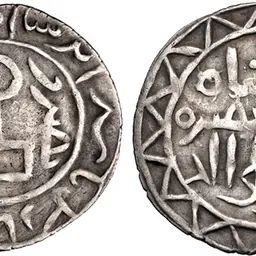
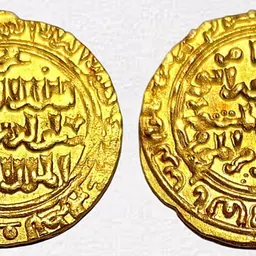
Even decades and almost a century after his death, Many Muslim rulers still posthumously mint coins on the caliph's name and mention him in Khutba especially Sultans of Delhi. The sultan Alauddin Khalji issued many coins, His coins omitted the mention of the Abbasid caliph, replacing it with Yamin-ul-Khilafat. He ceased adding Al-Musta'sim's name, instead adding Yamin-ul-Khilafat Nāsir Amīri 'l-Mu'minīn (The right hand of the Caliphate, the helper of the Commander of the Faithful). The Delhi Sultans continue this practice until the reign of Muhammad bin Tughlaq (1325–1351).
Don’t just read it —
keep it.
Full-length biographies made to live with: read them, listen on the way to work, watch them tonight.
- E-book
- Audio
- Video
Instant download · yours to keep · every purchase keeps this site free
Important facts
Family & relationships
People in Al-Musta'sim's life
Named in this biography and alive at the same time



Related people
Same field, nearest in time
Contemporaries
People whose lives overlapped Al-Musta'sim's




Frequently asked questions
Who was Al-Musta'sim?
37th and last Abbasid Caliph (r. 1242–1258)
When was Al-Musta'sim born?
Al-Musta'sim was born in 1213 in Baghdad.
When did Al-Musta'sim die?
Al-Musta'sim died on 20 February 1258 in Baghdad.
What was Al-Musta'sim's occupation?
Al-Musta'sim was a politician and caliph.
What nationality was Al-Musta'sim?
Al-Musta'sim was Arab.
Sources & further reading
Cite this page
APA: Biography.guide. (2026). Al-Musta'sim. https://biography.guide/al-musta-sim-politician/
MLA: "Al-Musta'sim." Biography.guide, https://biography.guide/al-musta-sim-politician/.
Chicago: "Al-Musta'sim." Biography.guide. https://biography.guide/al-musta-sim-politician/.
Data last updated: 2026-09-20 · Spot an error? Report a correction.
Page generated 2026-09-27 05:28 UTC