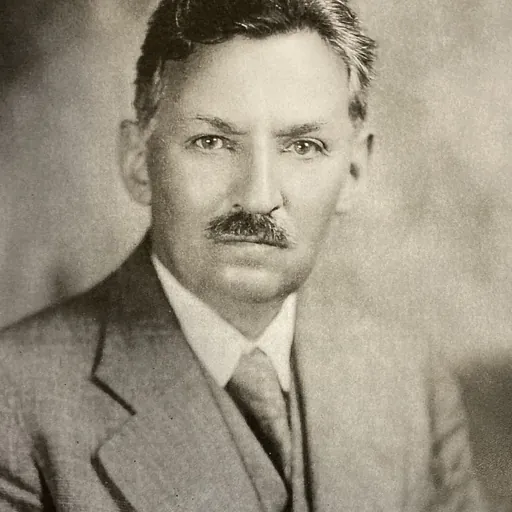
Hugo Leichtentritt
German-Jewish musicologist and composer
About Hugo Leichtentritt
Lived 1874 – 1951 (aged 77). Hugo Leichtentritt was a German composer, musicologist, pedagogue, music critic and musicographer.
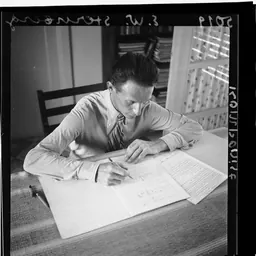
Hugo Leichtentritt (1 January 1874, Pleschen, , nearby Posen, Province of Posen13 November 1951, Cambridge, Massachusetts) was a German-Jewish musicologist and composer who spent much of his life in the USA. His pupils include composers Leroy Robertson and Erich Walter Sternberg.
Early life
Leichtentritt was born to a family of Jewish merchants in Pleschen, German Empire. His German father, Gerson Leichtentritt, was a successful distillery owner.
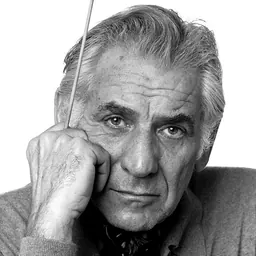
Leichtentritt was a thesis reader for Leonard Bernstein. Bernstein had cited Leichtentritt in his reasons to attend Harvard, writing, "I would probably attempt a Harvard training because of the superb musical department there. Several German professors, such as Leichtentritt, who have left their native land for obvious reasons, are now giving instruction there.” However, Leichtentritt was displeased with Bernstein's senior thesis, writing of its "arrogant attitude and air of superiority."
With his retirement looming, Leichtentritt branched out into other musical-related endeavors. He edited Oscar Thompson's The International Cyclopedia of Music and Musicians (New York, 1939), wrote for The Musical Quarterly, and had four books published by the Harvard University Press. At the University of Utah, his student Leroy Robertson transferred his papers to the Harvard Musical Association, which published his autobiography.
Musicologist Leichtentritt was a dedicated and intense musicologist. For his huge piece of writing Geschichte der Motette (1908), he analysed over 600 motets in manuscripts. His writings on Handel (1924) discuss a wide range of Handel's works, including unperformed operas and oratorios. Geschichte der Musik (1909) summarized the history of Western music in an easy and approachable manner. Edward Dent called his Ferruccio Busoni (1916), "a useful outline and a concise guide to his works".
Two of Leichtentritt's works were more famous than any of his others: Music, History, and Ideas (1938) and Music of the Western Nations (1956). Music, History, and Ideas, which drew from his time lecturing at Harvard, analyzes music as a category of culture, comparing it to other arts, politics, philosophy, and religion. Music of the Western Nations connects music to the culture and sociopolitical climate of Western countries.
Works Dates provided are primarily publication dates, not dates of authorship.
R. Keiser in seinen Opern, 1901 contributor of "Allgemeine Musikzeitung" contributor to "Die Musik" Geschichte der Motette, published 1908 by Breitkopf und Härtel Claudio Monteverdi als Madrigal Komponist, 1908-9 Musikalische Formenlehre, 1911 Erwin Lendvai: Kompositionen, 1912 Ferruccio Busoni (1916) German Music of the Last Decade, Musical Quarterly 10/2 (1924): 193-218 Music, History and Ideas, 1938 Serge Koussevitzky; The Boston Symphony Orchestra and the New American Music, published 1946 by Harvard University Press Music of Western Nations, 1956
Essays Ein Urahne des Berliozschen Requiem. In: Allgemeine Musikzeitung. 30, 1903, S. 677–681. Über Pflege alter Vokalmusik. In: Zeitschrift der internationalen Musikgesellschaft. 6, 1904/05, S. 192–202. Aufführungen älterer Musik in Berlin. In: Zeitschrift der internationalen Musikgesellschaft. 7, 1905/06, S. 368–372. Was lehren uns die Bildwerke des 14.–17. Jh. über die Instrumentalmusik ihrer Zeit? In: Sammelbände der Internationalen Musikgesellschaft. 7, 1906, S. 604–622. The Renaissance Attitude toward Music. In: Musical Quarterly. 1, 1915, S. 604–622. Die Quellen des Neuen in der Musik. In: Melos. 1, 1920, S. 28–33. Nationalism and Internationalism in Music. In: Sackbut. 2, 1921/22, Heft 12, S. 13–16. Philipp Jarnach. In: Musikblätter des Anbruch. 5, 1923, S. 258–262. Das Händelsche Opernwerk. In: Die Musik. 16, 1923/24, S. 551–557. German Music of the Last Decade. In: The Musical Quarterly. 10, 1924, S. 193–218. Harmonic Daring in the 16th Century. In: Modern Music. 5, 1927/28, Heft 1, S. 12–21. Schönberg and Tonality. In: Modern Music. 5, 1927/28, Heft 4, S. 3–10. Schubert’s early operas. In: The Musical Quarterly. 14, 1928, S. 620–638. Arnold Schönbergs op. 19. In: Die Musik 25, 1932/33, S. 405–412. Bartok and the Hungarian Folk-Song. In: Modern Music. 10, 1932/33, S. 130–139. Handel’s Harmonic Art. In: The Musical Quarterly. 21, 1935, S. 208–223. On Editing Netherlands Music. In: Musical Mercury 2, 1935, S. 5–11. On the Prologue in Early Opera. In: Papers of the American Musicological Society. 1936, S. 88–95. The Reform of Trent and Its Effect on Music. In: The Musical Quarterly. 30, 1944, S. 319–328.
Composer Although Leichtentritt was primarily known as a musicologist, he was both an avid composer and composition teacher. His works include a comic opera Die Sizilianer (1920), concertos, song cycles, piano and chamber music, and a symphony. His pieces enjoyed a measure of success in Germany, although many cannot be found. He was a good friend of Ferruccio Busoni and Max Reger.
List of Pupils Leichtentritt had numerous pupils during his time teaching in Berlin and at Harvard. Leroy Robertson Erich Walter Sternberg Harold Spivacke Salvador Ley William Busch Arthur Berger
Reception Leichtentritt's History of the Motet (1908) and his Musical Form Theory (1911) were considered standard works in Europe. In the United States, Leichtentritt hoped to continue the success he had in Germany as a valued music critic and composer. He had some, but little work as a music critic, and his strong opinions and emotions hurt his reputation as a musicologist. Leichtentritt's attempts to publish English translations of his well-known German books, the two volumes of the History of the Motet and his Musical Form Theory, failed initially. His compositions saw similar failures, failing to gain acceptance and greatly disappointing him. Famous conductors, he complained, ignored his music because his compositions were "too little sensational for their needs" (Autobiography p. 514).
Don’t just read it —
keep it.
Full-length biographies made to live with: read them, listen on the way to work, watch them tonight.
- E-book
- Audio
- Video
Instant download · yours to keep · every purchase keeps this site free
Important facts
People in Hugo Leichtentritt's life
Named in this biography and alive at the same time





Related people
Same field, nearest in time



Contemporaries
People whose lives overlapped Hugo Leichtentritt's

Frequently asked questions
Who was Hugo Leichtentritt?
German-Jewish musicologist and composer (1874–1951)
When was Hugo Leichtentritt born?
Hugo Leichtentritt was born on 1 January 1874 in Poznań, Pleszew.
When did Hugo Leichtentritt die?
Hugo Leichtentritt died on 13 November 1951 in Cambridge, Cambridge.
What was Hugo Leichtentritt's occupation?
Hugo Leichtentritt was a composer, musicologist, pedagogue, music critic and musicographer.
What nationality was Hugo Leichtentritt?
Hugo Leichtentritt was German.
Sources & further reading
· Wikipedia: Hugo Leichtentritt
Cite this page
APA: Biography.guide. (2026). Hugo Leichtentritt. https://biography.guide/hugo-leichtentritt/
MLA: "Hugo Leichtentritt." Biography.guide, https://biography.guide/hugo-leichtentritt/.
Chicago: "Hugo Leichtentritt." Biography.guide. https://biography.guide/hugo-leichtentritt/.
Data last updated: 2026-09-23 · Spot an error? Report a correction.
Portrait: Wikimedia Commons · author & licence
Page generated 2026-09-27 05:07 UTC