
About Hugo Brandt Corstius
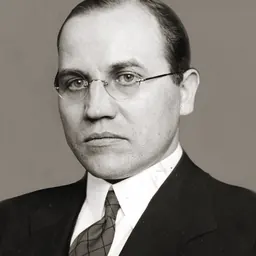
Lived 1935 – 2014 (aged 78). Hugo Brandt Corstius was a Dutch writer, columnist, linguist, computer scientist, journalist and university teacher.
Hugo Brandt Corstius (29 August 1935 – 28 February 2014) was a Dutch author, known for his achievements in both literature and science.
In 1970, he was awarded a PhD on the subject of computational linguistics. He was employed at the Mathematisch Centrum in Amsterdam. However, to the general public he is mostly known for his writing, in particular as a columnist for Vrij Nederland and de Volkskrant and as linguist and literary critic for Vrij Nederland, de Volkskrant, and NRC Handelsblad.
Writing and pseudonyms Hugo Brandt Corstius wrote under over sixty different pseudonyms, allonyms and aliases. He claimed each of them to be a component of his character.
In Vrij Nederland he used the pseudonym Piet Grijs and between 1979 and 1986 in de Volkskrant he used the pseudonym Stoker. His other pseudonyms include Battus (in NRC Handelsblad and Vrij Nederland), Raoul Chapkis, Victor Baarn, Dolf Cohen, Maaike Helder, Peter Malenkov and Talisman.
The Battus name was reserved for writing on linguistics and language play, in columns, articles and books. Many forms of word play (palindromes, the longest attested word in Dutch, e-less Dutch, etc. etc.) were bundled in the volume Opperlandse taal- & letterkunde, ("Upperlandic linguistics", where "Upperlandic" is word play on "Netherlandic"), and twenty years later a sequel Opperlans! (deliberate misspelling). Both books are concerned with the form of Dutch words with little regard to meaning. He also wrote De Encyclopedie, a book parodying encyclopedias, containing about 300 pages numbered 1 through 40000 or thereabouts, with many puns, references to non-existent pages and other jokes.
He coined the word "Symmys", an autological word for a palindrome, in his 1991 book Symmys (written under the pseudonym Battus), thus inspiring the SymmyS Awards in the American magazine The Palindromist.
Prizes 1966 - Anne Frank Prize for Ik sta op mijn hoofd 1978 - Cestoda-prijs 1978 - Burgemeester van Grunsven-prijs for his entire works 1985 - Busken Huetprijs for Rekenen op taal 1987 - P. C. Hooft Award for his entire works
Personal life His daughter Aaf is a columnist, his daughter Merel is a Montessori teacher and graduate student in Boston, and his son Jelle is also an author, and was a correspondent in Russia. Brandt Corstius died in Amsterdam after a long illness.
Don’t just read it —
keep it.
Full-length biographies made to live with: read them, listen on the way to work, watch them tonight.
- E-book
- Audio
- Video
Instant download · yours to keep · every purchase keeps this site free
Important facts
People in Hugo Brandt Corstius's life
Named in this biography and alive at the same time

Related people
Same field, nearest in time



Contemporaries
People whose lives overlapped Hugo Brandt Corstius's




Frequently asked questions
Who was Hugo Brandt Corstius?
Dutch computer scientist (1935–2014)
When was Hugo Brandt Corstius born?
Hugo Brandt Corstius was born on 29 August 1935 in Eindhoven.
When did Hugo Brandt Corstius die?
Hugo Brandt Corstius died on 28 February 2014 in Amsterdam.
What was Hugo Brandt Corstius's occupation?
Hugo Brandt Corstius was a writer, columnist, linguist, computer scientist, journalist and university teacher.
What nationality was Hugo Brandt Corstius?
Hugo Brandt Corstius was Dutch.
Sources & further reading
· Wikipedia: Hugo Brandt Corstius
· DBpedia: Hugo Brandt Corstius
Cite this page
APA: Biography.guide. (2026). Hugo Brandt Corstius. https://biography.guide/hugo-brandt-corstius/
MLA: "Hugo Brandt Corstius." Biography.guide, https://biography.guide/hugo-brandt-corstius/.
Chicago: "Hugo Brandt Corstius." Biography.guide. https://biography.guide/hugo-brandt-corstius/.
Data last updated: 2026-09-20 · Spot an error? Report a correction.
Page generated 2026-09-27 05:23 UTC