
About Hugh Tweedie
Lived 1877 – 1951 (aged 74). Hugh Tweedie was a British convoy Commodore, deputy Lieutenant, justice of the Peace, somerset and trinity House.
Admiral Sir Hugh Justin Tweedie KCB (5 April 1877 – 20 August 1951) was an officer in the Royal Navy who served in the First and Second World War.
Naval career Tweedie was born at Charlton, Kent, the son of General Michael Tweedie of the Royal Artillery, and his wife Louisa Bateson Hammond. He joined the Royal Navy in 1891. As a midshipman on he witnessed the sinking of after she collided with . He served in and the sailing corvette as the midshipman of the fore cross trees in 1896. On Rodney he undertook a course on mine warfare. His instructor was Robert Falcon Scott.
At the time of the Diamond Jubilee Review in 1897, Tweedie was appointed to the destroyer . He then served on the cruiser at the Cape. Promoted to lieutenant he received his first command, the governor's paddle yacht Countess of Derby for an operation on the Bumpeh River in Sierra Leone. There had been an uprising due to the imposition of Hut tax. He was tasked to transport a detachment of troops up the river to attack the rebel position. The detachment managed to get lost and Tweedie led a second native militia in a successful operation against the rebel position.
Tweedie's next posting was the destroyer , the cruiser and then the new battleship in China. He was a member of the first officer PT class at Britannia Royal Naval College before being appointed PT officer on , flagship in China, in 1906 under Sir Arthur Moore. Promoted to commander in 1910 he had charge of the destroyers , , and Hope under Reginald Tyrwhitt
Tweedie's next command as captain was the cruiser in Mexico at time of United States occupation of Veracruz. He was sent by Admiral Cradock from Veracruz with a small party to take despatches through the rebel lines to Mexico City. He returned with some one hundred American refugees for which he was thanked by President Woodrow Wilson. Essex then steamed to Canada. Approaching the St Lawrence River, a distress call was received from which had collided with a collier. Essex was three hours away at full steam only to arrive in time to pick up bodies as Empress of Ireland had sunk. In Canada Tweedie spent sometime as aide-de-camp to the Governor General of Canada, the Duke of Connaught.
Tweedie's next command in 1915 was the monitor which was being built in Jarrow. The ship was nearly destroyed before it was launched in a Zeppelin raid on the town. Tweedie's wife Constance launched the ship. A monitor, is a shallow draught barge with a large gun turret mounted on top. The ship turned out to be very difficult. She was designed to make though she never much exceeded . Her diesel engines were unreliable. She had a beam of and was very unmanageable in any wind. She saw action off the Belgium coast bombarding German positions with her guns. In 1916, Tweedie was appointed to another monitor, , seeing action in the Mediterranean Sea around Salonica and the Dardanelles.
In 1917 Tweedie returned to Rosyth. He was promoted to Commodore of the Grand Fleet Flotillas, a command of some 150 ships, under Admiral Beatty. His flagship was . It fell to him at the end of hostilities to lead out all his destroyer flotillas to meet the German High Seas Fleet and escort them into the Firth of Forth. This was quite a feat of seamanship. The destroyer flotillas were to be ahead of the main British fleet. The ships were spread out on a front of to ensure the German fleet that was steaming towards them was not missed in the dark. The German destroyers were then escorted back to Rosyth, altogether a total of 170 ships. He was made a Commander of the Order of the Bath (CB) in 1919.
After the First World War, Tweedie was involved with the coastguard. In 1922 he commanded the battleship in the Mediterranean during the Chanak Crisis. In 1923 he had a shore job as director of training. In 1926 he was promoted to rear admiral
Tweedie retired from the navy in 1936 and in 1939 published his autobiography. However, he was recalled at the outbreak of the Second World War. In 1940 he was Commodore of Convoys from .
Tweedie served as Deputy Lieutenant and J.P. He died in 1951 at the age of 74.
Tweedie married Constance Marion Crossman in 1907 in Japan. They had three sons and four daughters. Michael who was killed 1937 serving in the Guides Cavalry. Hugo who followed his fathers into the navy was awarded DSC 1942 as commander of HMS Tynedale during the St Nazaire Raid. Vere Tweedie who served in the Gold Coast Regiment of Royal West African Frontier Force awarded MC in 1945 during an action behind Japanese lines on the Tamandu to An road in the Arakan Burma.
Don’t just read it —
keep it.
Full-length biographies made to live with: read them, listen on the way to work, watch them tonight.
- E-book
- Audio
- Video
Instant download · yours to keep · every purchase keeps this site free
Important facts
People in Hugh Tweedie's life
Named in this biography and alive at the same time


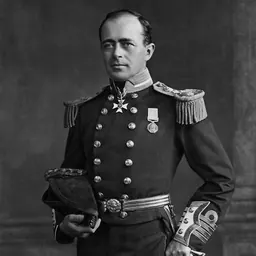

Contemporaries
People whose lives overlapped Hugh Tweedie's


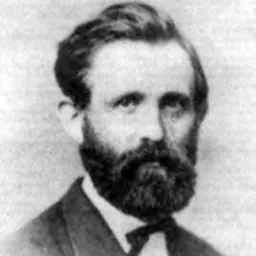
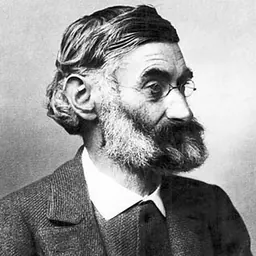
Frequently asked questions
Who was Hugh Tweedie?
Royal Navy admiral (1877–1951)
When was Hugh Tweedie born?
Hugh Tweedie was born on 5 April 1877 in Kent.
When did Hugh Tweedie die?
Hugh Tweedie died on 20 August 1951 in Somerset.
What was Hugh Tweedie's occupation?
Hugh Tweedie was a convoy Commodore, deputy Lieutenant, justice of the Peace, somerset and trinity House.
What nationality was Hugh Tweedie?
Hugh Tweedie was British.
Sources & further reading
Cite this page
APA: Biography.guide. (2026). Hugh Tweedie. https://biography.guide/hugh-tweedie/
MLA: "Hugh Tweedie." Biography.guide, https://biography.guide/hugh-tweedie/.
Chicago: "Hugh Tweedie." Biography.guide. https://biography.guide/hugh-tweedie/.
Data last updated: 2026-09-20 · Spot an error? Report a correction.
Page generated 2026-09-27 05:33 UTC