
About Hugh S. Roberton
Lived 1874 – 1952 (aged 78). Hugh S. Roberton was a British composer, conductor, choir director, copywriter and musician.
Sir Hugh Stevenson Roberton (23 February 18747 October 1952) was a Scottish composer and, as founder of the Glasgow Orpheus Choir, one of Britain's leading choral-masters in the first half of the 20th century.
Whilst he shared in later years a white goatee like fellow composer Thomas Beecham, he was known for his quiet Scottish humour.
Life Roberton was born in Glasgow, left school at the age of 14 and entered the family business – a funeral directors – which by the age of 21 he was managing. He worked there into the 1930s, devoting most of his spare time to music making. He was also involved in the artistic side of the Labour movement, a Fabian socialist, life-long pacifist and a friend of Ramsay MacDonald.
Roberton inherited his love of folk song from his mother, an untrained singer, and was largely self-taught in music, learning by singing in choirs and later directing them. As well as music, Roberton was an author and playwright. He wrote two plays, Kirsteen and Christ in the Kirkyaird (published together in 1922), some humorous essays under the title Curdies (1931), and a handbook, Choir Singing (1925).
Orpheus Choir
In 1906 he founded the Glasgow Orpheus Choir. For five years before that it was the Toynbee Musical Association, which he started when aged only 26. A perfectionist, he expected the highest standards of performance from its members. Its voice was a choir voice, its individual voices not tolerated. Roberton set new standards in choral technique and interpretation. For almost fifty years, until it disbanded in 1951 on the retirement of its founder on grounds of ill-health, (The original Gaelic lyric and tune of Mairi's Wedding was by John Bannerman, 1865–1938). Roberton wrote alternative lyrics for Dashing White Sergeant, also included in the volume. His best known original composition is the partsong All in the April evening (words by Katharine Tynan).
Personal life
Roberton was knighted in the 1931 New Year Honours, for services rendered to British music. Because of his pacifism and membership of the Peace Pledge Union both he and the Glasgow Orpheus Choir were banned by the BBC from broadcasting during the Second World War.
There were seven sons and two daughters, including the Australian politician and diplomat Hugh Roberton (1900–1987) and Kenneth Roberton, music publisher.
Don’t just read it —
keep it.
Full-length biographies made to live with: read them, listen on the way to work, watch them tonight.
- E-book
- Audio
- Video
Instant download · yours to keep · every purchase keeps this site free
Important facts
People in Hugh S. Roberton's life
Named in this biography and alive at the same time
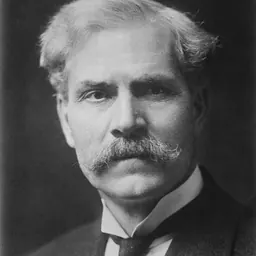




Related people
Same field, nearest in time





Contemporaries
People whose lives overlapped Hugh S. Roberton's

Frequently asked questions
Who was Hugh S. Roberton?
Scottish composer and choirmaster (1874-1952)
When was Hugh S. Roberton born?
Hugh S. Roberton was born on 23 February 1874 in Glasgow.
When did Hugh S. Roberton die?
Hugh S. Roberton died on 7 October 1952.
What was Hugh S. Roberton's occupation?
Hugh S. Roberton was a composer, conductor, choir director, copywriter and musician.
What nationality was Hugh S. Roberton?
Hugh S. Roberton was British.
Sources & further reading
Cite this page
APA: Biography.guide. (2026). Hugh S. Roberton. https://biography.guide/hugh-s-roberton/
MLA: "Hugh S. Roberton." Biography.guide, https://biography.guide/hugh-s-roberton/.
Chicago: "Hugh S. Roberton." Biography.guide. https://biography.guide/hugh-s-roberton/.
Data last updated: 2026-09-20 · Spot an error? Report a correction.
Page generated 2026-09-27 05:17 UTC