
Hugh Ray Easton
English stained glass artist
About Hugh Ray Easton
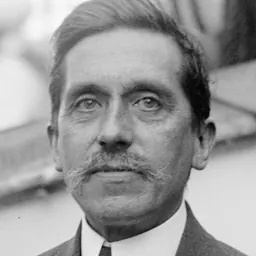
Lived 1906 – 1965 (aged 58–59). Hugh Ray Easton was a glass artist.
Hugh Easton (28 November 1906 – 15 August 1965) was a British stained glass artist of the mid-20th century, best known for his prolific work in the years following the Second World War. His many memorial windows for Church of England buildings blend traditional religious iconography with contemporary context. His best-known work is the 1947 Battle of Britain memorial window in the Henry VII Chapel at Westminster Abbey in London.
Early life and education Hugh Ray Easton was born in Marylebone, London on 28 November 1906 to Dr Frank Easton and Alice Howland. His father was a general practitioner. In 1920 he was admitted to Wellington College in Crowthorne, Berkshire where he failed to distinguish himself, even in the field of art (In 1953 Easton would design 11 windows for the school chapel). It was only while studying French at the University of Tours after the end of the First World War that Easton developed an interest in church architecture and stained glass, developing an aptitude in drawing and painting as he recorded what he saw.
Early career
On returning to England in 1925, aged 19, Easton began an apprenticeship with the architectural and church furnishing practice of William Henry Randoll Blacking in Guildford. It was under Blacking's tutelage that Easton adopted the guiding principle that a decorated window should avoid darkening the interior of the building in which it is installed.
In 1930, Easton established an independent practice in Cambridge, where he would remain until the outbreak of the Second World War in 1939. Though not a student of the University of Cambridge himself, Easton's diaries record the relationships he cultivated among artistically minded undergraduates, including Anthony Blunt and Guy Burgess.
Nevertheless, it was commissions for stained glass designs that bought Easton the most commercial success. In 1935 his design was chosen for a memorial window for Exeter Cathedral in memory of Hugh, 4th Earl Fortescue. The window, which depicted St George and St Hubert, was destroyed during the Exeter Blitz in 1942. In 1956 it was replaced with a new window, also designed by Easton.
Eaton's 1936 window for St Mary's Church, Burwell, which depicts the Annunciation and the Adoration of the Maji, won specific praise from the architect and critic Theodore Fyfe. The same year he also won the commission to replace two windows by William Wailes in the chapel of Clare College, Cambridge, which had been deemed too dark and heavy, and designed the new west window for the Church of St Paul in King's Cross, Halifax. The subject of the latter is St John's vision of the New Jerusalem, beneath which ride the Four Horsemen of the Apocalypse and a detailed panorama of Halifax standing in for the Holy City itself.
In 1938 Easton completed three 20-foot windows for the eastern apse of Ypres Cathedral in Belgium, depicting St Martin, St Maurice and St Michael. He was also commissioned by the Worshipful Company of Glaziers and Painters of Glass - to whom he had been attached as a liveryman since 1935 - to produce a window for Tonbridge School Chapel. The following year the Company commissioned two paired windows from Easton for Winchester Cathedral, one a memorial to George V and the second commemorating the coronation of George VI.
Post-war success
Unveiled on 10 July 1947, the Battle of Britain memorial window in Westminster Abbey instantly became Easton's best-known work, which it remains to this day. In his 2003 biography of Easton for the Journal of the Society of Master Glass Makers, Adam Goodyear notes that Easton's aim for the window was to:
"…create in glass a jewelled curtain of such brilliance as to be a translucent painting, a fresco shot through by flames, taking its place in the richness of the Henry VIl's Chapel. Each light in its own way tells the story of the Battle of Britain, each light has its own meaning, but the whole is subservient to the architectural frame."
In 1950 Easton moved his studio again, this time to Chelsea in West London. With the rebuilding and refurbishment of hundreds of bomb-damaged church buildings underway, the forthcoming years would prove to be commercially fruitful for Easton. Commissions included 13 windows for St George's Church at the Royal Naval Barracks, Chatham (1950); seven windows for the chapel of Oundle School (1950); eleven windows for Wellington College (1953); and twelve windows for St George's Chapel, Biggin Hill (1955). 1955 also saw the unveiling of the Easton's glass for the monumental west window of Holy Trinity Church in Coventry, a strikingly modern window in the context of the Gothic church in which it was installed.
Among Easton's final major commissions was the east window for St Luke's Church in Chelsea, at the time said to be the largest window installed in a London church since the end of the Second World War. Dedicated in 1959, its heraldic design incorporates the symbols and devices of the Evangelists, Apostles and Doctors of the Church, as well as those of 105 other saints.
Death In 1960 Easton was diagnosed with cancer of the hip. While he did not immediately retire, his pace of work slowed and he began to accept fewer commissions. Easton died at the King Edward VII Hospital for Officers, London, on 15 August 1965, aged 58. A memorial service was held in the Henry VII Chapel in Westminster Abbey in front of his Battle of Britain window. Easton's ashes were interred in the family plot at St Giles's Church, Bradford-on-Tone, where two years later, a memorial window designed by Easton's former apprentice and long time collaborator Gerald Coles was unveiled.
Legacy
Easton's work has been noted for its high degree of narrative clarity, often featuring figures in contemporary dress, particularly military uniform. During the immediate post-war period, this sensibility found significant favour with both the public and institutional patrons who appreciated Easton's legible, heroic, and patriotic imagery. In this regard his designs have been interpreted as a bridge between the Gothic revivalist practice of his Victorian and early 20th-century forebears and the onset of mid-century modernism that favoured clarity and optimism, manifested in the UK as the Festival of Britain style.
Selected works
Romsey Abbey, Hampshire Annunciation window (1930)
Canterbury Cathedral, Kent "Musicians’ Window in west cloister - four English composers: Purcell, Tallis, Merbecke and Archbishop Stephen Langton (1934) Sheppard memorial window (1939)
Exeter Cathedral, Devon Fortescue memorial window - St George and St Hubert (1935, destroyed 1942) Hugh Latimer and Nicholas Ferrar window (1936)
St John the Baptist's Church, Cirencester, Gloucestershire Croome memorial window - Fruit of the Mystic Rose (1937)
Ypres Cathedral, Belgium Three windows in eastern apse - St Martin, St Maurice and St Michael (1938)
Winchester Cathedral, Hampshire George V memorial window - George VI in Garter robes (1938) George VI coronation window - George VI and Queen Elizabeth with Henry IV and Joan of Navarre (1939)
Westminster Abbey, London Battle of Britain memorial window in Henry VII's Chapel - 48-lights depicting heavenly Seraphim, scenes of the Passion, squadron badges and airmen (1947) Two windows for Cheyneygates (1953) Viscount Elevdon memorial window - St George and the dragon (1950)
St Cuthbert's Church, Philbeach gardens, London Lady Chapel windows (c.1947)
Rolls-Royce Main Works, Derby Rolls-Royce Battle of Britain Memorial Window (1948)
St Dunstan's Church, Stepney, London East window - Crucifixion with detailed panorama of London's post-Blitz East End (1949)
St George's Church, Royal Naval Barracks, Chatham, Kent 13 single-light war memorial windows (1950)
Brechin Cathedral, Angus Wright memorial window - the apostles Bartholomew, Simon the Zealot and Jude (1952) Lady Chapel window - Virgin and Child (1952) Bulteel memorial window - Lamentation of the Virgin (1959)
Wellington College, Crowthorne, Berkshire 11 windows depicting Biblical scenes (1953) Gibson memorial window - Holy sacrament window (1957)
Holy Trinity Church, Coventry, West Midlands West window - Christ in Majesty (1955)
Gallery
Don’t just read it —
keep it.
Full-length biographies made to live with: read them, listen on the way to work, watch them tonight.
- E-book
- Audio
- Video
Instant download · yours to keep · every purchase keeps this site free
Important facts
People in Hugh Ray Easton's life
Named in this biography and alive at the same time




Related people
Same field, nearest in time
Contemporaries
People whose lives overlapped Hugh Ray Easton's

Frequently asked questions
Who was Hugh Ray Easton?
English stained glass artist
When was Hugh Ray Easton born?
Hugh Ray Easton was born in 1906.
When did Hugh Ray Easton die?
Hugh Ray Easton died in 1965.
What was Hugh Ray Easton's occupation?
Hugh Ray Easton was a glass artist.
Sources & further reading
Cite this page
APA: Biography.guide. (2026). Hugh Ray Easton. https://biography.guide/hugh-ray-easton/
MLA: "Hugh Ray Easton." Biography.guide, https://biography.guide/hugh-ray-easton/.
Chicago: "Hugh Ray Easton." Biography.guide. https://biography.guide/hugh-ray-easton/.
Data last updated: 2026-09-20 · Spot an error? Report a correction.
Page generated 2026-09-27 05:28 UTC