
Hugh O'Donnell, 2nd Earl of Tyrconnell
Irish soldier of fortune, titular King of Tír Conaill
About Hugh O'Donnell, 2nd Earl of Tyrconnell
Lived 1606 – 1642 (aged 35–36).
Colonel Hugh Albert O'Donnell, 2nd Earl of Tyrconnell (He was also styled Hugh-Albert or Albert-Hugh O'Donnell.) either at Kildare Castle or in his mother's home at Maynooth. His paternal grandparents were Hugh McManus O'Donnell, a Gaelic Irish chieftain in Ulster, and Scottish noblewoman Fiona "Iníon Dubh" MacDonald. His maternal grandparents were Henry FitzGerald, 12th Earl of Kildare, an Irish peer of Hiberno-Norman descent, and English noblewoman Frances Howard.
O'Donnell's paternal family were the O'Donnell clan of Tyrconnell, who claimed descent, via Conall Gulban of the Cenél Conaill, from High King Niall of the Nine Hostages. Rory's branch of the O'Donnell clan had ruled Tyrconnell since 1566. Rory fought against the English Crown during the Nine Years' War (1593–1603). He surrendered in 1603 and managed to secure favour with King James VI and I, though he was required to renounce his Gaelic titles. On 7 October [ O.S. 27 September] 1603, Rory was created Baron of Donegal and 1st Earl of Tyrconnell, In the haste to depart, O'Donnell's mother Bridget was left behind in Maynooth. Bridget was pregnant at the time; a few months after the flight, she gave birth to O'Donnell's younger sister Mary Stuart O'Donnell. in February 1608, and O'Donnell was given to the Convent of the Dames Blanches in Leuven. This was after Rory and Tyrone left Leuven to continue their journey to Rome. O'Donnell's cousin Hugh, and Tyrone's sons Shane and Brian were also left in Leuven.
The O'Gallaghers were devastated by this development, reminding officials that they were O'Donnell's legal fosterers. They condemned Madden for her "slovenness and unpleasantness", and accused her for only caring about the well-being of her own child and her spouse Dennis O'Kelly. Hugh O'Gallagher questioned how a stranger could teach O'Donnell the Irish language ("his mother tongue") and he asserted that Caecilia should remain with O'Donnell at the convent as his rightful nurse. The O'Gallaghers bemoaned that they had "no other consolation except this child, or means of support, or income", and lamented to Albert VII, Archduke of Austria and sovereign of the Netherlands, that they "had nothing to eat except what your Highness with your wanted kindness is pleased to grant". These desperate solicitations and pleas only alienated their correspondents.
O'Donnell became 2nd Earl of Tyrconnell after his father's death in Rome from a fever on 28 July 1608. Trumbull apparently attempted to bring O'Donnell back to Ireland, to be educated in the English manner, but this was blocked by Nuala. During this time, the Crown was sending the sons of Gaelic Irish lords to Dublin or England to be re-educated as English gentlemen. The title Earl of Tyrconnell was attainted by the Irish Parliament on 7 November [ O.S. 28 October] 1614.
At the royal court
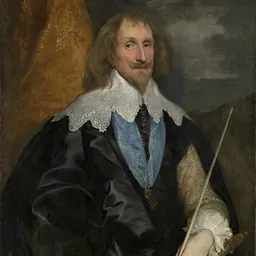
From 1615, O'Donnell and his cousin Hugh were in the receipt of a modest pension from Albert VII. As both boys were called Hugh, O'Donnell assumed the name Albert for his confirmation, in honour of Albert VII, who was O'Donnell's sponsor at his confirmation. Hugh Albert O'Donnell was attached to the court of the Infanta Isabella as a page, and it was during this time that his portrait was painted, by either Peter Paul Rubens or his workshop. This portrait is the only authentic and contemporary portrait of the last regnant O'Donnell dynasty of Tyrconnell.
O'Donnell had probably already left the college by the start of 1617. He petitioned Albert VII for an increase in pension, asking that it should be made the same as his late father's pension. An increase of fifty crowns monthly was granted on 24 August 1618. He also petitioned Isabella that he might be transferred to the service of the Prince in Spain, but by May 1619 this had not been granted. Albert VII brought this matter to Philip III but it was ignored. In autumn 1621, O'Donnell was enrolled as a student at St Anthony's College.
Philip III died in March 1621 and was succeeded by his son Philip IV. O'Donnell once again petitioned for a further increase in his pension so that his pay would be equal to Shane's pay. On 8 November 1622, Albert VII recommended to the king that O'Donnell's monthly pension should be increased by 50 crowns, also in view of the services of O'Donnell's late father. O'Donnell was thereafter attached to Albert VII's court at Brussels. In 1623, O'Donnell wrote: "...I do not consider myself inferior in rank, services and obligations to the Counts of Tiron... and only His Majesty is powerful enough to overshadow my house and no one lower than a king in Ireland, Scotland or England..."
Career
Rise in influence On 26 June 1623, O'Donnell was granted permission to travel to Spain for six months "on business of great importance". Although no documentation exists of his visit, it is assumed he spent this time in Spain. On 6 August, this grant was renewed for three more years. O'Donnell's cousin Hugh joined the first Irish regiment (tercio) in the Spanish army—which was then coloneled by Shane, now 3rd Earl of Tyrone—as a captain. Cousin Hugh died in early 1625 in the Siege of Breda.
As O'Donnell matured, he took over the role of leader of the O'Donnell exiles from his aunt Nuala. In 1595, Rory's elder brother Hugh Roe, last undisputed chief of the O'Donnell clan, claimed sovereignty over Sligo and Lower Connacht. These titles are recorded in a document dated 3 November 1626. Had the earldom of Tyrconnell not been attainted, O'Donnell's title would have had an annual value of 600,000 gold florins.
O'Donnell's company of Horse was ordered into garrison at Sichem, where it seemingly stayed until April 1630. Many of O'Donnell's junior officers resented his presence and raised difficulties about obeying him, possibly because he was a foreigner commanding a Spanish company. On 31 October 1630, orders were issued that all Cavalry Captains of the Light Horse, regardless of birth, nation, or condition, were to respect O'Donnell's rights of precedence.
Planned Armada and Mary Stuart O'Donnell
Conflict between Spain and England was revived with the Anglo-Spanish War of 1625 to 1630. Irishmen living on the Continent pressured the Spanish government to use this conflict to liberate Ireland from English control. In 1626, Conry and Owen Roe O'Neill went to Madrid to discuss plans for a Spanish expedition to Ireland with Philip IV. They proposed that the expedition should be led by O'Donnell and Shane as generals of equal footing to contend with the serious rivalry and jealousy between them. It was suggested that half of Shane's regiment could be assigned to O'Donnell. It was also proposed, with the approval of Philip IV, that an Irish republic should be established rather than a new monarchy, to avoid conflict between the earls over who had the right to the throne of Ireland. The Infanta wrote "the earls should be called Captains General of the said republic and... one could exercise his office on land and the other at sea".
In summer 1626, O'Donnell's younger sister Mary broke into a London prison and freed two Irishmen. She subsequently fled from the British Isles. Through his influence, she was received by Isabella's court. anticipated to sail to Killybegs in September. However, the invasion plan was marred by various disagreements. The Spanish government was reticent to be publicly associated with the invasion. O'Donnell and O'Neill also argued over their roles as joint commanders. Although O'Donnell was seven years younger than O'Neill, he again maintained that he was equally entitled to command an Irish regiment. The authorities in Brussels wished for O'Neill to take sole command of the expedition, while authorities in Madrid favoured O'Donnell (probably because Conroy remained there as an advisor). Conroy's hope for a marriage to unify the feuding families came to naught, as Mary was secretly in a relationship with an Irish captain named Dudley O'Gallagher, who had accompanied her to the Continent; she rejected the marriage. or off Tarragona. An ensuing naval engagement took place across 30 June and 1 July. On the second day of the battle, O'Donnell was entrusted with leading a Spanish attack on the French van after two hours of fighting. His ship, the 60-gun Magdalena, was closely engaged with the French ship Galion de Guise. In an attempt to run down the Spanish flagship, a French fireship accidentally set fire to Galion de Guise. The fire spread to the Magdalena. Whilst the ship was being evacuated, O'Donnell drowned along with many of his menMicheline Walsh stated that thirty of his men died in the battle, On 20 March 1632, O'Donnell entered into a marriage agreement with noblewoman Anna-Margaret of Henin-Lietard. She was the eldest daughter of Maximilien II de Hénin, 5th Count of Bossu, and his wife Alexandrine Françoise de Gavre. Anna-Margaret died in 1634. O'Donnell had no children.
Maximilien II de Hénin was a Knight of the Golden Fleece. Alexandrine Françoise de Gavre was a near kinswoman of the last eccentric Charles, Duke of Guise. Anna-Margaret's eldest brother was Albert Maximilian de Hennin, who was an ally to Owen Roe O'Neill. Her family had a chateau in what is modern-day Belgium, though their noble house (the House of Hénin of the Belgian nobility) is now extinct. Legacy O'Donnell and O'Neill's deaths in consecutive years were a major blow to Irish expectations that the two men would lead an Irish rebellion. The contemporary source Commentariiu Rinuccinianus described O'Donnell and O'Neill thus: "Tyrconnell, an accomplished courtier, expert in matters of war, of the greatest courage, but less prudent than Tyrone, a man of singular judgement". O'Donnell was outlived by his mother Bridget, who died in 1682 at the age of ninety.
According to the original patent of the earldom of Tyrconnell, the title (were it not attainted in 1614) would have passed to Donal Oge O'Donnell, who was the son of Rory's late elder half-brother Donal. In O'Donnell's will, he appointed Hugh Balldearg O'Donnell, a soldier in the Spanish army, as his heir, thus restoring the chieftainship to the elder branch of the family.
As of 2018, two portraits, one of O'Donnell and the other of his wife Anna-Margaret, are held at Kiplin Hall in Yorkshire. Modern appraisal Historian Matteo Binasco notes that, despite O'Donnell's young age, he was a proactive figure who worked tirelessly to support his family's interests, as well as the interests of Irish Franciscans.
Ancestry
Don’t just read it —
keep it.
Full-length biographies made to live with: read them, listen on the way to work, watch them tonight.
- E-book
- Audio
- Video
Instant download · yours to keep · every purchase keeps this site free
Important facts
People in Hugh O'Donnell, 2nd Earl of Tyrconnell's life
Named in this biography and alive at the same time


Contemporaries
People whose lives overlapped Hugh O'Donnell, 2nd Earl of Tyrconnell's


Frequently asked questions
Who was Hugh O'Donnell, 2nd Earl of Tyrconnell?
Irish soldier of fortune, titular King of Tír Conaill
When was Hugh O'Donnell, 2nd Earl of Tyrconnell born?
Hugh O'Donnell, 2nd Earl of Tyrconnell was born in 1606.
When did Hugh O'Donnell, 2nd Earl of Tyrconnell die?
Hugh O'Donnell, 2nd Earl of Tyrconnell died in 1642.
What nationality was Hugh O'Donnell, 2nd Earl of Tyrconnell?
Hugh O'Donnell, 2nd Earl of Tyrconnell's recorded nationality: Kingdom of Ireland.
Sources & further reading
· Wikipedia: Hugh O'Donnell, 2nd Earl of Tyrconnell
· DBpedia: Hugh O'Donnell, 2nd Earl of Tyrconnell
Cite this page
APA: Biography.guide. (2026). Hugh O'Donnell, 2nd Earl of Tyrconnell. https://biography.guide/hugh-o-donnell-2nd-earl-of-tyrconnell/
MLA: "Hugh O'Donnell, 2nd Earl of Tyrconnell." Biography.guide, https://biography.guide/hugh-o-donnell-2nd-earl-of-tyrconnell/.
Chicago: "Hugh O'Donnell, 2nd Earl of Tyrconnell." Biography.guide. https://biography.guide/hugh-o-donnell-2nd-earl-of-tyrconnell/.
Data last updated: 2026-09-20 · Spot an error? Report a correction.
Page generated 2026-09-27 05:29 UTC