
About Hugh May
Lived 1621 – 1684 (aged 62–63). Hugh May was a British architect.
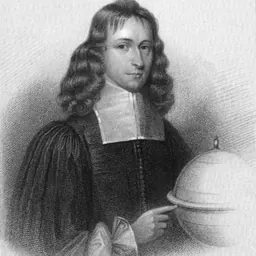
Hugh May (1621 – 21 February 1684) was an English architect in the period after the Restoration of King Charles II. He worked in the era which fell between the first introduction of Palladianism into England by Inigo Jones, and the full flowering of English Baroque under John Vanbrugh and Nicholas Hawksmoor. His own work was influenced by both Jones' work, and by Dutch architecture. Although May's only surviving works are Eltham Lodge, and the east front, stables and chapel at Cornbury Park, his designs were influential. Together with his contemporary, Sir Roger Pratt, May was responsible for introducing and popularising an Anglo-Dutch type of house, which was widely imitated.
Biography Hugh May was the seventh son of John May of Rawmere, in Mid Lavant, West Sussex, by his wife, Elizabeth Hill, and was baptised on 2 October 1621. He was a first cousin of Baptist May, Charles II's Keeper of the Privy Purse. As a member of a Royalist family, Hugh May spent the years of Oliver Cromwell's Commonwealth in the service of George Villiers, 2nd Duke of Buckingham. May arranged the transport of artworks from the Duke's York House to Holland, where the Duke was in exile. Here, May was exposed to recent developments in Dutch Classical architecture, and the simple but refined brick-built houses designed by Jacob van Campen and Pieter Post. May was a friend of the painter Peter Lely, and in 1656 the two of them travelled to Charles II's court in exile.
Rebuilding London Following the Great Fire of London, in September 1666, May was one of the three "Commissioners for Rebuilding the City of London", appointed by Charles II. The others were Roger Pratt and Christopher Wren, and along with three representatives of the City of London, Robert Hooke, Edward Jerman and Peter Mills, they were charged with surveying the damage, and promoting methods of rebuilding. The commissioners' work led to two acts of Parliament for rebuilding, the Rebuilding of London Act 1666 and the Rebuilding of London Act 1670, although May's role in the reconstruction work was limited.
Windsor Castle In June 1668, May was promoted to Comptroller of the King's Works, and was also appointed Clerk to the Recognizances, an office of the Court of Common Pleas. In November 1673, he was further appointed Comptroller of the Works at Windsor Castle, where, from 1675, he remodelled the upper ward, adding to the apartments of Queen Catherine of Braganza, and built St George's Hall and the Royal Chapel. Again working with Gibbons, and the painter Antonio Verrio, May created a series of baroque interiors, the grandest of which, St George's Hall, served as a model for Wren's Great Hall at Greenwich Palace. The hall was demolished in 1826, when Sir Jeffry Wyatville remodelled the castle for George IV, although the Queen's Audience Chamber and Presence Chamber survive in altered form.
Don’t just read it —
keep it.
Full-length biographies made to live with: read them, listen on the way to work, watch them tonight.
- E-book
- Audio
- Video
Instant download · yours to keep · every purchase keeps this site free
Important facts
People in Hugh May's life
Named in this biography and alive at the same time





Related people
Same field, nearest in time


Contemporaries
People whose lives overlapped Hugh May's



Frequently asked questions
Who was Hugh May?
British architect
When was Hugh May born?
Hugh May was born in 1621.
When did Hugh May die?
Hugh May died on 21 February 1684.
What was Hugh May's occupation?
Hugh May was an architect.
What nationality was Hugh May?
Hugh May was British.
Sources & further reading
Cite this page
APA: Biography.guide. (2026). Hugh May. https://biography.guide/hugh-may/
MLA: "Hugh May." Biography.guide, https://biography.guide/hugh-may/.
Chicago: "Hugh May." Biography.guide. https://biography.guide/hugh-may/.
Data last updated: 2026-09-20 · Spot an error? Report a correction.
Page generated 2026-09-27 05:24 UTC