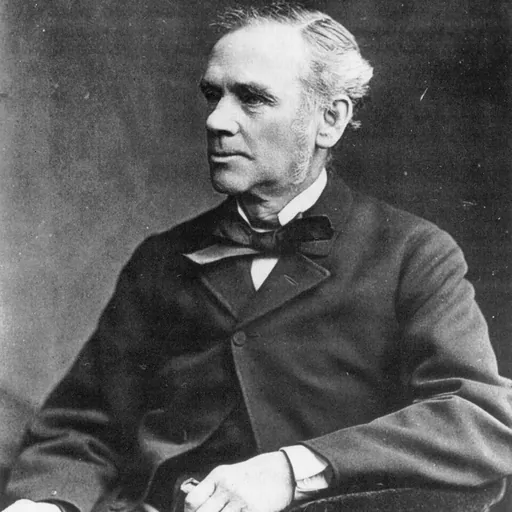
About Hugh Mason
Lived 1817 – 1886 (aged 69). Hugh Mason was a British politician.
Hugh Mason (30 January 1817 – 2 February 1886) was an English mill owner, social reformer and Liberal politician. He was born in Stalybridge and brought up in Stalybridge and Ashton-under-Lyne until he entered the family cotton business in 1838 after a seven-year period working in a bank. Having originally opposed trade unions, Mason became a paternalistic mill owner, creating a colony for his workers with associated facilities and ensuring that they experienced good conditions. During the Lancashire Cotton Famine of the 1860s he refused to cut workers' wages although it was common practice.
Mason became the first Liberal to be elected councillor for Ashton-under-Lyne in 1856. He was mayor of the council from 1857 to 1860 and retired from local politics in 1874 due to conflict with his own party. Mason returned to the Liberals in 1878 when he stood for election as Member of Parliament for Ashton-under-Lyne. He was voted in and supported progressive policies, which included women's suffrage, making him unpopular within his own party. He was MP from 1880 to 1885. When he died in 1886, aged 69, Hugh Mason had amassed £290,933 (now about £17 million).
Early life and business career Hugh Mason was born in Stalybridge, Cheshire, on 11 May 1817 and christened there. He was the youngest of four children of Thomas Mason, a former textile manager, and Mary, the daughter of John Holden, Esq. The family had moved to Stalybridge from Derbyshire in 1776. After working as the manager of a mill in Ashton-under-Lyne, Thomas established his own business in 1815 in partnership with James Booth and Edward Hulton at Currier Slacks Mill in the town. Rapid growth in their enterprise saw them expand into the Bank Mill and Royal George Mills in the 1820s and Albion Mill in the 1830s. At the age of 10, Hugh was working in the mill,
In 1845, to house the workers for the mills, Mason began construction of a "workers' colony". The colony not only provided 150 terrace houses (housing an estimated 691 people in 1872) but also leisure facilities such as a library, a swimming pool, a gymnasium, and a reading room. Mason built up what he saw as a model industrial community, Residents were expected to adhere to his strict moral code and he discouraged the use of public houses. and 1853 respectively. Their father remained active in the company until 1860 when he retired, leaving Hugh as the sole owner. The Manchester Cotton Company was set up in 1860 and Mason's success in the cotton industry led him to become its chairman from the beginning until its winding up, which began in 1864, but was not concluded until 1867. The purpose of the company was to increase the number of producers of cotton; this was important as the American market was closed off during the American Civil War, causing the Lancashire Cotton Famine. Mason served as President of the Manchester Chamber of Commerce from 1871 to 1874, and came to hold interests in the Bridgewater Canal Navigation Company, the Midland Railway Company, the Mersey Dock Board, and various other coal and iron companies. These inequalities in political representation led to calls for reform and eventually the Peterloo Massacre in 1819. Hugh said of his father that "To his life of honest industry, to his example of commercial probity, to his high Christian character, to his training, of me in my early years, to his wise consuls, I owe under God my position in society." He supported progressive measures such as opening a public park, providing public libraries, and addressing unsanitary conditions in parts of Ashton-under-Lyne.
As well as being a councillor, Mason was also elected a local magistrate for Ashton-under-Lyne in 1857. During his time in office he had to deal with the bread riots of 21–22 March 1863 (caused by the cotton famine) and the Murphy Riots in May 1868. He personally went to one mob during the Murphy Riots to read them the riot act face-to-face. Such was his significance in Manchester he was appointed President of the Chamber of Commerce for two years from 1871. At the same time he was a Governor of Owen's College in the city. Mason was appointed a member of the Board of the Mersey Docks and Harbour.
National The Manchester Reform Club building. Mason was a founder member of the club. Mason, along with a group of other Advanced Liberals supporting John Morley, the gladstonian, was one of the founding members of the Reform Club in Manchester, a political club founded in 1867 for Liberals and their supporters. Despite retiring from local politics because of conflict with the Liberals, by 1878 he was back in favour and Liberal councillors were encouraging Mason to stand for parliamentary election.
As an MP he lived at 33 Onslow Square, Kensington, and was a member of the Reform Club. Mason supported many reformist bills and became a spokesman of the Women's Suffrage Association in 1881. He proposed motions for women's suffrage in 1881 and again in 1883 but was defeated on both occasions. Bertha became known as a campaigner for women's suffrage and temperance.
Hugh Mason died three days after his 69th birthday on 2 February 1886 at his home, Groby Hall. At his death, he had amassed a fortune worth £290,933 (now worth about £17M). He was the first person to have a statue (now protected as a Grade II listed building) erected in his honour in Tameside; it was financed by public subscription immediately after Mason's death.
Don’t just read it —
keep it.
Full-length biographies made to live with: read them, listen on the way to work, watch them tonight.
- E-book
- Audio
- Video
Instant download · yours to keep · every purchase keeps this site free
Important facts
Family & relationships
People in Hugh Mason's life
Named in this biography and alive at the same time




Related people
Same field, nearest in time




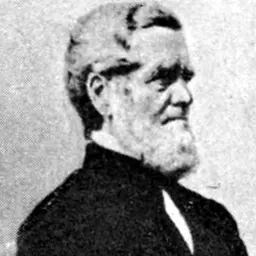
Contemporaries
People whose lives overlapped Hugh Mason's




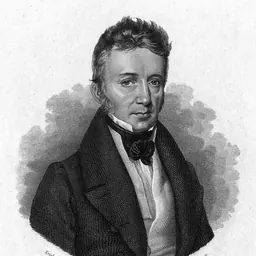
Frequently asked questions
Who was Hugh Mason?
English mill owner, social reformer and Liberal politician (1817-1886)
When was Hugh Mason born?
Hugh Mason was born on 30 January 1817 in Stalybridge.
When did Hugh Mason die?
Hugh Mason died on 2 February 1886 in Ashton-under-Lyne.
What was Hugh Mason's occupation?
Hugh Mason was a politician.
What nationality was Hugh Mason?
Hugh Mason was British.
Sources & further reading
Cite this page
APA: Biography.guide. (2026). Hugh Mason. https://biography.guide/hugh-mason-politician/
MLA: "Hugh Mason." Biography.guide, https://biography.guide/hugh-mason-politician/.
Chicago: "Hugh Mason." Biography.guide. https://biography.guide/hugh-mason-politician/.
Data last updated: 2026-09-21 · Spot an error? Report a correction.
Portrait: Wikimedia Commons · author & licence
Page generated 2026-09-27 05:00 UTC