
About Hugh Longbourne Callendar
Lived 1863 – 1930 (aged 66). Hugh Longbourne Callendar was a British physicist and engineer.
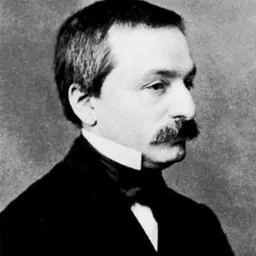
Hugh Longbourne Callendar (18 April 1863 – 21 January 1930) was a British physicist known for his contributions to the areas of thermometry and thermodynamics.
Callendar was the first to design and build an accurate platinum resistance thermometer suitable for use, which allowed scientists and engineers to obtain consistent and accurate results. Callendar worked with multiple institutions during World War I, helping to research and develop useful tools for the Navy. He was elected as a Fellow of the Royal Society, and later a member of the Physical Society of London. Callendar was also nominated for the Nobel Prize in Physics three times.
Birth & education Callendar was born in Hatherop, Gloucestershire as the eldest son of the Reverend Hugh Callendar, a local Anglican rector, and Anne Cecilia Longbourne. He was christened in his father's church on May 24, 1863. Here he developed his thesis on platinum thermometry and in 1886 he became a Fellow of Trinity. While at Cambridge, he invented a new system of shorthand for writing quickly, which J.J. Thomson learnt and used. and wrote on English spelling reform.
Career
Resistance thermometry Prior to Callendar's work in the area of thermometry, there lacked an instrument for accurate and reliable temperature measurement. The gas thermometer was the standard for temperature scale at the time. These devices had significant limitations regarding their reliability and practicality, as they were costly and large. The mercury thermometer was also used for temperature measurement, although it had a restricted range and was often too fragile for use. By 1886 he had developed a design for an accurate platinum resistance thermometer, correcting the errors made by Siemens.
Thermodynamics Illustration of calorimeter by H.L. CallendarCallendar left Cambridge and spent two years working as a professor of physics at Royal Holloway College from 1891 to 1893.
Other work In 1896, Callendar was the first in Canada to perform X-ray experiments. The method produced satisfactory results that could be used for imaging in hospitals.
Publications
Don’t just read it —
keep it.
Full-length biographies made to live with: read them, listen on the way to work, watch them tonight.
- E-book
- Audio
- Video
Instant download · yours to keep · every purchase keeps this site free
Important facts
Family & relationships
Related people
Same field, nearest in time




Contemporaries
People whose lives overlapped Hugh Longbourne Callendar's




Frequently asked questions
Who was Hugh Longbourne Callendar?
British physicist (1863-1930)
When was Hugh Longbourne Callendar born?
Hugh Longbourne Callendar was born on 18 April 1863 in Hatherop.
When did Hugh Longbourne Callendar die?
Hugh Longbourne Callendar died on 21 January 1930 in London Borough of Ealing.
What was Hugh Longbourne Callendar's occupation?
Hugh Longbourne Callendar was a physicist and engineer.
What nationality was Hugh Longbourne Callendar?
Hugh Longbourne Callendar was British.
Sources & further reading
· Wikipedia: Hugh Longbourne Callendar
· DBpedia: Hugh Longbourne Callendar
Cite this page
APA: Biography.guide. (2026). Hugh Longbourne Callendar. https://biography.guide/hugh-longbourne-callendar/
MLA: "Hugh Longbourne Callendar." Biography.guide, https://biography.guide/hugh-longbourne-callendar/.
Chicago: "Hugh Longbourne Callendar." Biography.guide. https://biography.guide/hugh-longbourne-callendar/.
Data last updated: 2026-09-20 · Spot an error? Report a correction.
Page generated 2026-09-27 05:23 UTC