
Hugh Inge
Bishop of Meath, Archbishop of Dublin and Lord Chancellor of Ireland
About Hugh Inge
Lived 1460 – 1528 (aged 67–68). Hugh Inge was a catholic priest and judge.
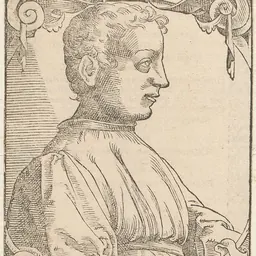
Hugh Inge or Ynge (c. 1460 – 3 August 1528) was an English-born judge and prelate in sixteenth century Ireland who held the offices of Bishop of Meath, Archbishop of Dublin and Lord Chancellor of Ireland.
Biography Inge was born at Shepton Mallet in Somerset in about 1460. Not much is known about his parents, although it is said that they intended him for a career in the Church from an early age. He was educated at Winchester College, became a fellow of New College, Oxford in 1484, BA in 1491 and a Doctor of Divinity in 1511. He was ordained a priest in 1491. He held a number of minor benefices in England including the Church of St Mary the Virgin, Westonzoyland from 1508. After travelling around Europe, he became attached to the household of Adriano Castellesi, the Italian-born Bishop of Bath and Wells, and went with him to Rome in 1504.
Shepton Mallet: The Market Cross, Shepton Mallet, present day. Hugh Inge was born here in about 1460
Inge in Ireland
In 1512, through Wolsey's influence, he was made Bishop of Meath. There was a quarrel between the two men which led to a brief estrangement, and in 1514 Inge wrote to Wolsey imploring him not to "cast him away". The cause of the quarrel appears to have been Wolsey's request that Inge surrender his office of Archdeacon of Meath, which he held jointly with the bishopric, to the royal physician. The quarrel was short-lived, and with Wolsey's renewed support Inge followed the same career path as William Rokeby, whom he succeeded both as Archbishop of Dublin and Lord Chancellor of Ireland in 1521. He was appointed to the Privy Council, apparently in an attempt to strengthen the "English party" on the Council. He was a popular and respected figure in Ireland, and enjoyed the friendship of Gerald FitzGerald, 9th Earl of Kildare, the dominant figure in Irish politics for many years. His regular letters to Wolsey stress that a key difficulty of the Dublin administration was the shortage of ready money.
Inge carried out extensive repairs to the episcopal palace of St. Sepulchre, which was then the Archbishop's principal residence in Dublin. His name is commemorated in Hugh Inge's door, which was restored in the eighteenth century;
The Archbishop was vigilant in protecting the rights and privileges of the See of Dublin, and in 1524 he complained to the Privy Council of Ireland that the city fathers of Dublin, headed by Nicholas Queytrot (or Coitrotte), who had lately held office as Lord Mayor of Dublin, had unlawfully occupied the Manor of St. Sepulchre (St. Sepulchre consisted of several adjoining manors, which covered most of present-day Dublin city south of the River Liffey). According to Inge, the manor was a "liberty" under the jurisdiction of the Archbishop. Queytrot was a formidable opponent, a prominent Dublin merchant and builder, who later served as the city auditor. The Council referred the matter to the three Chief Justices of the Courts of Common Law, who ruled that the disputed lands were indeed within the liberty of the Archbishop, and that he and his successors were entitled to hold them in perpetuity without let or hindrance by the Mayor of Dublin. At the same time he was engaged in a lawsuit with the Dean and Chapter of the Diocese of Kildare as to his rights of visitation in the Diocese if the office of Bishop of Kildare happened to be vacant: the outcome of this lawsuit is unknown
Death and reputation
In 1528 the fourth and most severe outbreak of the mysterious plague called the sweating sickness swept through England and Ireland, and also ravaged much of the continent of Europe. Inge was among its victims: he died on 3 August 1528 and was buried in St. Patrick's Cathedral, Dublin
The Victorian historian O'Flanagan praises him as a judge who was noted for his honesty, good sense and desire to do impartial justice; though his recorded judgements are few, they are said to have carried great weight. In his own lifetime Polydore Vergil praised him as an honest man who brought a measure of order and good government to a notoriously troubled kingdom. D'Alton calls him a man noted for "great justice and probity".
Don’t just read it —
keep it.
Full-length biographies made to live with: read them, listen on the way to work, watch them tonight.
- E-book
- Audio
- Video
Instant download · yours to keep · every purchase keeps this site free
Important facts
People in Hugh Inge's life
Named in this biography and alive at the same time


Related people
Same field, nearest in time



Contemporaries
People whose lives overlapped Hugh Inge's



Frequently asked questions
Who was Hugh Inge?
Bishop of Meath, Archbishop of Dublin and Lord Chancellor of Ireland
When was Hugh Inge born?
Hugh Inge was born in 1460.
When did Hugh Inge die?
Hugh Inge died on 8 August 1528 in Dublin.
What was Hugh Inge's occupation?
Hugh Inge was a catholic priest and judge.
Sources & further reading
Cite this page
APA: Biography.guide. (2026). Hugh Inge. https://biography.guide/hugh-inge/
MLA: "Hugh Inge." Biography.guide, https://biography.guide/hugh-inge/.
Chicago: "Hugh Inge." Biography.guide. https://biography.guide/hugh-inge/.
Data last updated: 2026-09-20 · Spot an error? Report a correction.
Page generated 2026-09-27 05:26 UTC