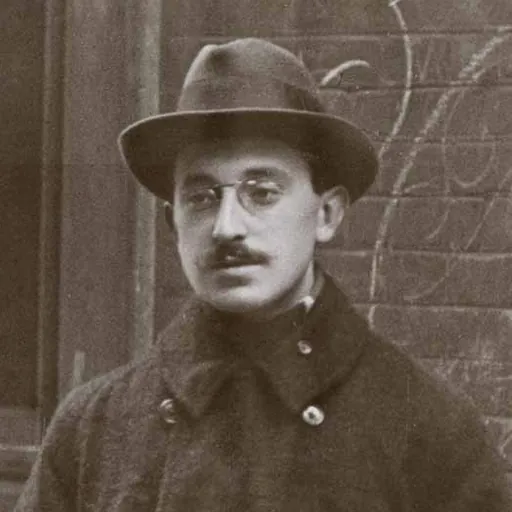
About Hugh Franklin
Lived 1889 – 1962 (aged 73). Hugh Franklin was a British secretary, politician and suffragist.
Hugh Arthur Franklin (27 May 1889 – 21 October 1962) His crimes included an attempted attack on Winston Churchill and an act of arson on a train. He was the first person to be released under the Prisoners (Temporary Discharge for Ill Health) Act 1913 (the so-called "Cat and Mouse law"), and he later married the second, Elsie Duval. Following his release, he never returned to prison, but still campaigned for women's rights and penal reform. He stood unsuccessfully for parliament on two occasions, but did win a seat on Middlesex County Council and was a member of the Labour Party executive committee. The Franklin family was a prominent member of the Anglo-Jewish "cousinhood", and the family was well-off and well-connected. Hugh's uncles included the Liberal politicians Sir Leonard Franklin, Sir Stuart Samuel and Herbert Samuel, 1st Viscount Samuel.
Hugh was educated at Clifton College and, on graduation in 1908, he moved to Gonville and Caius College, Cambridge to read engineering. However, on finishing his first year of study, Hugh made several moves that would ultimately lead to his estrangement from his father. Firstly, he wrote his father a letter, declaring his agnosticism and rejecting the Jewish faith. Secondly, he attended a speech by Emmeline Pankhurst and her daughter Christabel on the topic of women's suffrage. Finally, he abandoned his studies in engineering and began to read economics and sociology instead. He became an active member of the Women's Social and Political Union, the Young Purple White and Green Club and the Men’s Political Union for Women’s Enfranchisement. Hugh left Cambridge for a while to promote the WSPU in London – on his return, he did not put his heart into his studies and missed his examinations. By June 1910, he had abandoned university altogether.
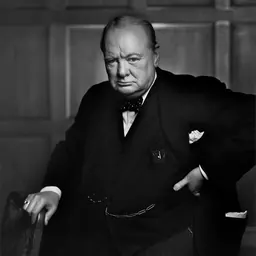
Winston Churchill was at that point Home Secretary, and he was widely blamed for the police excesses on display. Hugh Franklin, who was angered by what he had seen, began to follow Churchill to heckle him at public meetings. On the train back from a meeting in Bradford, Yorkshire, Hugh met Churchill and set on him with a dog whip, shouting "Take this, you cur, for the treatment of the suffragists!"
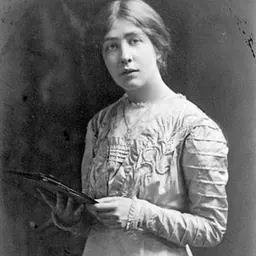
Hugh's final militant act was setting fire to a railway carriage at Harrow on 25 October 1912. He then went on the run, spending two months at the famous radical book store Henderson's, better known as "The Bomb Shop", before being caught and sentenced to six months in prison in February 1913. he fled the country and stayed in Brussels under the assumed name of Henry Forster until the outbreak of World War I. Due to poor eyesight, he was not called to military service. He took a job in a munitions factory and after the war he ceased his militant activities, although he kept close ties with the suffragettes, including Sylvia Pankhurst. Elsie converted to Judaism, and the couple married in the synagogue. Her mother Jane Emily née Hayes (1861–1924) was an active suffragette, as Emily Hayes Duval she was imprisoned for six weeks in 1908 following a demonstration at H. H. Asquith's house.
Hugh stayed with Elsie until, probably weakened by her own force feeding, she died in 1919 from Spanish flu. . The first section of the interview centres around Hugh, including his activities for the suffrage movement, his lifestyle and the failure of his business. Another nephew, Colin Franklin (and his wife, Charlotte), were interviewed in June 1977, and their niece, Mrs Ursula Richley (and her husband Noel), were interviewed in September 1977. These interviews have a greater focus on Alice Franklin, but provide further information about Hugh, such as his life and career following his suffrage campaigning, his work for the Metropolitan Water Board during the Second World War, and his family relationships.
Don’t just read it —
keep it.
Full-length biographies made to live with: read them, listen on the way to work, watch them tonight.
- E-book
- Audio
- Video
Instant download · yours to keep · every purchase keeps this site free
Important facts
People in Hugh Franklin's life
Named in this biography and alive at the same time



Related people
Same field, nearest in time
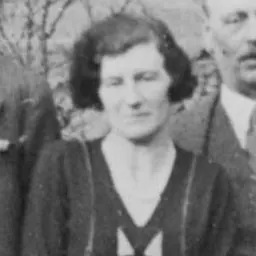

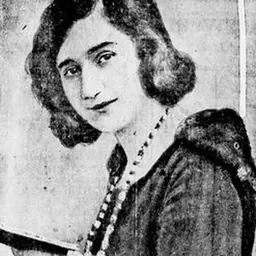
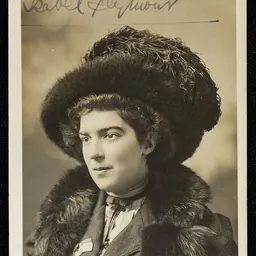

Contemporaries
People whose lives overlapped Hugh Franklin's

Frequently asked questions
Who was Hugh Franklin?
suffragist and politician (1889-1962)
When was Hugh Franklin born?
Hugh Franklin was born on 27 May 1889 in Kensington.
When did Hugh Franklin die?
Hugh Franklin died on 21 October 1962.
What was Hugh Franklin's occupation?
Hugh Franklin was a secretary, politician and suffragist.
What nationality was Hugh Franklin?
Hugh Franklin was British.
Sources & further reading
· DBpedia: Hugh Franklin (suffragist)
Cite this page
APA: Biography.guide. (2026). Hugh Franklin. https://biography.guide/hugh-franklin-secretary/
MLA: "Hugh Franklin." Biography.guide, https://biography.guide/hugh-franklin-secretary/.
Chicago: "Hugh Franklin." Biography.guide. https://biography.guide/hugh-franklin-secretary/.
Data last updated: 2026-09-21 · Spot an error? Report a correction.
Portrait: Wikimedia Commons · author & licence
Page generated 2026-09-27 04:59 UTC