
About Hugh Cruttwell
Lived 1918 – 2002 (aged 83). Hugh Cruttwell was a theatre director.
Hugh Percival Cruttwell (31 October 1918 – 24 August 2002) was a British drama teacher and consultant. He was Principal of the Royal Academy of Dramatic Art (RADA) in London, England for 18 years, from 1966 to 1984. After declaring himself to be a conscientious objector and consequently serving as an agricultural labourer during World War II, he began his professional life as a teacher in private schools but in 1947 moved into theatrical production, spending several years as a stage and production manager at the Theatre Royal, Windsor, Berkshire, England before becoming a freelance drama director. He combined his academic and theatrical experience when he joined the teaching staff at the London Academy of Music and Dramatic Art (LAMDA) in 1959. After seven years there he was appointed Principal of RADA where he presided over one of its most illustrious periods, training many leading actors. He was regarded as having restored the academy's position as Britain's premier drama school. In retirement he served for ten years as artistic and production consultant to the actor and director Sir Kenneth Branagh. He spent his early childhood in Shanghai, China but at the age of 10 his mother took him with his younger sister, Marjorie, to live in Britain.
Cruttwell attended King's School, Bruton, a public school in Somerset, England as a boarder where he developed a love of the theatre and film As a conscientious objector to armed service, Cruttwell worked as an agricultural labourer for the duration of the war Not enjoying teaching history, in 1947 he decided on a change of direction and sought work in the theatre. He "worked [his] way up" to an associate directorship at the Theatre Royal He remained at LAMDA for six years, until the end of 1965. In a change from the responsibilities of previous holders of the post, Cruttwell was to be in charge only of teaching and productions, the control of administration and finance being newly devolved to separate management.
Cruttwell's popular predecessor, John Fernald, had had a widely publicised disagreement with the RADA Council over matters of spending priorities and executive responsibilities. The students backed him with strikes and sit-ins but, under pressure, his resignation in May 1965 was inevitable. As a result Cruttwell inherited control of an institution whose senior management was in some disarray and whose student body harboured deep unhappiness and some resentment about Fernald's departure. and only 35 to 40 students completing their training each year. As the number of applicants was whittled down during the auditioning process Cruttwell would start to identify those to whom he would like to offer places. On how he made his choices, Cruttwell told The New York Times in 1982 that he was "not interested in competence": "I want a blank sheet on which they can write something. I can't be more precise than to say I'm looking for a capacity to transfix an audience ... If an applicant makes me sit up and take notice, that's what I want."
Cruttwell believed in exposing students to the wide variety of acting techniques rather than to any specific Stanislavskian, Strasbergian or Adlerian discipline and he placed students with tutors and directors holding differing technical viewpoints, allowing the actors to find the technique and style that suited them. He maintained that with eight to twelve teachers working at the academy at any one time: "if you wanted to instil a particular approach to acting, it would be impractical ... There may also be directors working here with whom I'm out of sympathy but whose approach I think students should learn about. It's a catholic affair." One of Cruttwell's students, Sir Mark Rylance, later recalled: "it was up to us to choose the technique that worked best for us. He was adamant that we were able to survive and muster ourselves believably on stage, whatever the technique we used to get there."
Cruttwell picked the plays to be rehearsed and performed by his students and chose who should play which parts. His casting choices were "unpredictable and daring" according to one student. A director employed by Cruttwell, Glyn Idris Jones, had much the same view: "At RADA you had no say in casting. Cruttwell presented you with the cast list and, though you might think some of his choices bizarre to say the least, he knew his students and had his reasons. It was up to you to get performances out of them."
Cruttwell very rarely directed plays at RADA, but he kept a close eye on all the productions. Towards the end of rehearsal every cast faced what was universally known as "the Cruttwell Run", a performance of the entire production, usually in the rehearsal room, in front of Cruttwell. A former RADA student, Michael Simkins, recalled:
"They were nerve-wracking experiences - his comments at the end of these runs, delivered in his customary mixture of rumination interspersed with moments of searing conviction, provided the yardsticks by which we measured our progress."
Aside from 'the Cruttwell Run" he would give copious acting notes to the actors following the first public performance of a play and would also attend the final performance, expecting to find his guidance followed. Actor Alan Rickman remembered that Cruttwell's criticism of a student's performance would be "completely unsentimental, and absolutely truthful. Even when he was telling you how terrible you were, he would be encouraging." Cruttwell would meet classes regularly to talk about problems and aims and every student knew that he was always available for individual counselling. and soon after his arrival he oversaw the establishment of a course for student directors. Further courses started in later years, mostly in technical theatre disciplines, including property making, scenic painting and design, stage carpentry and stage electrics.
Cruttwell also started refresher courses for acting professionals for two or three weeks every summer, and began an American summer school to bring US acting students to the academy during the long summer vacations.
In an extra-curricular activity in the autumn of 1974, Cruttwell took over from another director to rescue an ailing production of André Roussin's The Little Hut which appeared at the Duke of York's Theatre in the West End for a limited run of two months. Cruttwell's wife, Geraldine McEwan, starred in it and won considerably better reviews than the somewhat dated play.
At RADA Cruttwell won the admiration and affection of his students and often remained friends with them long after they had gone out into the professional world. He followed his students' careers "with a loyalty that did not preclude the occasional sharp 'note' when it was needed". Several students recalled that during their time at the academy and occasionally later in the professional world Cruttwell would come to them and use his favourite criticism: "I don't believe a word you say". Over 900 students, both acting and production, graduated from RADA during Cruttwell's 18 years as Principal. The same year he was offered the honour of Commander of the Most Excellent Order of the British Empire (CBE) for his services to theatre but he turned it down.
Consultant to Sir Kenneth Branagh In 1986 Cruttwell was approached by his former student Kenneth Branagh to act as artistic consultant for a production of William Shakespeare's Romeo and Juliet at the Lyric Studio in Hammersmith, London which Branagh was to direct and in which he was to play Romeo. "He would be there to monitor my performance," wrote Branagh in his 1989 autobiography, "and to offer regular comments about the production."
It was the start of a long professional partnership between Cruttwell and Branagh as the older man became production consultant and technical advisor to Branagh's and David Parfitt's Renaissance Theatre Company. Cruttwell was at Branagh's side while the actor wrote and directed his play, Public Enemy, and then while Romeo and Juliet was rehearsed and performed. Cruttwell remained as an unpaid éminence grise working in the shadow of Branagh and the rest of the company (including Sir Derek Jacobi, Dame Judi Dench and Geraldine McEwen) for another six years as they presented multiple stage productions of mainly Shakespearean plays, and also pieces by Ingmar Bergman and Anton Chekhov and one-man shows by another former Cruttwell student, John Sessions, in provincial venues, London's West End, Dublin, Helsingør (Elsinore) in Denmark, Los Angeles and in a world tour.
The company also made a film adaptation of Shakespeare's Henry V directed by and starring Branagh in 1988. In Cruttwell's absence and without his permission being sought Branagh appointed him a consultant to the film when at the last moment before filming started he had to convince doubting completion guarantors that he had adequate experienced artistic support in both directing and starring in the film. Cruttwell, later described by Branagh as "an enormous help", was credited in the film as "Technical Consultant".
The Renaissance Theatre Company was disbanded in 1992 after Branagh moved into film making. Swan Song (1992) was a short film which Cruttwell adapted for the screen from Anton Chekhov's one act play. The New York Times described it as "a faithful adaptation". It was nominated for an Academy Award for Best Live Action Short Film. Finally there was Hamlet (1996) on which Cruttwell was again performance consultant. McEwan recalled of her first meeting with Cruttwell that she found him "arresting". and then in a large house overlooking Barnes Common in southwest London and had two children, a son, Greg — who became an actor, writer and director — and a daughter, Claudia. His obituarist in The Times described him as "a man of eclectic tastes which he held with a quiet passion." Actor Michael Simkins remembered him as "a figure of towering influence".
Filmography Henry V (1989) .... Technical Advisor Dead Again (1991) .... Production Consultant Peter's Friends (1992) .... Production Consultant Swan Song (1992) .... Screenwriter Much Ado About Nothing (1993) .... Production Consultant Mary Shelley's Frankenstein (1994) .... Performance Consultant Hamlet (1996) .... Performance Consultant As Dreams Are Made On (2004) .... Special Thanks
Don’t just read it —
keep it.
Full-length biographies made to live with: read them, listen on the way to work, watch them tonight.
- E-book
- Audio
- Video
Instant download · yours to keep · every purchase keeps this site free
Important facts
Family & relationships
People in Hugh Cruttwell's life
Named in this biography and alive at the same time
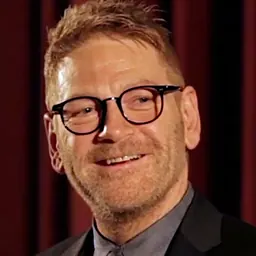

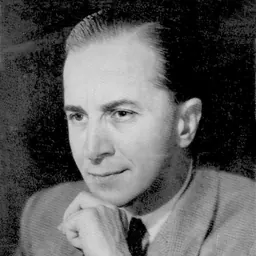

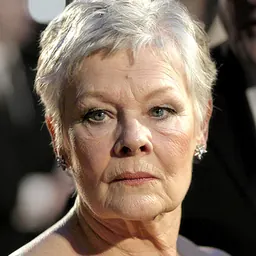
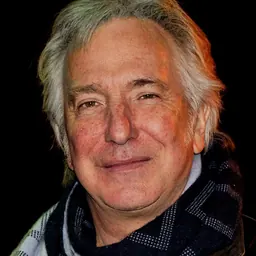
Related people
Same field, nearest in time


Contemporaries
People whose lives overlapped Hugh Cruttwell's



Frequently asked questions
Who was Hugh Cruttwell?
English theatre director, creative consultant
When was Hugh Cruttwell born?
Hugh Cruttwell was born on 31 October 1918 in Singapore.
When did Hugh Cruttwell die?
Hugh Cruttwell died on 24 August 2002 in London.
What was Hugh Cruttwell's occupation?
Hugh Cruttwell was a theatre director.
Sources & further reading
Cite this page
APA: Biography.guide. (2026). Hugh Cruttwell. https://biography.guide/hugh-cruttwell/
MLA: "Hugh Cruttwell." Biography.guide, https://biography.guide/hugh-cruttwell/.
Chicago: "Hugh Cruttwell." Biography.guide. https://biography.guide/hugh-cruttwell/.
Data last updated: 2026-09-22 · Spot an error? Report a correction.
Page generated 2026-09-27 05:17 UTC