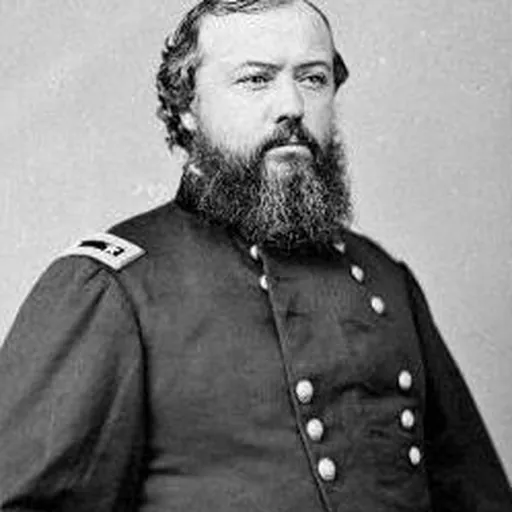
About Hugh Boyle Ewing
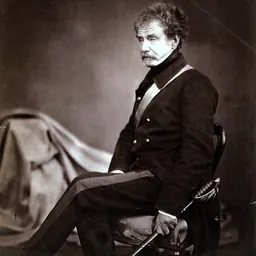
Lived 1826 – 1905 (aged 78). Hugh Boyle Ewing was an American military officer, diplomat, autobiographer, novelist, writer and lawyer.
Hugh Boyle Ewing (October 31, 1826 – June 30, 1905) was a diplomat, author, attorney, and Union Army general during the American Civil War. He was a member of the prestigious Ewing family, son of Thomas Ewing, the eldest brother of Thomas Ewing, Jr. and Charles Ewing, and the foster brother and brother-in-law of William T. Sherman. General Ewing was an ambitious, literate, and erudite officer who held a strong sense of responsibility for the men under his command.
Ewing's wartime service was characterized by several incidents which would have a unique impact on history. In 1861, his political connections helped save the reputation of his brother-in-law, William T. Sherman, who went on to become one of the north's most successful generals. Ewing was also present in Kentucky during Major General Stephen G. Burbridge's "reign of terror", where he worked to oppose Burbridge's harsh policies against civilians, but was hampered by debilitating rheumatism. While a member of the cadet corps, he was close friends with future Union generals John Buford Jr., Nathaniel C. McLean, and John C. Tidball. His father appointed Philip Sheridan to the open seat.
During the gold rush in 1849, Ewing went to California, where he joined an expedition ordered by his father, then Secretary of the Interior, to rescue immigrants who were trapped in the Sierra by heavy snows.
In 1858, Ewing married Henrietta Young, daughter of George W. Young, a large planter of the District of Columbia, whose family was prominent in the settlement and history of Maryland. Ewing and his sister argued that Sherman's requests for men and material in Kentucky had been denied in Washington, and that the charges of insanity had been part of a conspiracy orchestrated by Adjutant General Lorenzo Thomas. President Abraham Lincoln praised Sherman's "talent & conduct" publicly to a large group of important officers, and later banished Thomas to a meaningless post on recruiting duty in the Trans-Mississippi Theater.
After Antietam, Ewing was placed on sick leave because of chronic dysentery, and was promoted to Brigadier General on November 29, 1862. He transferred West and served throughout the campaign before Vicksburg, leading the assaults made by General Sherman; and upon its fall was placed in command of a division in the XVI Corps. Prior to the Battle of Chattanooga, Ewing's command led a diversionary raid that resulted in the destruction of the Empire State Iron Works in Dade County, Georgia, which was being refurbished to increase the South's manufacturing capability. Sherman considered Ewing his most reliable division commander. Their release coincided with that of Pierce's book, Our Old Home. As early as 1860, Pierce had written to Davis about "the madness of northern abolitionism", and other letters uncovered stated that he would "never justify, sustain, or in any way or to any extent uphold this cruel, heartless, aimless unnecessary war", and that "the true purpose of the war was to wipe out the states and destroy property." On August 11, 1864, Burbridge ordered soldiers from the 26th Kentucky to select four men to be taken from prison in Louisville to Eminence, Kentucky, to be shot for unknown outrages, and on August 20, several suspected Confederate guerrillas were also to be taken from Louisville and executed. General Ewing declared their innocence and sought a pardon from Burbridge, but he refused to give the pardon and the men were shot.
In his autobiography, Ewing describes an incident in October 1862 with Colonel Augustus Moor, who had struck a member of Ewing's regiment with his sword when the enlisted soldier had fallen out of a march. Ewing immediately confronted Moor. In his own words:
Colonel Moor quickly apologized. While General Ewing respected the discipline of the German regiment, he preferred a different atmosphere in his own command, better suited to Americans. He was capable of recognizing the military tradition of other units while accommodating the unique needs of his own. General Ewing was ordered to North Carolina in 1865, and was planning an expedition up the Roanoke river to co-operate with the Army of the James, when Lee surrendered.
In 1864, Ewing suffered an attack of rheumatism, and received treatment several times thereafter, often being confined to his chair. Blaine himself was disingenuous, having represented to prominent politicians in Ohio including Senator John Sherman that he was doing everything possible to nominate his close personal friend, former Ohio General Roeliff Brinkerhoff, for the post. Nonetheless, Blaine's request to recall General Ewing was never acted upon, possibly due to the influence of his sister, whose husband General Sherman was a very close friend to President Grant. Ewing was related to Blaine through Blaine's mother Maria Louise Gillespie Blaine.
Upon his eventual return to the United States, Ewing retired to a farm near Lancaster, Ohio, where he died of old age.
He was the author of: The Black List; A Tale of Early California (1887); A Castle in the Air (1887); The Gold Plague, and other works.
Don’t just read it —
keep it.
Full-length biographies made to live with: read them, listen on the way to work, watch them tonight.
- E-book
- Audio
- Video
Instant download · yours to keep · every purchase keeps this site free
Important facts
People in Hugh Boyle Ewing's life
Named in this biography and alive at the same time


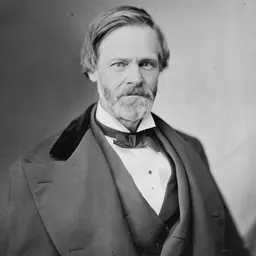

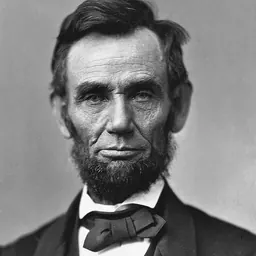


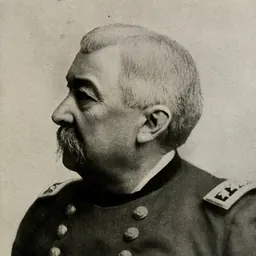
Related people
Same field, nearest in time

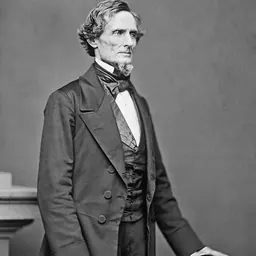
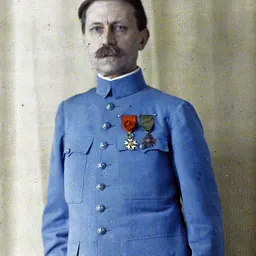
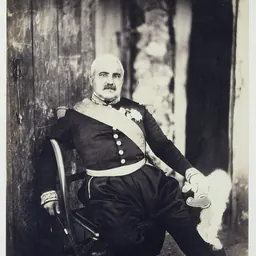
Contemporaries
People whose lives overlapped Hugh Boyle Ewing's





Frequently asked questions
Who was Hugh Boyle Ewing?
Union Army General (1826–1905)
When was Hugh Boyle Ewing born?
Hugh Boyle Ewing was born on 31 October 1826 in Lancaster.
When did Hugh Boyle Ewing die?
Hugh Boyle Ewing died on 30 June 1905 in Lancaster.
What was Hugh Boyle Ewing's occupation?
Hugh Boyle Ewing was a military officer, diplomat, autobiographer, novelist, writer and lawyer.
What nationality was Hugh Boyle Ewing?
Hugh Boyle Ewing was American.
Sources & further reading
Cite this page
APA: Biography.guide. (2026). Hugh Boyle Ewing. https://biography.guide/hugh-boyle-ewing/
MLA: "Hugh Boyle Ewing." Biography.guide, https://biography.guide/hugh-boyle-ewing/.
Chicago: "Hugh Boyle Ewing." Biography.guide. https://biography.guide/hugh-boyle-ewing/.
Data last updated: 2026-09-20 · Spot an error? Report a correction.
Page generated 2026-09-27 05:10 UTC