
Hubertus Quellinus
Flemish engraver and draughtsman
About Hubertus Quellinus
Lived 1619 – 1687 (aged 67–68). Hubertus Quellinus was a Belgian engraver, copper engraver and draftsperson.
Hubertus Quellinus or Hubert Quellinus (15 August 1619, Antwerp – 1687) was a Flemish printmaker, drawing artist and painter and a member of the prominent Quellinus family of artists. His engravings after the work of his brother, the Baroque sculptor Artus Quellinus the Elder, were instrumental in the spread of the Flemish Baroque idiom in Europe in the second half of the 17th century.
Life Hubertus Quellinus was born in Antwerp on 15 August 1619 as the son of Erasmus Quellinus the Elder and Elisabeth van Uden. His family was a family of sculptors and painters which included, amongst others, his father and his brothers, the Rubens pupil Erasmus Quellinus the Younger and the prominent sculptor Artus Quellinus the Elder. Hubertus' mother was the sister of the prominent landscape painter Lucas van Uden.
In 1650 he traveled to Rome where he joined the Bentvueghels, an association of mainly Dutch and Flemish artists working in Rome. It was customary for the Bentvueghels to adopt an appealing nickname, the so-called 'bent name'. Hubertus was given the bent name Saracin. He witnessed that he was present when the lifeless body of Pietro Testa was the retrieved from the Tiber in 1650. Quellinus was in Amsterdam by 1660 where he collaborated on a publication on the new City Hall of Amsterdam.
Om 9 August 1666 he sold in Amsterdam 113 copper plates, including their 15-year patent, regarding Amsterdam City Hall to Frederik de Wit. He returned to Antwerp where he was buried on 2 March 1688. His death duties were met between 18 September 1687 and 18 September 1688. The first part was published initially in 1655 while the second part was first published in 1663 in Amsterdam but the publisher Frederick de Widt (or 'de Witt') changed the dates on the Quellinus prints to 1665 and 1668. The publication was instrumental in the spread of the Baroque style in Northern Europe until the end of the 17th century, and was used by nearly all followers of the Flemish Baroque style in Europe as the most important pattern-book and source of inspiration in the fields of architectural ornamentation and sculpture.
He also engraved portraits.
Don’t just read it —
keep it.
Full-length biographies made to live with: read them, listen on the way to work, watch them tonight.
- E-book
- Audio
- Video
Instant download · yours to keep · every purchase keeps this site free
Important facts
People in Hubertus Quellinus's life
Named in this biography and alive at the same time
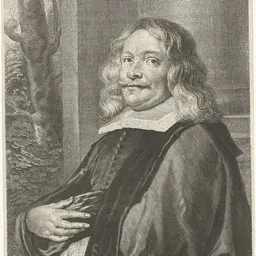
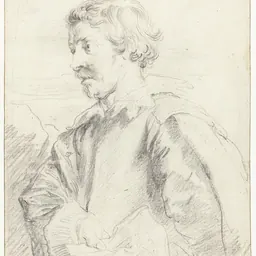
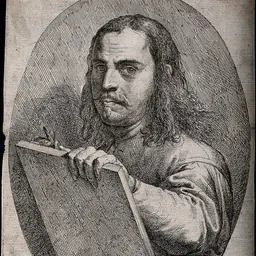


Related people
Same field, nearest in time
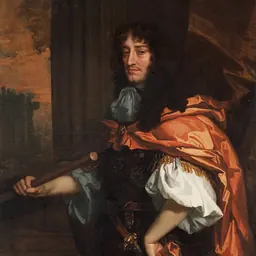

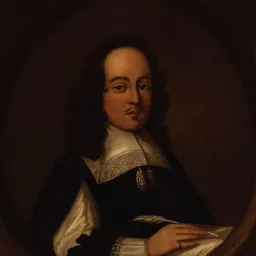


Contemporaries
People whose lives overlapped Hubertus Quellinus's




Frequently asked questions
Who was Hubertus Quellinus?
Flemish engraver and draughtsman (1619–1687)
When was Hubertus Quellinus born?
Hubertus Quellinus was born on 15 August 1619 in Antwerp.
When did Hubertus Quellinus die?
Hubertus Quellinus died in 1687 in Antwerp.
What was Hubertus Quellinus's occupation?
Hubertus Quellinus was an engraver, copper engraver and draftsperson.
What nationality was Hubertus Quellinus?
Hubertus Quellinus was Belgian.
Sources & further reading
· Wikipedia: Hubertus Quellinus
Cite this page
APA: Biography.guide. (2026). Hubertus Quellinus. https://biography.guide/hubertus-quellinus/
MLA: "Hubertus Quellinus." Biography.guide, https://biography.guide/hubertus-quellinus/.
Chicago: "Hubertus Quellinus." Biography.guide. https://biography.guide/hubertus-quellinus/.
Data last updated: 2026-09-20 · Spot an error? Report a correction.
Page generated 2026-09-27 04:58 UTC