About Hubert Cecil Booth
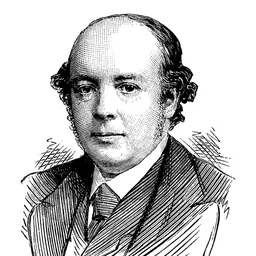
Lived 1871 – 1955 (aged 83). Hubert Cecil Booth was a British inventor, engineer, businessperson and civil engineer.
Hubert Cecil Booth (4 July 1871 – 14 January 1955) was an English engineer, best known for having invented one of the first powered vacuum cleaners.
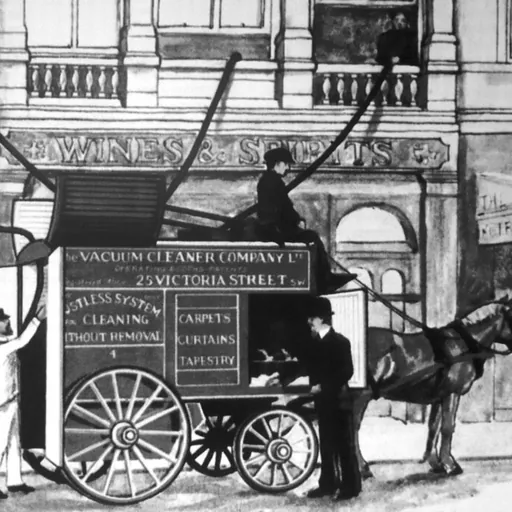
He also designed Ferris wheels, suspension bridges and factories. England in 1871. He was educated at Gloucester College and Gloucester County School under headmaster the Reverend H. Lloyd Brereton. In 1889 he entered the Central Technical College, City and Guild, London, after passing the entrance examination. He completed a three-year course in civil engineering and mechanical engineering under Professor William Cawthorne Unwin FRS. He completed the Diploma of Associateship (ACGI), coming second in the engineering department. He became a student of the Institution of Civil Engineers. driven by an internal combustion engine. Nicknamed the "Puffing Billy", Booth's first petrol-powered, horse-drawn vacuum cleaner relied upon air drawn by a piston pump through a cloth filter. It did not contain any brushes; all the cleaning was done by suction through long tubes with nozzles on the ends. Although the machine was too bulky to be brought into the building, its principles of operation were essentially the same as the vacuum cleaners of today. He followed this up with an electric-powered model, but both designs were extremely bulky, and had to be transported by horse and carriage. The term "vacuum cleaner" was first used by the company set up to market Booth's invention, in its first issued prospectus of 1901.
Booth initially did not attempt to sell his machine, but rather sold cleaning services. The vans of the British Vacuum Cleaner Company (BVCC) were bright red; uniformed operators would haul hose off the van and route it through the windows of a building to reach all the rooms inside. Booth was harassed by complaints about the noise of his vacuum machines and was even fined for frightening horses. Gaining the royal seal of approval, Booth's motorised vacuum cleaner was used to clean the carpets of Westminster Abbey prior to Edward VII's coronation in 1901. The device was used by the Royal Navy to improve the level of sanitation in the naval barracks. It was also used in businesses such as theatres and shops, although the device was too large to be feasibly used as a domestic appliance. When cleaning the Royal Mint, upon leaving he was arrested as his machine had collected a massive amount of silver dust from the coins and he had forgotten to empty it. He was however quickly released.
Booth received his first patents on 18 February and 30 August 1901. Booth founded Goblin, his company to sell vacuum cleaning services and refined his invention over the next several decades. Though Goblin lost out to competition from Hoover in the household vacuum market, his company successfully turned its focus to the industrial market, building ever-larger models for factories and warehouses. Booth's company, now BVC, lives on today as a unit of pneumatic tube system maker Quirepace Ltd.
Personal life In 1903, Booth married Charlotte Mary Pearce, one of the daughters of Francis Tring Pearce, director of the Priday, Metford and Company Limited. He was a friend of Hugh Pembroke Vowles. He was offered a knighthood; however, he turned it down. His father, Abraham Booth, was involved in the development of the transatlantic telephone lines. Booth died on 14 January 1955, in Croydon, England.
Tribute On 4 July 2018, Google celebrated his 147th birthday with a Google Doodle.
Don’t just read it —
keep it.
Full-length biographies made to live with: read them, listen on the way to work, watch them tonight.
- E-book
- Audio
- Video
Instant download · yours to keep · every purchase keeps this site free
Important facts
People in Hubert Cecil Booth's life
Named in this biography and alive at the same time


Related people
Same field, nearest in time

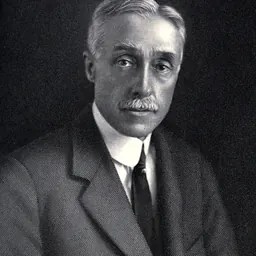
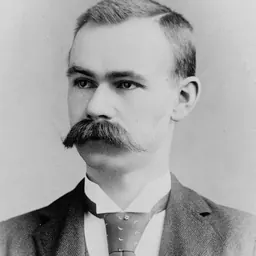
Contemporaries
People whose lives overlapped Hubert Cecil Booth's
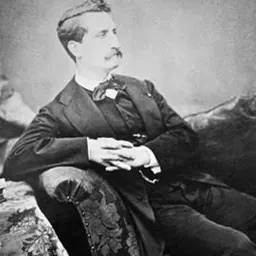



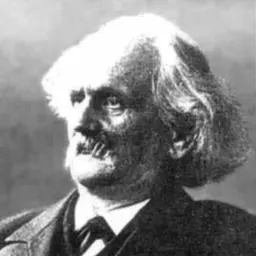
Frequently asked questions
Who was Hubert Cecil Booth?
British engineer (1871–1955)
When was Hubert Cecil Booth born?
Hubert Cecil Booth was born on 4 July 1871 in Gloucester.
When did Hubert Cecil Booth die?
Hubert Cecil Booth died on 14 January 1955 in Croydon.
What was Hubert Cecil Booth's occupation?
Hubert Cecil Booth was an inventor, engineer, businessperson and civil engineer.
What nationality was Hubert Cecil Booth?
Hubert Cecil Booth was British.
Sources & further reading
· Wikipedia: Hubert Cecil Booth
Cite this page
APA: Biography.guide. (2026). Hubert Cecil Booth. https://biography.guide/hubert-cecil-booth/
MLA: "Hubert Cecil Booth." Biography.guide, https://biography.guide/hubert-cecil-booth/.
Chicago: "Hubert Cecil Booth." Biography.guide. https://biography.guide/hubert-cecil-booth/.
Data last updated: 2026-09-21 · Spot an error? Report a correction.
Portrait: Wikimedia Commons · author & licence
Page generated 2026-09-27 05:00 UTC