
About Hubert Benoit
Lived 1904 – 1992 (aged 88). Hubert Benoit was a French psychiatrist, psychologist, translator, surgeon and psychoanalyst.
Hubert Benoit (1904–1992) was a 20th-century French psychotherapist whose work foreshadowed subsequent developments in integral psychology and integral spirituality. He stressed the part played by the spiritual ignorance of Western culture in the emergence and persistence of much underlying distress. He used concepts derived from psychoanalysis to explain the defences against this fundamental unease, and emphasised the importance of an analytic, preparatory phase, while warning against what he regarded as the psychoanalytic overemphasis on specific causal precursors of symptomatology. He demonstrated parallels between aspects of Zen training and the experience of psychoanalysis. He constructed an account in contemporary psychological terms of the crucial Zen concept of satori and its emergence in the individual.
Early life and career
Hubert Benoit was born in Nancy on 21 March 1904 and died in Paris on 28 October 1992. He trained as a doctor in Paris, where he qualified in 1935 and subsequently specialised in surgery until 1944. In 1944 he sustained severe injuries during the Allied bombardment of Saint-Lô after the Normandy landings. In his introduction to Métaphysique et Psychanalyse he expressed his conviction that a higher truth existed which was potentially attainable: Benoit's studies led him to the Vedanta and Taoism as well as Zen Buddhism. He was also acquainted with the work of Gurdjieff.
Psychotherapy
Benoit began his work in Paris as a psychotherapist in 1952. ). Despite this association with Zen Buddhism, Benoit preferred to speak of Ch'an precedes his account of Benoit's approach with the following comment: "...although his The Supreme Doctrine was widely read and appreciated in many countries, problems with the translation of his later, more comprehensive and conclusive work, Let Go!, must have cost him most of his English-speaking readers."
Influence
Aldous Huxley
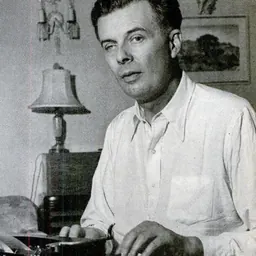
Benoit was brought to the attention of the English-speaking world by Aldous Huxley, a leading exponent of the Perennial Philosophy in the middle decades of the 20th century. He had read Métaphysique et Psychanalyse He also provided the preface to the first edition of Benoit's best known book, The Supreme Doctrine, concluding: When Huxley's library was destroyed by fire in 1961, The Supreme Doctrine was among the books that he singled out for replacement
Robert Powell
While Huxley promoted The Supreme Doctrine for its discussion of Zen Buddhism from a Western psychological perspective, others highlighted concepts of particular interest. For Robert Powell, a contemporary of Huxley, it was Benoit's approach to existential anxiety. Benoit considered this to be a near-universal, fundamental component of human personality, likening it to an '"inner lawsuit" which is continually being enacted in our subconscious mind.'
Margaret J. Rioch and Joseph Hart
In the 1970s papers by Joseph Hart and Margaret Jeffrey Rioch appeared in academic journals. Both summarised Benoit's ideas. Rioch's paper was an abbreviated version of a lecture she delivered as part of a course on philosophy at M.I.T. Hart, author of Modern Eclectic Psychotherapy (1983), presented Benoit's work as a contribution to the philosophy of science that humanistic and transpersonal psychologists were attempting to develop.
Osho
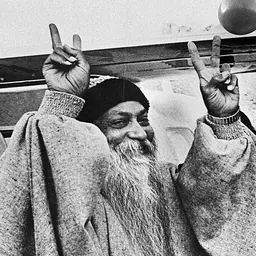
The followers of Osho (Bhagwan Shree Rajneesh) were introduced to Benoit's ideas. In Books That I Have Loved, Osho mentions two of Benoit's books, Let Go and The Supreme Doctrine. Of the former he writes (p. 32):
Referring to The Supreme Doctrine he noted(p. 39):
Integral psychology movement
Benoit was quoted in one of the seminal works of the integral psychology movement, Ken Wilber's The Atman Project. Wilber, writing about the subjective wing of the Atman-project, commented (p. 103):
A few pages later, Wilber wrote(p. 108):
Don’t just read it —
keep it.
Full-length biographies made to live with: read them, listen on the way to work, watch them tonight.
- E-book
- Audio
- Video
Instant download · yours to keep · every purchase keeps this site free
Important facts
People in Hubert Benoit's life
Named in this biography and alive at the same time




Related people
Same field, nearest in time



Contemporaries
People whose lives overlapped Hubert Benoit's




Frequently asked questions
Who was Hubert Benoit?
French psychotherapist (1904-1992)
When was Hubert Benoit born?
Hubert Benoit was born on 21 March 1904 in Nancy.
When did Hubert Benoit die?
Hubert Benoit died on 28 October 1992 in Paris.
What was Hubert Benoit's occupation?
Hubert Benoit was a psychiatrist, psychologist, translator, surgeon and psychoanalyst.
What nationality was Hubert Benoit?
Hubert Benoit was French.
Sources & further reading
· DBpedia: Hubert Benoit (psychotherapist)
Cite this page
APA: Biography.guide. (2026). Hubert Benoit. https://biography.guide/hubert-benoit/
MLA: "Hubert Benoit." Biography.guide, https://biography.guide/hubert-benoit/.
Chicago: "Hubert Benoit." Biography.guide. https://biography.guide/hubert-benoit/.
Data last updated: 2026-09-22 · Spot an error? Report a correction.
Page generated 2026-09-27 05:31 UTC