
About Huang Yaomian
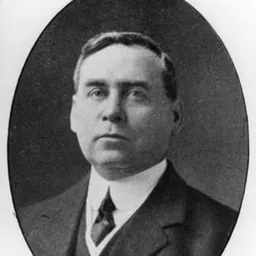
Lived 1903 – 1987 (aged 84). Huang Yaomian was a Chinese translator.
Huang Yaomian (; January 14, 1903 – September 3, 1987), also known by the given names Fangsun and Huang Fang , was a Chinese political activist, literary theorist, poet, writer, educator, aesthete, and journalist. A graduate of Guangdong University (now Sun Yat-sen University), he was an important figure in modern Chinese literary theory and a prominent member of the China Democratic League.
Biography
Huang Yaomian was born on January 14, 1903, in Meixian, Guangdong (now Meijiang District, Meizhou). He received his early education at Guangdong Provincial No. 5 Middle School (now Meizhou Middle School) and was admitted in 1921 to the English department of Guangdong Higher Normal School, a predecessor of Sun Yat-sen University. Influenced by the May Fourth Movement, he actively participated in student activism and became deeply engaged with new literature and progressive thought. He later studied in Japan and, after returning to China, worked as a teacher in several secondary schools.
In 1927, following the April 12 Incident, Huang moved to Shanghai, where he joined the Creation Society (Chuangzao She), a revolutionary literary group, and began publishing poetry and essays. His early works, including the poetry collection Huanghuagang Shang, established him as a Romantic poet. During this period, he also began studying Marxist theory and joined the Chinese Communist Party in 1928. He later taught part-time at the Shanghai University of the Arts and worked briefly in Moscow for the Communist International.
After returning to China in 1933, Huang served as head of the Publicity Department of the Communist Youth League Central Committee. In 1934, he was arrested by the Kuomintang authorities and sentenced to ten years' imprisonment. He was released in 1937 through the intervention of the Eighth Route Army and subsequently worked at Xinhua News Agency in Yan'an before moving to Guilin, where he co-founded the International News Agency with figures such as Hu Yuzhi and Fan Changjiang. Chunyin Hall, a residential building located at 11 Dongshan Bridge in Meijiang District, Meizhou, is the former residence of Huang Yaomian. During the Second Sino-Japanese War, Huang was active in journalism, literary creation, and propaganda. He later worked in Hong Kong under the leadership of Liao Chengzhi and contributed to various publications. After the Japanese occupation of Hong Kong, he returned to his hometown and later continued his work in Guilin, Chengdu, and Kunming, producing essays and theoretical writings, including The Beautiful Black Sea and literary criticism works.
In 1944, Huang joined the China Democratic League and became an active participant in democratic movements. After the end of the war, he worked in Hong Kong and Guangzhou as an editor and organizer of several publications, including People's Daily (local edition), Democratic Weekly, and Democracy and Culture. He also helped found Dade College in Hong Kong and served as head of its Department of Literature.
In 1949, Huang traveled to Beijing to attend the First National Congress of Literary and Art Workers and the first plenary session of the Chinese People's Political Consultative Conference. After the founding of the People's Republic of China, he became a professor and later head of the Chinese Department at Beijing Normal University, where he carried out influential research in aesthetics and literary theory.
In 1957, Huang was labeled a "rightist" during the Anti-Rightist Campaign after drafting proposals on reforming higher education leadership systems. He suffered political persecution for two decades but continued writing under difficult circumstances, producing works such as Facing the Ocean of Life. Following the Boluan Fanzheng period after 1978, he was rehabilitated and his reputation restored.
Throughout his career, Huang held numerous public positions. He was a deputy to the 1st National People's Congress, a member of the 3rd, 4th, and 5th National Committees of the CPPCC, and a Standing Committee member of the 6th CPPCC. He also served as a Central Committee member and Standing Committee member of the China Democratic League, vice director of its Central Advisory Committee, a standing member and deputy secretary-general of the China Federation of Literary and Art Circles, and an advisor to the China Writers Association.
Huang Yaomian died in Beijing on September 3, 1987, at the age of 84.
Don’t just read it —
keep it.
Full-length biographies made to live with: read them, listen on the way to work, watch them tonight.
- E-book
- Audio
- Video
Instant download · yours to keep · every purchase keeps this site free
Important facts
People in Huang Yaomian's life
Named in this biography and alive at the same time





Related people
Same field, nearest in time



Contemporaries
People whose lives overlapped Huang Yaomian's
Frequently asked questions
Who was Huang Yaomian?
Chinese translator
When was Huang Yaomian born?
Huang Yaomian was born on 14 January 1903.
When did Huang Yaomian die?
Huang Yaomian died on 3 September 1987.
What was Huang Yaomian's occupation?
Huang Yaomian was a translator.
What nationality was Huang Yaomian?
Huang Yaomian was Chinese.
Sources & further reading
Cite this page
APA: Biography.guide. (2026). Huang Yaomian. https://biography.guide/huang-yaomian/
MLA: "Huang Yaomian." Biography.guide, https://biography.guide/huang-yaomian/.
Chicago: "Huang Yaomian." Biography.guide. https://biography.guide/huang-yaomian/.
Data last updated: 2026-09-20 · Spot an error? Report a correction.
Page generated 2026-09-27 05:17 UTC