
About Hsu Shih-chang
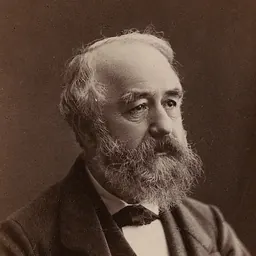
Lived 1855 – 1939 (aged 83). Hsu Shih-chang was a Chinese politician and artist.
Xu Shichang (; courtesy name Juren ; 20 October 1855 – 5 June 1939) was a Chinese politician who served as the President of China from 10 October 1918 to 2 June 1922. A member of the Anhui clique, he was the only permanent president of the Beiyang government to be a civilian; his presidency was also the longest of the Warlord Era. Previously, he was Minister of the Cabinet of the Imperial Cabinet during the Qing dynasty.
Biography Xu Shichang's ancestral hometown was Yinxian County (current Yinzhou District), Ningbo, Zhejiang. Born in Weihui, Henan, he was Yuan Shikai's closest friend. He was at one time the Viceroy of the Three Northeast Provinces, served as minister of the cabinet in Prince Qing's Cabinet, and tutored the final Qing Emperor, Puyi. At the end of the Qing dynasty, Xu was made chief of the general staff despite being a civilian. Following the overthrow of the monarchy and the establishment of the Republic of China, he was appointed minister of state by Yuan Shikai in 1912, as the latter hoped that this would appease the pro-Qing Royalist Party. Xu resigned as secretary of state (premier) in protest of Yuan's self-proclaimed monarchy in late 1915. He resumed his post after Yuan abandoned monarchism on 22 March 1916.
His election as president was largely engineered by Duan Qirui and his Anhui clique. He was chosen because he was a civilian yet had close ties to the Beiyang Army and was neutral to both its Zhili and Anhui cliques. Lacking any military power of his own, he had to play Duan, Zhili leader Cao Kun, and Fengtian leader Zhang Zuolin against each other to stay in power.
Xu believed the monarchy would eventually be restored, and to prepare Puyi for the challenges of the modern world had hired Reginald Johnston to teach Puyi "subjects such as political science, constitutional history and English".
He held a massive celebration in Beijing for China's victory in World War I on 18 November 1918. However, he then brought troops into the Allied intervention in the Russian Civil War. A ceasefire with Sun Yat-sen's rival Constitutional Protection Junta based in Guangzhou was declared and intellectuals were given greater freedom. This lasted until news from France revealed that Duan Qirui had promised former German territory in Shandong to Japan. Large student protests in the May Fourth Movement led to Xu cracking down with mass arrests. Ma Jun , a Muslim, led protests against the Versailles Treaty. The delegation was ordered home and China refused to sign or ratify the Treaty of Versailles. Consequently, the shaky alliance between the Zhili and Anhui cliques collapsed with Duan decisively defeated. This led to the era of high warlordism. Conflict with the anti-Beiyang movements in Southern China flared again in 1920, and he also failed to retake Outer Mongolia. Cao Kun, who never liked Xu, pressured him out of office and restored Li Yuanhong.
Xu retired from politics and moved to the British concession in Tianjin, where he died on 5 June 1939 at the age of 83.
Don’t just read it —
keep it.
Full-length biographies made to live with: read them, listen on the way to work, watch them tonight.
- E-book
- Audio
- Video
Instant download · yours to keep · every purchase keeps this site free
Important facts
more
Shichang Xu, Buwu, Guiyunlou, Tanfengyueguan, Tuigengtang, Wanqingyi, Tuigenglaoren, Xu ShichangPeople in Hsu Shih-chang's life
Named in this biography and alive at the same time

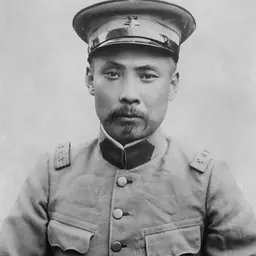



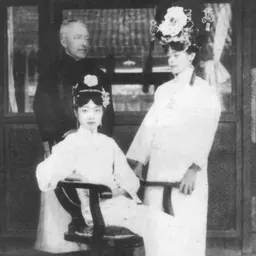

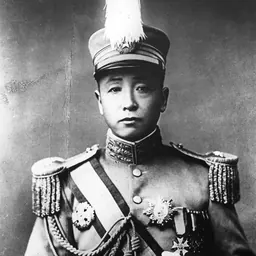
Related people
Same field, nearest in time




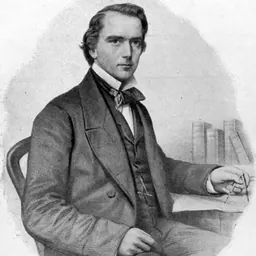
Contemporaries
People whose lives overlapped Hsu Shih-chang's





Frequently asked questions
Who was Hsu Shih-chang?
President of the Republic of China (1855–1939)
When was Hsu Shih-chang born?
Hsu Shih-chang was born on 23 October 1855 in Weihui.
When did Hsu Shih-chang die?
Hsu Shih-chang died on 5 June 1939 in Tianjin.
What was Hsu Shih-chang's occupation?
Hsu Shih-chang was a politician and artist.
What nationality was Hsu Shih-chang?
Hsu Shih-chang was Chinese.
Sources & further reading
Cite this page
APA: Biography.guide. (2026). Hsu Shih-chang. https://biography.guide/hsu-shih-chang/
MLA: "Hsu Shih-chang." Biography.guide, https://biography.guide/hsu-shih-chang/.
Chicago: "Hsu Shih-chang." Biography.guide. https://biography.guide/hsu-shih-chang/.
Data last updated: 2026-09-25 · Spot an error? Report a correction.
Page generated 2026-09-27 05:07 UTC