
About Hryhorii Kvitka-Osnovianenko
Lived 1778 – 1843 (aged 64). Hryhorii Kvitka-Osnovianenko was a Ukrainian journalist, writer, playwright, prose writer and literary critic.
Life and work Hryhorii Kvitka-Osnovianenko was born in 1778 in the village of , Sloboda Ukraine Governorate (now within the city of Kharkiv), to a family of Ukrainian nobility. His uncle Illia Kvitka researched the settlement of Sloboda Ukraine, becoming a pioneer of historical studies in the region. He adopted the pen name "Osnovianenko," a reference to the village of his birth, when he embarked on his literary career.
A deeply religious person, at the age of 23 Kvitka entered a monastery, but returned to civil life four years later. Starting from 1812, Hryhorii Kvitka-Osnovianenko began his social activities, being appointed the director of a new regular lay theatre which opened in Kharkiv. The love for theatre, which he preserved through all his life, led him to become an author of theatrical drama works. In 1841 he wrote his "Kharkiv Theatre History". Along with his theatrical activities, Kvitka-Osnovianenko also engaged in philanthropy and became the founder of an Institute for Noble Maidens. He also served as the local Marshal of the Nobility and headed the chamber of Kharkiv's criminal court. However, with time Kvitka-Osnovianenko became one of the earliest proponents of Ukrainian as a literary language and began publishing in the first Ukrainian literary journals printed in Kharkiv. He corresponded respectfully with Taras Shevchenko, keeping up constantly with literary life. He was a friend of Nikolai Gogol, and it is possible that Gogol's play The Government Inspector was inspired by Kvitka-Osnovianenko's satiric drama The Visitor from the Capitol or Turmoil in a District Town, which has a very similar plot and cast of characters.
In his works Kvitka-Osnovianenko initially followed Ivan Kotliarevsky's travesty tradition.
He also tried his hand at the gothic genre with his "Dead Man's Easter" (1834).
Historical Novels From the historical works of interest are the "Historical and Statistical Outline of Slobozhanshchyna" (1838), "On the Sloboda Regiments", "Ukrainians" (1841) and “History of the Theater in Kharkiv” (1841).
In the 1830s, Kvitka composed a fantastic lyrical story about the founding of the city of Kharkiv in the middle of the 17th century with his ancestor Andriy Kvitka. This story, published in his collected works, is not supported by any source and has never been seriously considered by any historian.
The most famous works Малоросийские анекдоты (Little Russian Anecdotes) - 1821-1822 (in Russian) Шельменко-волосний писар (Shelmenko-volost clerk) - comedy, 1831 Конотопська відьма (The Witch of Konotop) - 1833 Салдатський патрет (A Soldier's Portrait) - novella, 1833 Маруся (Marusia) - novella, 1834-1837 Сердешна Оксана (Poor Oksana) - 1834-1837 Сватання на Гончарівці (The Courtship at Honcharivka) - comedy, 1836 Шельменко-денщик (Shelmenko the Batman) - comedy, 1837 Козир-дівка (The Trump Girl) - 1838 Пан Халявский (Mr. Khalyavsky) - 1839 (in Russian) Ганнуся (Hannusya) - 1839
Film adaptations Films based on his works:
The Courtship at Honcharivka (1958) Shelmenko the Batman (1910, 1911, 1957) Shelmenko the Batman (1971) The Witch (1990, 2 a; based on the story "The Witch of Konotop")
Documentary films about Hryhorii Kvitka-Osnovianenko
"Hryhorii Kvitka-Osnovianenko" (1979) "Kvitka-Osnovianenko" (1988)
Critical reception Kvitka-Osnovianenko's literary achievement has tended to be a polarizing subject for critics of Ukrainian culture. On the one hand, as one of the first popular writers to use the Ukrainian language, he is viewed a founding figure of Ukrainian literature and the "father of Ukrainian prose". On the other hand, many prominent Ukrainian scholars, including Ivan Franko, Mykola Zerov, and Dmytro Chyzhevsky, viewed his work as reactionary and conservative and were skeptical of the sentimental, pastoral image that he painted of Ukraine and Ukrainians.
Don’t just read it —
keep it.
Full-length biographies made to live with: read them, listen on the way to work, watch them tonight.
- E-book
- Audio
- Video
Instant download · yours to keep · every purchase keeps this site free
Important facts
People in Hryhorii Kvitka-Osnovianenko's life
Named in this biography and alive at the same time


Related people
Same field, nearest in time
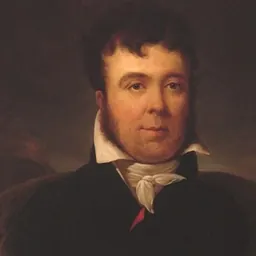
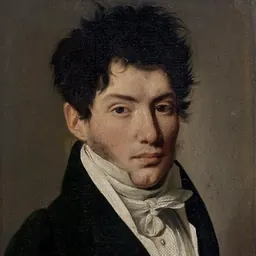
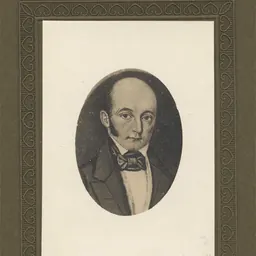
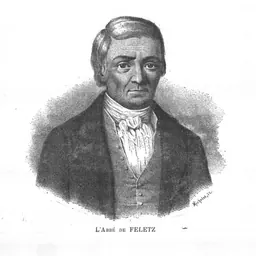

Contemporaries
People whose lives overlapped Hryhorii Kvitka-Osnovianenko's


Frequently asked questions
Who was Hryhorii Kvitka-Osnovianenko?
Ukrainian writer (1778–1843)
When was Hryhorii Kvitka-Osnovianenko born?
Hryhorii Kvitka-Osnovianenko was born on 18 November 1778 in Osnova.
When did Hryhorii Kvitka-Osnovianenko die?
Hryhorii Kvitka-Osnovianenko died on 8 August 1843 in Kharkiv.
What was Hryhorii Kvitka-Osnovianenko's occupation?
Hryhorii Kvitka-Osnovianenko was a journalist, writer, playwright, prose writer and literary critic.
What nationality was Hryhorii Kvitka-Osnovianenko?
Hryhorii Kvitka-Osnovianenko was Ukrainian.
Sources & further reading
· Wikipedia: Hryhorii Kvitka-Osnovianenko
· DBpedia: Hryhorii Kvitka-Osnovianenko
Cite this page
APA: Biography.guide. (2026). Hryhorii Kvitka-Osnovianenko. https://biography.guide/hryhorii-kvitka-osnovianenko/
MLA: "Hryhorii Kvitka-Osnovianenko." Biography.guide, https://biography.guide/hryhorii-kvitka-osnovianenko/.
Chicago: "Hryhorii Kvitka-Osnovianenko." Biography.guide. https://biography.guide/hryhorii-kvitka-osnovianenko/.
Data last updated: 2026-09-20 · Spot an error? Report a correction.
Page generated 2026-09-27 05:31 UTC