
About Howard Talbot
Lived 1865 – 1928 (aged 63). Howard Talbot was a British composer and conductor.
Howard Munkittrick, better known as Howard Talbot (9 March 1865 – 12 September 1928), was an American-born, English-raised composer and conductor of Irish descent. He was best known for writing the music to several hit Edwardian musical comedies, including A Chinese Honeymoon, The Arcadians and The Boy, as well as a number of other successful British musicals during the first two decades of the 20th century.
Life and career Of Irish descent, Talbot was born in America in Yonkers, New York, but moved to London at the age of four. His parents were Alexander Munkittrick (1810–1892) and his wife, Margaret. Originally planning to enter the medical profession, he studied at King's College London but switched to music and pursued a musical education at the Royal College of Music. There he studied under Sir Hubert Parry, Sir Frederick Bridge and Sir Walter Parratt. For some years, although Talbot had had works staged by amateurs in Hunstanton, Oxford and King's Lynn, professionally he only succeeded in having a few of his individual songs performed in other people's productions. After a marriage which ended in divorce, he was married in 1910 to Dorothy Maud Cross, the daughter of St Mary Magdalene Church, Sandringham organist Arthur Harry Cross. The couple produced four daughters.
1890s: early career
Talbot's first full professionally produced comic opera was Wapping Old Stairs in 1894. The success of this production in King's Lynn led to a transfer of the show to the Vaudeville Theatre in London. Despite a strong London cast including Jessie Bond, Courtice Pounds and Richard Temple from the D'Oyly Carte Opera Company, the show was not well received in the West End and closed after one month. A follow-up work, the burlesque All My Eye-van-hoe, was also a flop, and Talbot was forced to sue the producers for monies owed to him for this work.
At this time, Talbot earned the bulk of his living from conducting both in London and for provincial touring productions, such as The Lady Slavey, where managers appreciated his "cheery, goodnatured" attitude. Although he continued to compose, achieving some success both in Britain and America with Monte Carlo in 1896, Talbot's name was not yet considered to be a major force in British musical theatre, and he continued to be asked mainly to supply individual songs that were inserted into works primarily written by others. The most successful shows that he conducted in London during this period were The Sorrows of Satan (1897) at the Shaftesbury Theatre and two Arthur Roberts vehicles, Dandy Dan the Lifeguardsman (1897), which included his song "Someone Ought to Speak to Millie Simpson", and Milord Sir Smith (1898). In 1899 he conducted Great Caesar. In addition to musicals, he produced a body of songs, piano pieces, orchestral works and a cantata. The musicals that followed this, such as The Mousmé in 1911, The Pearl Girl in 1913, My Lady Frayle in 1915, Mr Manhattan in 1916, and other short works for music halls, were only modest successes, however, and musical styles began to change. It was also adapted successfully on Broadway as Good Morning, Judge in 1919 and toured the English-speaking world. A third Pinero adaptation, My Niece's (1921), was a flop and proved to be Talbot's final West End theatre score. His nephew, Howard Carr, was also a theatre conductor and composer, and at one stage he directed and conducted performances of A Chinese Honeymoon in London.
Don’t just read it —
keep it.
Full-length biographies made to live with: read them, listen on the way to work, watch them tonight.
- E-book
- Audio
- Video
Instant download · yours to keep · every purchase keeps this site free
Important facts
People in Howard Talbot's life
Named in this biography and alive at the same time




Related people
Same field, nearest in time
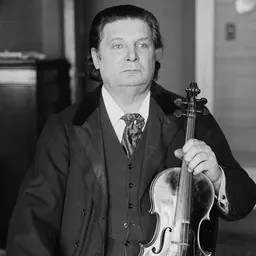

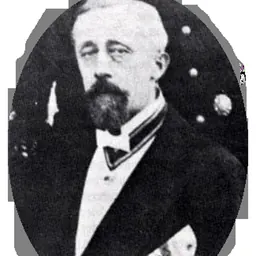
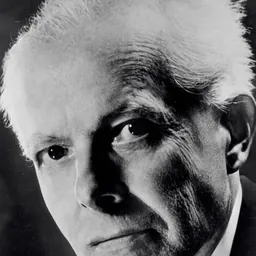

Contemporaries
People whose lives overlapped Howard Talbot's
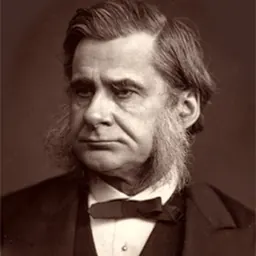


Frequently asked questions
Who was Howard Talbot?
American-born, English-raised conductor and composer
When was Howard Talbot born?
Howard Talbot was born on 9 March 1865 in Yonkers.
When did Howard Talbot die?
Howard Talbot died on 12 September 1928 in Reigate.
What was Howard Talbot's occupation?
Howard Talbot was a composer and conductor.
What nationality was Howard Talbot?
Howard Talbot was British.
Sources & further reading
Cite this page
APA: Biography.guide. (2026). Howard Talbot. https://biography.guide/howard-talbot/
MLA: "Howard Talbot." Biography.guide, https://biography.guide/howard-talbot/.
Chicago: "Howard Talbot." Biography.guide. https://biography.guide/howard-talbot/.
Data last updated: 2026-09-20 · Spot an error? Report a correction.
Page generated 2026-09-27 05:19 UTC